



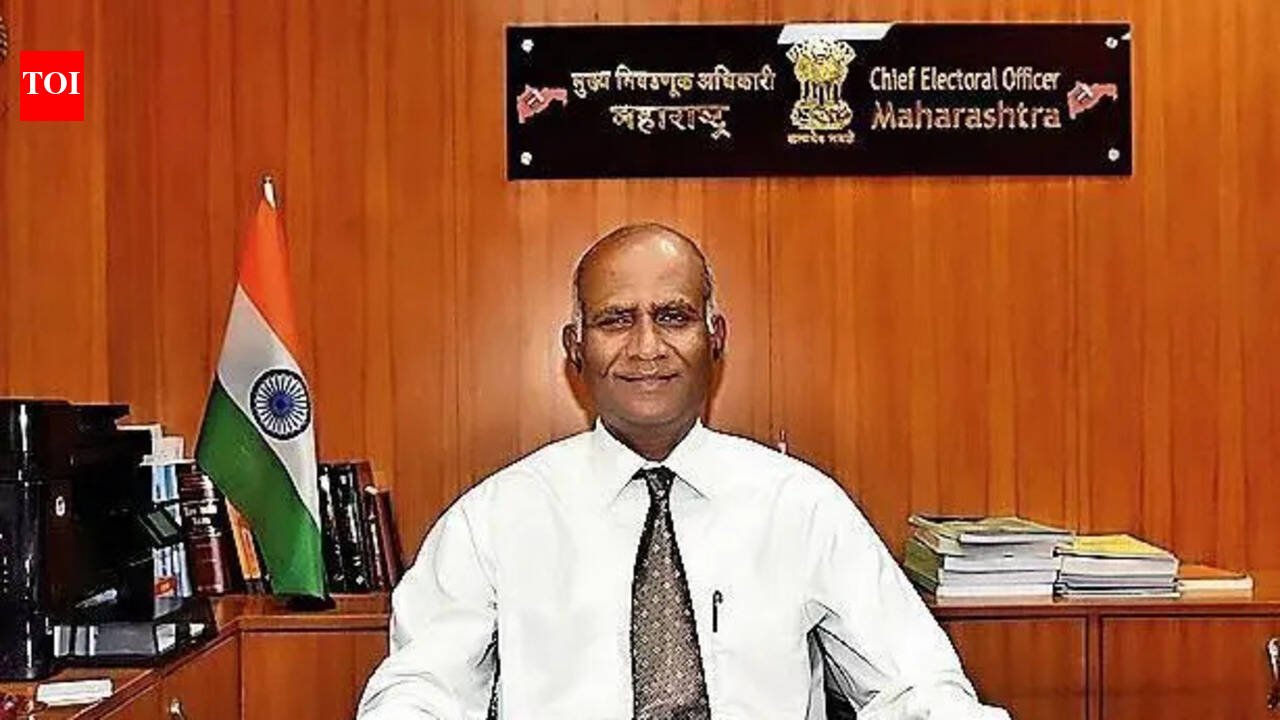
Q. The Special Intensive Revision will start tomorrow. What should voters expect?Chief Electoral Officer S Chockalingam (SC) The field verification is the most important phase of Special Intensive Revision (SIR) because the tentative mapping we carried out so far will be physically confirmed. The guiding principle of the exercise is that no eligible voter should be left out. We have completed around 76% of voters using the previous electoral rolls. It is tentative because similar names may have been wrongly mapped and only a physical verification by the booth-level officer (BLO) and by the elector can confirm whether the mapping is correct. If the mapping is correct, the elector will provide basic details and sign the form, which confirms the mapping. Until then, our mapping is not final. If it is wrong or unmapped, the elector can give correct details for the mapping and sign.Q There is widespread concern that genuine voters could be deletedSC The exercise will ensure the opposite. The law empowers the Electoral Registration Officer (ERO) to determine eligibility after the prescribed legal process. Every voter can establish their eligibility before a decision. If a person’s name is available in the electoral rolls of the previous SIR, that itself is an important reference. Even if the person’s name cannot be traced, those of the parents in previous SIR electoral rolls are important links. We have carried out mapping using historical electoral records. But, this mapping is tentative and is valid only after physical verification and the elector’s signature.Q How important is field verification in urban areas?SC Urban areas are a much bigger challenge. People have shifted houses, changed constituencies and sometimes moved to different districts or states over the last two decades. Therefore, while the overall mapping is around 76%, in urban areas it is below 60%. BLOs can ask voters where they were enrolled in the previous SIR. Even if they do not remember the polling station, many remember the assembly constituency or the MLA they voted for. The Election Commission’s online search facility available on the ECI website (‘Search Your Name in the Last SIR’ button in https://voters.eci.gov.in) enables citizens to search previous electoral details across the country. The part number or polling details help locate the earlier record. Our public advertisements request citizens, particularly urban voters, to keep these details ready before the BLO visits.Q What are the three parts of the form?SC Every elector whose name appears in the electoral roll as on June 18, 2026 will receive a form pre-filled with the voter’s details. If the photograph needs updating, the BLO will take a new one using a cellphone. This is not necessary unless the existing image is blurred. The form has three parts. The first part is pre-filled with the voter’s existing details, including name, EPIC number, address, polling details and photograph, which the elector verifies during the BLO’s visit. The second part seeks details linking the elector or their parents to the last Special Intensive Revision (2002-2004) electoral roll, including the assembly constituency, part and serial number, or the name of a parent or qualifying relative appearing in the earlier roll. The third part contains the elector’s declaration, signature or thumb impression, cellphone number, or that of a close family member and Aadhaar number. If the voter cannot be mapped during the verification, they will still receive the form but will later be issued a notice to submit supporting documents during the claims and objections period before the Electoral Registration Office.Q What documents will voters need to produce?SC The SIR instructions list 11 documents (Aadhaar is 12th document but only as an identity proof), but this is only an indicative list and not an exhaustive one. Equivalent documents can also be accepted. For example, if someone does not possess a matriculation certificate, a transfer certificate or another equivalent educational document can be produced. ERO will verify these documents with the govt departments wherever necessary. All 11 documents need not be submitted, only one is required.Q Some critics say this exercise is about deleting votersSC No. People should understand the difference between a summary revision and an intensive revision. In the former, the existing electoral roll remains the base document and additions or deletions are made. In the latter, a new electoral roll is prepared. Naturally, this removes “deadwood” accumulated over the years—people who have died, permanently shifted, have duplicate registrations or cannot be traced. This should not be viewed as a deletion but as a cleaning up of the electoral roll. Whoever is available, provides the basic information and signs the form will be included in the draft rolls. Final rolls would include properly mapped electors. Electors who are unmapped or mapped with anomalies will be included in the final rolls on submission of documents. Eligible voters will remain in the electoral roll while non-genuine or obsolete entries will naturally get excluded after due process.


