



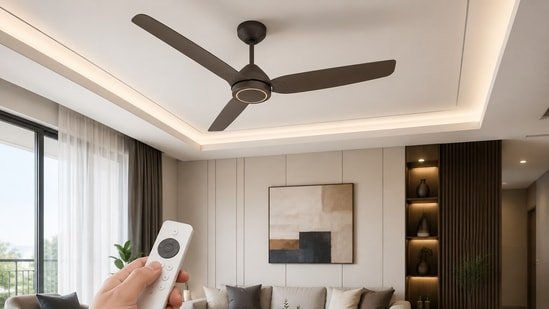
For most Indian households, ceiling fans run far longer than air conditioners. Bedrooms, living rooms, and home offices often keep fans running for 12 to 16 hours a day, especially during peak summer months. While each fan may seem inexpensive to operate, the electricity consumption adds up over time.
This is where BLDC (Brushless Direct Current) ceiling fans have started gaining attention. Unlike conventional induction-motor fans that typically consume 75W to 80W of power, most BLDC fans operate between 25W and 35W while delivering comparable airflow.
But does replacing a perfectly functional ceiling fan make financial sense? And how long does it take to recover the higher upfront cost through electricity savings?
After researching fan technologies, energy consumption figures, and real-world usage patterns, here’s what buyers should know before making the switch.
Why are so many households switching to BLDC fans?
The biggest reason is simple: electricity savings.
Traditional ceiling fans have remained largely unchanged for decades. They use induction motors that consume significantly more power than modern BLDC motors.
A BLDC fan uses electronic controls to regulate motor speed more efficiently, reducing energy loss and heat generation. As a result, most models consume 50% to 65% less electricity than conventional ceiling fans.
The technology also brings practical advantages such as remote controls, timer functions, boost modes, sleep settings, and better compatibility with home inverters.
For homeowners looking to reduce monthly electricity bills without sacrificing comfort, BLDC fans have become one of the easiest appliance upgrades available today.
BLDC fan vs regular fan: Key differences
| Feature | Traditional Ceiling Fan | BLDC Ceiling Fan |
|---|---|---|
| Typical Power Consumption | 75W–80W | 25W–35W |
| Energy Savings | Standard power usage | Up to 65% lower electricity consumption |
| Motor Noise | Slight humming possible, especially at lower speeds | Quieter operation with minimal motor noise |
| Heat Generation | Higher heat generation during operation | Lower heat generation due to efficient motor design |
| Remote Control | Usually unavailable | Common on most modern models |
| Inverter Backup | Standard backup duration | Up to 2x longer runtime during power cuts |
| Purchase Price | Lower upfront cost | Higher upfront cost but lower running expenses |
How much electricity can a BLDC fan actually save?
The biggest question for most buyers is whether the savings are significant enough to justify the higher purchase price.
Let’s consider a practical example.
Assume a ceiling fan operates for around 16 hours every day during the summer and electricity costs approximately ₹6.5 per unit. A conventional ceiling fan consuming around 75W to 80W can use close to one unit of electricity daily.
A comparable BLDC fan consuming around 30W typically uses only about 0.4 units per day.
| Fan Type | Approx. Daily Consumption | Estimated Annual Cost |
|---|---|---|
| Standard Ceiling Fan | ~1 unit/day | ~ ₹2,900 |
| BLDC Ceiling Fan | ~0.4 unit/day | ~ ₹1,200 |
That translates into annual savings of approximately ₹1,700 per fan.
For households running three or four ceiling fans throughout the day, the savings can quickly add up to several thousand rupees every year.
When does a BLDC fan recover its cost?
A standard ceiling fan typically costs between ₹1,500 and ₹2,000 while a good-quality BLDC fan generally costs between ₹3,000 and ₹4,000.
That means buyers usually pay an additional ₹1,500 to ₹2,000 upfront for the energy-efficient model. Based on annual savings of around ₹1,700 per fan, many households can recover the additional investment within 12 to 18 months, depending on usage patterns and local electricity tariffs.
After that period, the reduced power consumption effectively turns into ongoing savings.
Best BLDC fans to consider buying in 2026
The Orient Zeno BLDC is designed for buyers who want to reduce electricity bills without compromising on airflow. Its BLDC motor consumes significantly less power than conventional fans while delivering a strong 220 CMM air delivery. The included remote control adds convenience with timer and boost functions, making it suitable for bedrooms, living rooms, and home offices.
With stable operation during voltage fluctuations and longer inverter backup, it is a practical option for everyday use.
Reasons to buy
Excellent energy savings with BLDC technology
Remote control with timer and boost mode
Reason to avoid
Air delivery could be higher than some premium BLDC rivals
Remote-dependent operation may not appeal to everyone
Who should buy this BLDC fan?
Homeowners looking to lower electricity bills while enjoying remote convenience, reliable airflow, and longer inverter backup during outages.
2. Havells FAB BLDC LED Ceiling Fan 1200mm, 5 star, LED Speed Indicator, 380 RPM, Up to 65% Savings,Reverse Rotation,4 Speed Modes,Low Wattage 30W,Low Noise,Air Flow:225 CMM, 3 Year Warranty,Cocoa Brown
Our Principles
Full Transparency
Every product review clearly lists the Pros and Cons, giving you a balanced view.
Brand Confidence
We focus on products from brands with a proven reputation and long-standing market trust.
The Havells FAB BLDC ULED is a feature-rich ceiling fan designed for buyers who want maximum energy savings and modern convenience. Its BLDC motor consumes only 30W while delivering strong airflow at 380 RPM.
Features such as an LED speed indicator, reverse rotation mode, remote control, and low-noise operation make it a practical choice for bedrooms, living rooms, and home offices where comfort and efficiency matter equally.
Reasons to buy
Excellent energy efficiency with up to 65% savings
Reverse rotation feature and LED speed display add convenience
Reason to avoid
Higher price than many entry-level BLDC fans
Only four speed modes compared to some competitors offering more controls
Who should buy this BLDC fan?
Buyers seeking premium features, low electricity consumption, quiet operation, and remote-controlled convenience for everyday use in frequently occupied rooms.
The Atomberg Renesa Enzel is one of the most popular BLDC ceiling fans in India, offering an excellent balance of energy savings, airflow, and modern design. It consumes just 35W at full speed while delivering a powerful 235 CMM air delivery, making it suitable for bedrooms, living rooms, and home offices.
Features like a smart remote, sleep mode, timer, low-noise operation, and LED speed indicator add convenience, while voltage and surge protection help ensure reliable performance.
Specifications
Noise Level
Less than 58 dB
Reasons to buy
Excellent airflow with low power consumption
Smart remote with timer and sleep mode
Reason to avoid
IR remote requires line-of-sight operation
Premium design variants can cost more than basic BLDC fans
Who should buy this BLDC fan?
Homeowners wanting strong airflow, low electricity bills, quiet operation, and smart features at a reasonable price point.
The Orient Aeon BLDC PRO is designed for buyers who want both performance and aesthetics. It features a premium curved-blade design, anti-dust coating, and a smart remote for convenient operation.
The Boost Mode quickly increases fan speed for instant cooling, while the BLDC PRO motor helps reduce electricity consumption by up to 50%. A 5-year warranty adds long-term peace of mind.
Reasons to buy
Attractive premium design with anti-dust coating
Long 5-year warranty coverage
Reason to avoid
Higher price than basic BLDC models
Boost mode may increase noise at maximum speed
Who should buy this BLDC fan?
Homeowners seeking a stylish ceiling fan with energy savings, strong airflow, remote convenience, and long warranty support.
The Havells Stealth Air BLDC is aimed at buyers looking for a premium ceiling fan that combines energy efficiency with silent operation. Its aerodynamic blade design delivers strong airflow while keeping noise levels low, making it particularly suitable for bedrooms and home offices.
The BLDC motor helps reduce electricity consumption by up to 55%, while features like RF remote control, timer settings, memory backup, and in-built voltage stabilisation enhance everyday convenience.
Specifications
Motor Type
BLDC with 100% Copper Motor
Controls
RF Remote with Timer & Memory Backup
Reasons to buy
Extremely quiet operation with aerodynamic blade design
Premium features including memory backup and voltage stabilization
Reason to avoid
Significantly more expensive than standard BLDC fans
Air delivery figures are not specified by the brand
Who should buy this BLDC fan?
Homeowners seeking a premium, silent ceiling fan with advanced remote features, reliable performance, and long-term electricity savings.
Top 3 features of the best BLDC fans on Amazon
| BLDC Fans | Sweep Size | Air Delivery | Energy Rating |
|---|---|---|---|
| Orient Electric Zeno BLDC | 1200 mm | 220 CMM | BEE 5-Star |
| Havells FAB BLDC ULED | 1200 mm | 225 CMM | BEE 5-Star |
| Havells Stealth Air BLDC | 1200 mm | Not Specified | BEE 5-Star |
| Atomberg Renesa Enzel BLDC | 1200 mm | 235 CMM | BEE 5-Star |
| Orient Electric Aeon BLDC PRO | 1200 mm | 225 CMM | BEE 5-Star |
Are BLDC fans powerful enough for Indian summers?
Many buyers assume that lower wattage automatically means weaker airflow.
Fortunately, that’s not how modern BLDC fans work.
Most reputable BLDC models are designed to deliver airflow levels comparable to traditional ceiling fans while consuming far less electricity. Several premium models also maintain stable performance during voltage fluctuations, making them suitable for areas where power quality is inconsistent.
The key is choosing the right sweep size and air delivery rating for your room rather than focusing only on wattage.
When does upgrading to a BLDC fan not make sense?
Not every ceiling fan needs to be replaced immediately.
If you have a fan installed in a guest room, storage room, or other low-usage space, the potential savings may take several years to recover the upgrade cost.
In such cases, it often makes more financial sense to continue using the existing fan until replacement becomes necessary.
The biggest benefits come from upgrading fans installed in bedrooms, living rooms, and home offices where they operate for long hours every day.
Factors to consider before buying a BLDC fan
Before purchasing a BLDC fan, keep these points in mind:
Check the rated power consumption.
Compare air delivery and RPM figures.
Look for remote control and timer functions.
Verify motor and electronics warranty coverage.
Choose the correct sweep size for your room dimensions.
Consider inverter compatibility if power cuts are common in your area.
Should you replace your old ceiling fan with a BLDC fan?
If your ceiling fan runs for several hours every day, upgrading to a BLDC model is one of the most practical energy-efficiency improvements you can make at home.
The technology can reduce fan-related electricity consumption by up to 65%, lower annual operating costs, extend inverter backup, and add modern convenience features such as remote controls and timer settings.
However, there is no need to replace every fan in your home overnight. Focus first on high-usage rooms where the savings will be most noticeable.
For most households, the BLDC transition is less about chasing the latest technology and more about making a smart long-term investment that pays for itself through lower electricity bills.
Similar stories for you
Stop overpaying for cooling: 7 BLDC fans that could slash your summer electric bill
Tired of high summer electric bills? 5 energy efficient ceiling fans that cut power costs by 65%
The Research
I’ve used and tested hundreds of fans, which includes traditional ceiling fans, BLDC ceiling fans and wall fans. I’ve also been writing about consumer electronic devices and home appliances for over a decade.
To compile this guide, I’ve used hundreds of BLDC fans across price segments and brands in India and combed through Reddit pages that talk about their cooling features and features that make them energy efficient. Like all HT journalists, I review products with complete editorial independence and recommend products based on my learnings.
Disclaimer: At Hindustan Times, we help you stay up-to-date with the latest trends and products. Hindustan Times has an affiliate partnership, so we may get a part of the revenue when you make a purchase. We shall not be liable for any claim under applicable laws, including but not limited to the Consumer Protection Act, 2019, with respect to the products. The products listed in this article are in no particular order of priority.


