



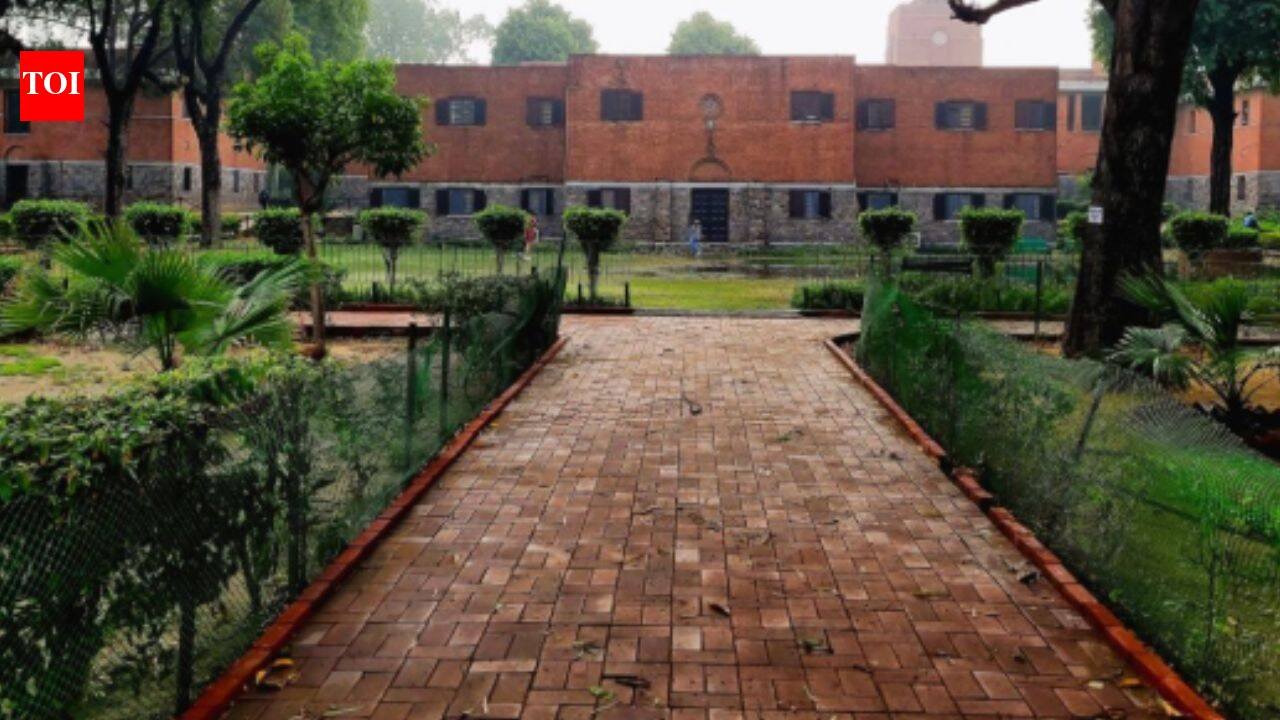
NEW DELHI: A protest over a pair of shorts at one of Delhi University’s most elite colleges has sparked a wider debate on how much control educational institutions should have over adult students, and where personal freedom starts.St Stephen’s College has started its new academic session with some students deliberately turning up in shorts after the college banned them from classrooms, the assembly hall, library, dining hall and chapel. Principal Susan Elias’s notice has sparked accusations of “moral policing”.
But the bigger question that campuses across India face beyond the immediate controversy is whether colleges should be in the business of controlling how adults dress, or whether it should be left to the individual’s choice.The ban itself was not completely new. St Stephen’s had long discouraged the wearing of shorts in formal spaces. What was new this year was that an unwritten convention was made an official rule. That is a significant difference. Customs allow latitude. Rules demand enforcement, and require justification.It’s funny how the college handbook only says students have to be “decently dressed” and not what clothing is not allowed. Faculty members say they have rarely seen students disciplined for wearing shorts. The notification seems less about fixing a problem, and more about drawing the lines of where institutions stand.Backers say that every institution has the right to protect its culture. St Stephen’s has developed its reputation on discipline, academic excellence and a unique campus ethos. Colleges may also require a certain decorum in classrooms, libraries and chapels, as courts require robes and many workplaces require formal dress.But the critics don’t see it that way. Universities are not schools and their students are adults with the right to make their own choices. They wonder why regulate it, if it does not interfere with classes or learning. The ban seems more symbolic than functional as there is no evidence to link shorts with indiscipline.Students say the protest isn’t really about shorts, it’s about choice. It is said that athletes coming back from practice in days gone by have had trouble getting into the dining hall dressed in official sports kit. Some say faculty members have privately suggested the rule may not be strictly enforced. These inconsistencies raise the question of why an advisory practice would need to be made a formal directive.The row at St Stephen’s is indicative of a wider trend. Universities in India have seen disputes over hijabs, ripped jeans, tattoos, hairstyles and other aspects of personal appearance. The debate is unlikely to remain confined to St Stephen’s. The latest All India Survey on Higher Education (AISHE) 2023-24 report shows India’s higher education system has grown to 4.50 crore students spread across 1,278 universities and 46,468 colleges. As campuses become larger and more diverse, institutions are increasingly being challenged to balance long-standing traditions with students’ expectations of personal autonomy.St Stephen’s College, is a Christian minority institution affiliated with Delhi University, and enjoys a significant degree of autonomy in its administration and governance. The college has, in the past, faced criticism over some of its policies, including making attendance at the morning assembly compulsory and debarring students with attendance shortages from appearing for examinations, and summoning their parents.Ultimately, the controversy is about where to draw the line for colleges. Institutions have the right to demand reasonable standards of conduct and decorum. But they are also supposed to think for themselves, not just be the ones who manage one’s personal choices.The debate at St Stephen’s is about much more than shorts. It is a test of how Indian campuses balance institutional identity with personal liberty — a question that will probably become more and more relevant as higher education develops.


