






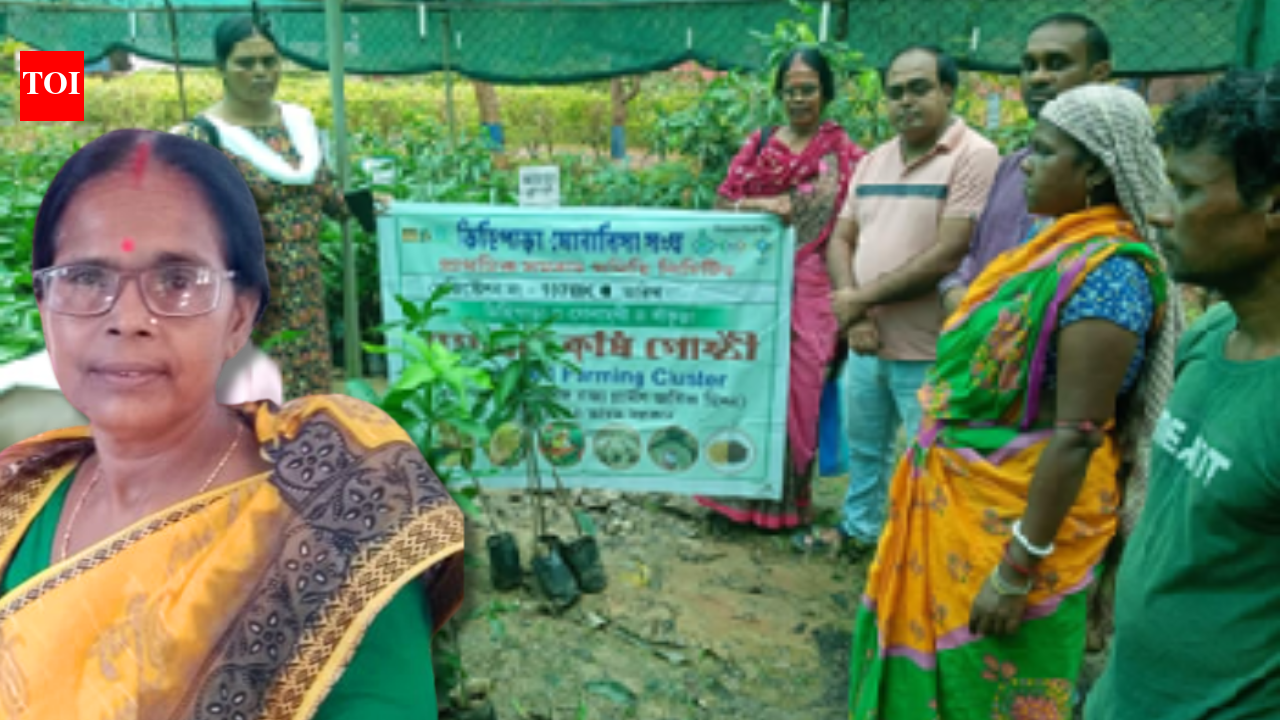
Chhabita Pramanik once worked as a labourer on other people’s farms in Bankura, West Bengal. Today, she cultivates her own land, earns a monthly net income of around ₹15,000 from agriculture and related activities, and leads a network of 347 self-help groups (SHGs) supporting nearly 500 rural families. Her work has helped bring together almost 3,500 women through farming, food processing and collective businesses.According to the Indian Council of Agricultural Research (ICAR), Pramanik’s journey began with just two acres of land. She gradually developed her farm by adopting scientific farming methods and resource-saving practices. Her association with Krishi Vigyan Kendra (KVK), Bankura, under the West Bengal Comprehensive Area Development Corporation (WBCADC), helped her gain technical knowledge and learn how to turn agricultural work into a more sustainable source of income. But her work soon extended beyond her own farm. Pramanik began organising women in her village, helping them work together and explore ways to earn independently.
Started a group with just 10 women
Pramanik began her leadership journey by forming Rangamatichar Vachati Swanirvar Dal, a self-help group with only 10 women members. According to ICAR, the initiative later developed into Dihipara Monalisa Sangha, which initially connected around 500 women and eventually grew into a collective involving nearly 3,500 women across the district. As reported by Anandabazar Patrika, she faced resistance when she began organising women around 25 years ago. Some influential local people objected to women working outside their homes and taking loans. The report says Pramanik was socially isolated, and people sometimes shut their doors when she approached them.She wanted women to move away from borrowing from moneylenders who charged interest of 5% per month, according to the report. She explained the value of working together, saying, “I had explained to them that if women worked together, we could get out of that cycle.” Her efforts gradually changed attitudes in the village. The women who were once discouraged from stepping outside their homes are now involved in farming and group enterprises, with some men also helping them with their work.
How scientific farming changed the work
Photo credit: ICAR
Pramanik and members of her self-help group approached KVK Bankura for technical support and demonstrations. With guidance from KVK scientists, they introduced resource-conserving methods for paddy cultivation in the locality. According to ICAR, these methods improved productivity and helped farmers use resources more efficiently than conventional practices. She also received training in oilseed farming, integrated nutrient management and groundnut oil processing. The women’s collective learnt vermicompost production, mushroom cultivation, growing vegetables outside the usual season under shade-net structures, and processing agricultural produce into higher-value products.Under the Rashtriya Krishi Vikas Yojana (RKVY), KVK Bankura helped establish a mushroom spawn production unit, a shade-net facility and an electric ‘dheki’ for processing brown rice. These facilities gave the women opportunities to earn from processing and value addition rather than depending only on the sale of raw crops. According to ICAR, brown rice produced by Pramanik and her collective is now sold through a retail outlet run by the West Bengal government. The group has also been involved in awareness campaigns promoting the balanced use of fertilisers.
From growing crops to building group businesses
Photo credit: ICAR
The women associated with Pramanik’s network grow paddy, vegetables, groundnuts, potatoes, turmeric, mustard and other crops. Some of their processed products, including rice and spices, are marketed through organisations that help connect them with buyers. Their markets have expanded beyond Bankura to Durgapur and surrounding areas, with products also reaching customers outside the region.Pramanik continues to work on the farm herself. As reported by Anandbazar Patrika, she still harvests paddy, plants vegetables and processes rice while also managing the accounts of the women’s collective. She has learnt basic computer skills and can maintain records and enter names on a computer. In an interview with Anandabazar Patrika, she described the collective effort behind the work: “This life is not mine alone. It is ours.”The group’s work has also reached beyond farming. Women from the collective gradually took charge of organising the village’s Durga Puja celebrations, including managing the committee and meeting expenses. It has become another example of women taking on responsibilities in community life.
Supports 500 families as a community resource person
Pramanik currently serves as a Senior Community Resource Person (CRP), a role through which she supports nearly 500 rural families. ICAR says she leads 347 self-help groups across Bankura district, helping women adopt sustainable farming methods and take part in collective enterprises. Her work has received recognition from government and agricultural institutions. According to ICAR, she was recently felicitated by the Governor of West Bengal for her contribution to rural development.From working on other people’s farms to cultivating her own land and helping thousands of women work together, Pramanik’s journey has been shaped by farming knowledge and collective organisation. Her work now involves not only growing crops, but also helping women find ways to process, sell and earn from what they produce.


