



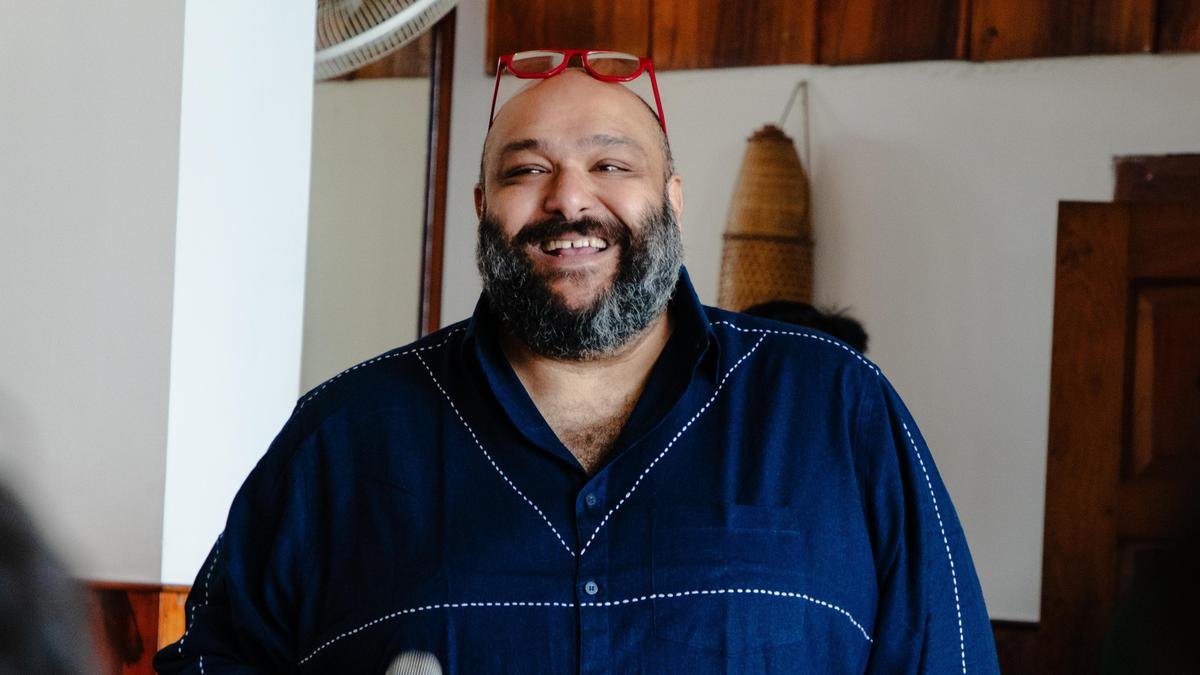
It began as a casual conversation between three good friends ― Sid Mewara, Mayur Sharma and Priyadarshini Raje Scindia ― back in early 2023 or so.
During that chat, they toyed with ways to create a more collaborative ecosystem within the F&B community, which is “very fragmented, back-stabby…this territorial place,” says Sid. It was Priyadarshini, recalls the chef-turned-venture capitalist and co-host of the popular food entertainment show, The Big Forkers, who pushed for the idea to go beyond mere conversation. “She said we should stop faffing and actually get something (done) together,” he says, adding that this led to them meeting again at the Jai Vilas Palace in Gwalior, Priyadarshini’s home, to ideate. “It all came together there,” he says.
Seeti sought to bring together people from the culinary and culinary-adjacent ecosystem to participate in larger, often provocative conversations about the food industry
| Photo Credit:
Special Arrangement
This was the starting point for the Seeti Movement, whose Instagram page describes it as “a modern-day catalyst for India’s food and hospitality industry, bridging gaps across diverse sectors.”
The initiative, which just completed its second edition in Shillong, Meghalaya, was a way to bring together people from the culinary and culinary-adjacent ecosystem to participate in larger, often provocative conversations about the food industry. The name Seeti, referring to the whistle of a pressure cooker when enough steam builds up, reflected this aim in two ways, says Sid. “One is a call to action: when you are blowing a whistle, you are calling people.” The other part of Seeti, according to him, is about creating a pressure cooker-like situation. “When you put everyone in the room together, things come out.”
Sid Mewara and Priyadarshini Raje Scindia
| Photo Credit:
Special Arrangement
The first edition of Seeti, which they funded themselves was held at the Gwalior Palace in October 2023, and it had several tangible outcomes, Sid believes. For instance, there were people with a background in law and contract work attending the Seeti event who ended up being connected to first-time food entrepreneurs with “a lot of passion, but sometimes not a lot of physical discipline. I, as a banker, and several others could help them with that,” says Sid, who wants the movement to be “a catalyst to talk and understand. We just ask people to be generous with their time… open themselves up to conversations and ideas, and maybe perhaps help someone else,” he says.
Participants enjoy a Garo meal
| Photo Credit:
Special arrangement
The success of the Gwalior event emboldened them to embark on another edition of Seeti, this time in Shillong, Meghalaya.
“From the day we started The Big Forkers in 2020, I’ve been obsessing about coming to the Northeast,” he says. They would spend nearly a year researching Shillong, “for our own episodes so that became a conversation and knowledge piece. We understood Meghalya better after extensive research and conversations with chefs. And then, Priya, at the same time, was doing something similar with textiles,” he says. This, in turn, led to conversations with Dr Vijay Kumar D, IAS, Chairman and Managing Director of Meghalayan Age Limited, and later with Conrad Sangma, the Chief Minister of Meghalaya. “They asked us to do Seeti here and that they would support us.”
A dance performance at Seeti
| Photo Credit:
Special Arrangement
Once Meghalaya Tourism, the primary funder of Seeti 2.0, came on board, preparations for the event went ahead full steam. The five-day-long event kicked off on March 26 with a charming dinner at Rynsan, Shillong, before segueing into a series of highly curated activities and events that offered participants a glimpse of Meghalaya’s cuisine, landscape, culture, and communities: Khasi, Jaintia, and Garo meals enjoyed in stunning open-air settings, plenty of local alcohol, guided tours of a local market, a tea estate, a sacred grove and food stalls, an evening of rock music, and glimpses of local weaves, pottery, dance, and music.
The curation also included panel discussions on the broader culinary landscape in India, such as scrutiny of the fine-dining culture, and whether it is justified, and the uneasy relationship between content creators and restaurant owners.
In a press release, Conrad Sangma stated that he sees Seeti as a way to celebrate Meghalaya and provide a platform for the State’s youth to lead, innovate, and share their story with the world. “It is a reflection of who we are and a step towards a future shaped by our young people.”
For Priyadarshini, this second edition of the movement is an attempt to explore how they could work in the Northeast and introduce it to Seeti’s storytellers. “We wanted to understand what we could give to Meghalaya, and what we could introduce to the rest of the world as well,” she says, a perspective that Sid echoes.
A dish served at the Khasi meal
| Photo Credit:
Special Arrangement
He hopes that Seeti 2.0 will also help mainstream conversations about Meghalya, going beyond what he refers to as “stereotypical tribal tourism that adds to the economy, but detracts from the culture”.
In Sid’s opinion, people often have no idea what Meghalaya is. He says, “This is a football capital… Shillong is a rock-and-roll city… the food is fantastic. We want to start that conversation. The hope is that they go home and talk about it, share stories of what happened here, and that’s good enough for me.”
The writer was in Shillong on the invitation of the Seeti Movement
Published – April 10, 2026 05:32 pm IST


