






Ordinarily, cancers are not regarded as contagious — whereas AIDS, COVID-19, tuberculosis, and malaria are. Contagious diseases spread from one person to another through direct contact, airborne droplets or through insect vectors (like mosquitoes). On the other hand, cancers originate from one of the patient’s own cells.
However, so far, scientists have documented three instances in which naturally occurring cancers in animals became contagious. That is, the cancer cells originated in one individual, then moved into another, formed tumours in its new host, and then moved on in search of still other hosts.
In 2006, scientists who reported a transmissible venereal tumour that spreads between dogs wrote that “the concept of a contagious cancer cell has tended to be greeted with scepticism by many oncologists and immunologists”.
Interest among scientists
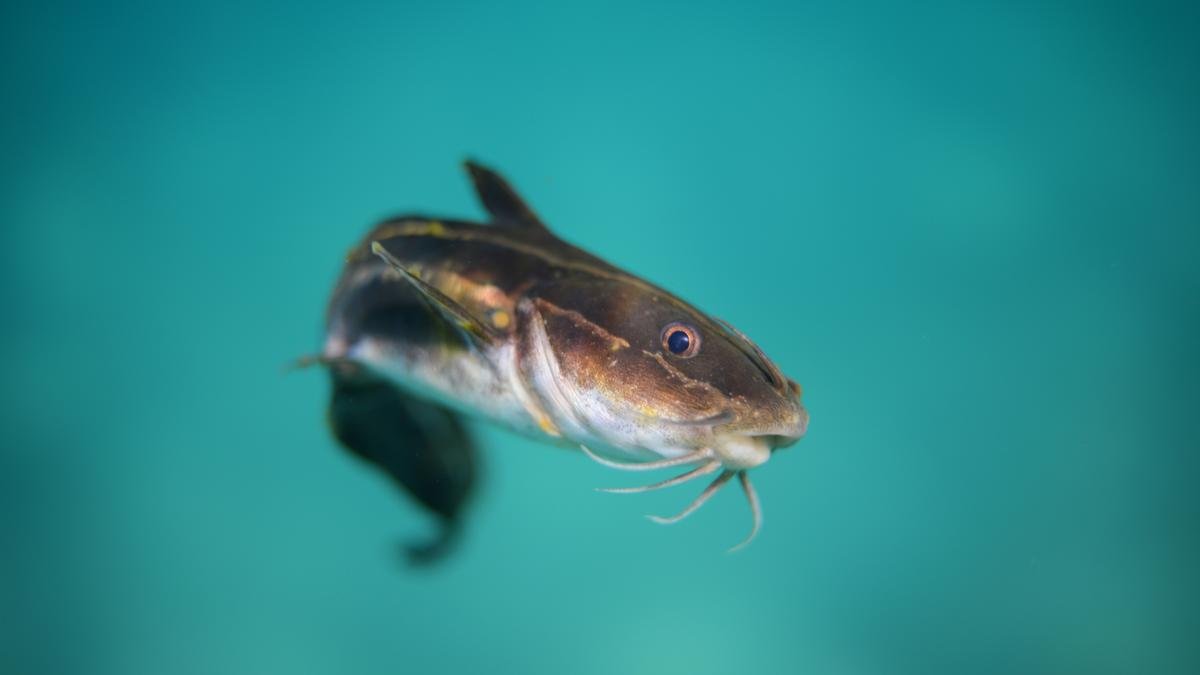
But recently, researchers from the University of Vermont in the U.S. reported the fourth instance. They studied melanoma in the brown bullhead catfish (Ameiurus nebulosus), a resident of Lake Memphremagog, a 51-km-long lake straddling the border between Quebec in Canada and Vermont in the U.S.
Melanomas are aggressive cancers that originate from skin cells called melanocytes. Melanocytes make the pigment melanin, which gives skin its colour. About 30% of catfish collected from across the lake since 2013 were found to be afflicted with melanoma.
The team’s findings were published in Nature.
Scientists are also interested because the work could reveal clues to keeping a person’s body from rejecting a transplanted organ. This is because the affected catfish’s immune system does not reject the cancer cells despite the latter being obviously non-self.
Mitochondrial DNA
The genome of cancer cells is often unstable. The DNA accumulates many changes in its sequence, allowing cells to grow aggressively and evade the body’s immune surveillance.
The Vermont researchers compared the genomes of the melanomas in the catfish with that of the normal cells from individual affected fish. They were surprised to find evidence that the melanomas had originated in a distantly related fish and then had invaded, parasitised, and formed tumours in new hosts.
The researchers compared the mitochondrial DNA (mtDNA) from melanomas with the mtDNA from non-cancerous cells. Mitochondria, the cells’ powerhouses, are the descendants of a bacterium that an ancient single-celled organism engulfed, and evolved over billions of years to give rise to animal and plant life.
Over these aeons, many of the bacterium’s genes were transferred to the host cell’s nucleus, leaving behind only a small rump of mtDNA. In humans, the mtDNA content is five-million-times smaller than the DNA in the cell’s nucleus.
Tumour cells
The researchers found that the mtDNA in the cancer cells contained almost an order of magnitude more changes compared to the mtDNA in normal cells — a difference that natural variations can’t explain. More analysis of the mutations indicated that the affected catfish had acquired their cancer cells from ‘outside’, which then formed tumours in their new host.
The team also found that the cancer cells had originated from beyond Lake Memphremagog.
Reproduction likely played a role in infection. During spawning, the fish come together in relatively small areas, and physical interactions amongst them could have given cancer cells the chance to move between individuals.
An alternative explanation for the high frequency of melanomas is a cancer-causing virus or microbe. The researchers screened all the tumour and normal tissues for viruses and other microbial agents but did not find any unique to affected fish.
Based on this they wrote: “although we cannot rule out a role for conventional pathogens in the original emergence or ecological transmission of this disease, the genomic evidence presented here overwhelmingly supports a transmissible cancer in which the tumour cells themselves act as the infectious entity”.
A view of Lake Memphremagog.
| Photo Credit:
Ascended Dreamer (CC BY)
Other examples
Of the three previously documented instances of transmissible cancer, the one in dogs involved sex. In the 2006 paper, scientists found that the DNA from cancer cells of 40 affected dogs from across the world had mostly the same sequences, suggesting that the ‘infection’ had originated in one dog around 11,000 years ago.
The oral-facial cancer in Tasmanian devils, an endangered Australian marsupial, obstructed the animal’s ability to feed, thus leading to these animals’ population in the wild crashing by 90% and threatening to render them extinct. In all the affected Tasmanian devils, the tumour cells contained the same complex rearrangement of chromosomes, once again indicating a common origin, from a single cell, which then multiplied and spread across individuals, probably as they bit one another.
Scientists have also found transmissible cancers in several bivalve molluscs, including clams, mussels, and cockles. Their cancer cells were probably transmitted passively from one individual to another via the seawater. In one clam species, scientists found the cancer had originated in a different species and then had jumped to this one, which is more unusual.
In fact, the authors of the latest study have speculated that the catfish cancer cells, like those of the bivalves, might be transmitted indirectly through the aquatic environment, and have become grafted to a host through its gills, skin or mouth.
‘Cooperation breakdown’
While the discovery of this fourth instance of a cancer that can move between bodies is not surprising, it also extends an unconventional understanding of the ‘disease’. In a complex biological organism, billions of cells cooperate to keep the organism alive and kicking.
Cancer arises when some cells refuse to cooperate, and proliferate at the expense of other cells. A transmissible cancer, however, implies that the cells break the rules in their original body as well as can exploit entirely different organisms.
In a 2015 paper, scientists wrote that the possibility lends weight to the idea that cancer is not just the product of specific mutations but “a breakdown of multicellular cooperation”.
D.P. Kasbekar is a retired scientist.
Published – October 21, 2026 09:00 am IST


