



Climate scientists have released a new set of global emission scenarios that will serve as the basis for climate research over the coming years, including the forthcoming seventh UN Intergovernmental Panel on Climate Change (IPCC) assessment report. And the worst-case scenario that put the world on track to experience warming well above 4° C by the end of the century has been officially retired after 15 years.
Called RCP8.5, the high-emission scenario was deemed implausible in the latest revision due to the rapid expansion of renewable energy and countries implementing climate policies. Scientists say climate action eliminating the ‘doomsday scenario’ is encouraging because that means the extreme consequences associated with 4° to 5° C of warming can now be avoided.
However, they warned, the planet is still on track to experience drastic climate change under current policies. More worrying: the scenarios adhering to the Paris Agreement’s goals are no longer possible without overshoot.
‘Rapid transition to renewable energy’
After months of experiments and collaboration across dozens of research centres worldwide, a team of earth system modelling experts published published seven new emissions scenarios in April. In this set, the new highest emission scenario projects an overall warming of around 3.5° C by 2100, down from the earlier 5° or so of projected warming associated with RCP8.5.
“Scenarios are not predictions; they are ways to start understanding the future,” Detlef van Vuuren, a climate scientist at the PBL Netherlands Environmental Assessment Agency, who has led emissions scenario development for many years, including the latest CMIP7 scenarios, said.
“If you look at the scenarios that were made in 2010, we had this high emission scenario [RCP8.5], which was not implausible at that time, as that could have been a pathway that we would have followed.”
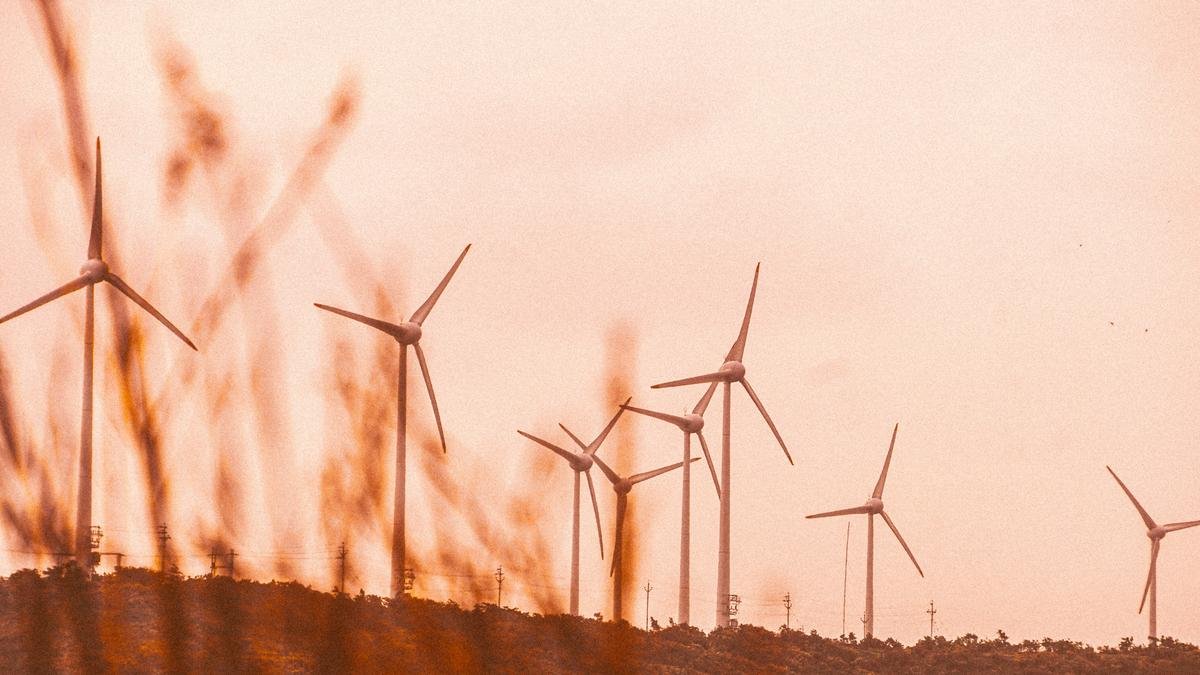
The elimination of RCP8.5 “is mainly because of the rapid transition to renewable energy in several countries around the globe, particularly China, which is number one in terms of carbon emissions today,” Govindaswamy Bala, professor at the Center for Atmospheric and Oceanic Sciences, Indian Institute of Science, who was also part of the latest scenario development, said. “Emissions have peaked and are declining in the U.S. and Europe, and are plateauing in China.”
‘Dangerous climate change’
At the same time, there remains no plausible path to keep warming below 1.5° C without significant overshoot under the current emissions trajectory. This is worrying for countries like India, already facing extreme climate change effects. Overshoot means temporarily exceeding the 1.5° C of warming threshold before returning to the limit by 2100.
“In a way, we are in a worse situation now than we were in 2010 because we followed this path of increasing greenhouse gas emissions,” Dr. van Vuuren said. “And so, while that original high emissions path has become irrelevant, getting to the low emission levels consistent with preventing dangerous climate change has also become much more difficult to achieve.”
Global emission scenarios are crucial projections based on greenhouse gas emission trends, technological development, and socioeconomic factors. Developed and revised approximately every six to eight years, these scenarios are used by thousands of climate modellers worldwide to simulate a range of climate processes and outcomes, including global temperature rise, changes to rainfall patterns, sea-level rise, glacial and ice-sheet melting, and other environmental processes. These projections inform climate research and major reports, including the IPCC Assessment Reports and international and national assessments.
In 2011, when RCP8.5 emerged as one of the four Representative Concentration Pathways scientists introduced, it took on a life of its own. Its projected consequences dominated the climate messaging landscape. In 2016, scientists upgraded the RCPs to SSPs, or ‘Shared Socioeconomic Pathways’. SSPs integrated factors such as economic growth and population expansion alongside greenhouse gas concentrations.
The high-emission scenario was retained as SSP5-8.5, with a projected warming of 4.4° C by 2100.
Misinterpreting RCP8.5
For scenario developers, RCP8.5 denoted a world in which governments enacted no climate policy. It quickly became known as the “business as usual” scenario in the larger climate modelling community, even though scientists intended it only as an edge case — to model earth systems under unabated fossil fuel expansion and high population growth. But the media and many modellers ran with it for years, projecting drastic consequences by the end of the century, even as criticism of its implausibility grew.
Thousands of studies have used the RCP8.5 scenario to assess future climate change and its consequences, leading to a possibly exaggerated view of future climate risk among policymakers and analysts. Many scientists said the new revision demonstrates the usual process of doing climate research: by constantly integrating new information and eliminating unrealistic scenarios.
“High emission scenarios are useful for scientific ‘proof-of-concept’ studies as the signal-to-noise ratio is high in these scenarios,” Dr. Bala said. “Climate modellers often use several idealised scenarios that produce similar or larger global warming than the RCP8.5 scenarios to gain deeper insights into the workings of the climate system.”
Dangerous climate change
Despite the rare bit of good news, the world has not averted the worst of climate change. A recent study published in Nature reported that even moderate global warming, of 2° C, can have extreme consequences in specific sectors and regions — including severe droughts in breadbasket regions, extreme rainfall over highly populated areas, and fire weather extremes across forests.
Based on the current emissions trajectory, the world is close to the medium pathway in the new CMIP7 illustrative scenarios: with an expected warming of up to 2.8° C by the end of the century.
“The new scenarios can shed light on what to expect but do not radically change the fact that India is highly exposed to extreme events, in all scenarios, because they take us into dangerous 2° C and beyond-2°-C territory,” Chandni Singh, climate adaptation researcher at the Indian Institute for Human Settlements and an IPCC Lead Author, said.
RCP8.5 assumed that the concentration of carbon dioxide in the atmosphere would triple (to 850-900 ppm) as coal use increased four- or five-fold and that the world’s population would swell beyond 10 billion. Both these possibilities have since become unrealistic. Nonetheless, the risk of a high level of warming remains.
“If the climate turns out to be much more sensitive [to CO2 concentration], then we could end up with warming levels associated with RCP8.5,” Dr. van Vuuren said. “Secondly, it is still possible to hit those warming levels if we are on the high emission pathway, but around the year 2150.”
There is already some evidence that we may have underestimated climate sensitivity, as scientists have been baffled by the last three years, when global warming seems to have accelerated. They hope to resolve this uncertainty over the coming years as climate models simulate earth systems in these new scenarios with new data.
Overshoot and adaptation
Under the new emission scenarios, a temperature rise of 1.5° C by 2100 is not possible without overshoot, not even in the best cases. This means the risk of irreversible climate change in some areas, and of crossing critical tipping points, is increasing.
Second, the dependence on carbon removal technologies — which are still quite nascent compared to how mature they need to be to keep warming to safe levels — increases significantly, as a return from overshoot requires large-scale deployment of carbon dioxide removal. (The 2018 mitigation pathways, in accordance with the Paris Agreement, already included substantial carbon removal.)
Read together, it means India cannot rule out extreme consequences of climate change.
“The imperative to adapt for countries like India remains high,” Dr. Singh said. “But this is a necessary but insufficient approach. Instead, more crucially, deep and rapid emissions cuts by developed countries is important, especially if we are to adhere to the Paris Agreement’s CBDR-RC principles.”
Neelima Vallangi is an independent journalist and filmmaker covering climate change in the Himalayan region and South Asia.


