



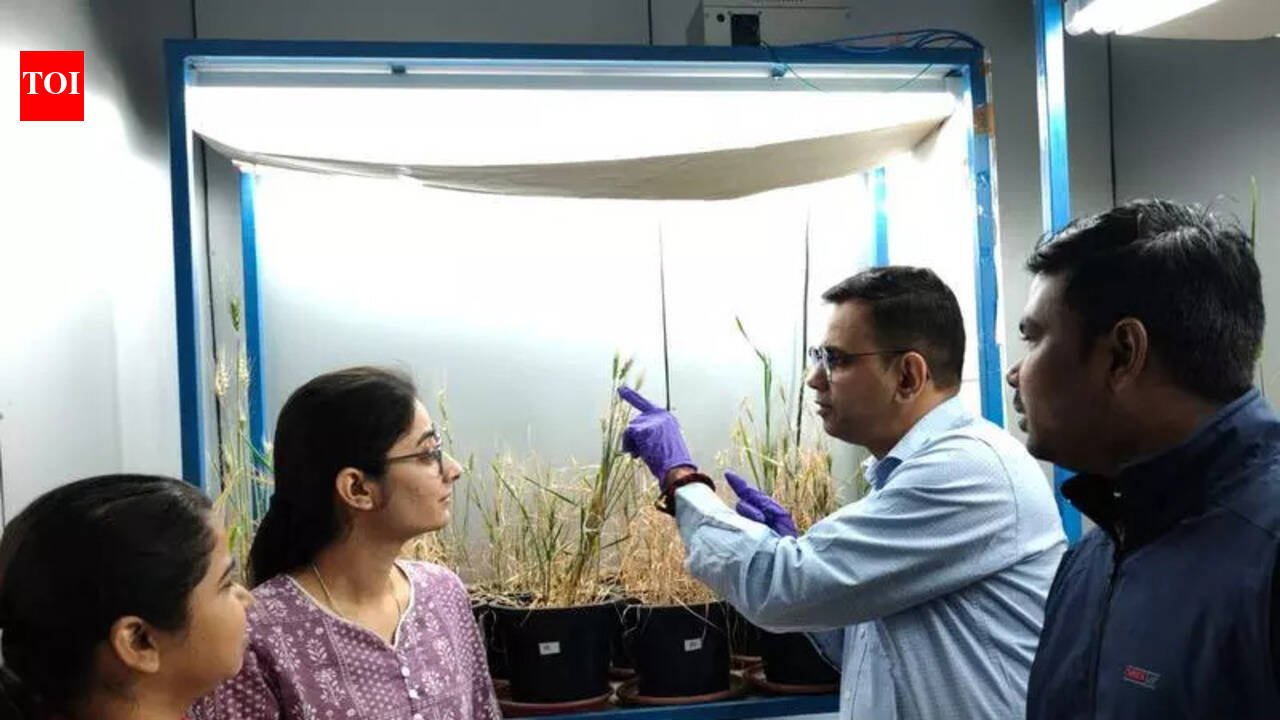
Varanasi: A research team of the Banaras Hindu University and IIT-BHU developed an innovative green nanotechnology-based strategy to enhance disease resistance and productivity in wheat crop.The research by Prashant Singh and his team from the department of Botany, Institute of Science, BHU, in collaboration with scientists from the School of Materials Science and Technology at IIT-BHU, showed that zinc oxide nanoparticles can act as a defence-priming agent in wheat against spot blotch disease caused by the fungal pathogen Bipolaris sorokiniana.Defence priming is a unique strategy in which plants are prepared to respond faster and more effectively to stress without activating costly defence mechanisms under normal conditions.The team, comprising Nidhi Yadav, Bandana Devi, P Thirunarayanan, Sanjeev Kumar, Chandan Upadhyay, and Prashant Singh, investigated how green-synthesised zinc oxide nanoparticles could enhance plant immunity and growth. The study found that wheat plants treated with these nanoparticles remained healthy under normal conditions but displayed stronger resistance when challenged with the pathogen.The primed plants showed improved growth, healthier leaves, and stronger biochemical defence responses. The next generation of wheat plants derived from primed parents also showed improved resilience and performance. According to Prashant Singh, the findings highlight the potential of green nanotechnology to develop sustainable crop protection strategies that are environment-friendly and effective. The approach strongly aligns with the three pillars of sustainability—People, Planet, and Profit—by supporting food security, protecting agroecosystems, and improving farmers’ productivity. The findings were published in the journal Plant Nano Biology (Netherlands).


