



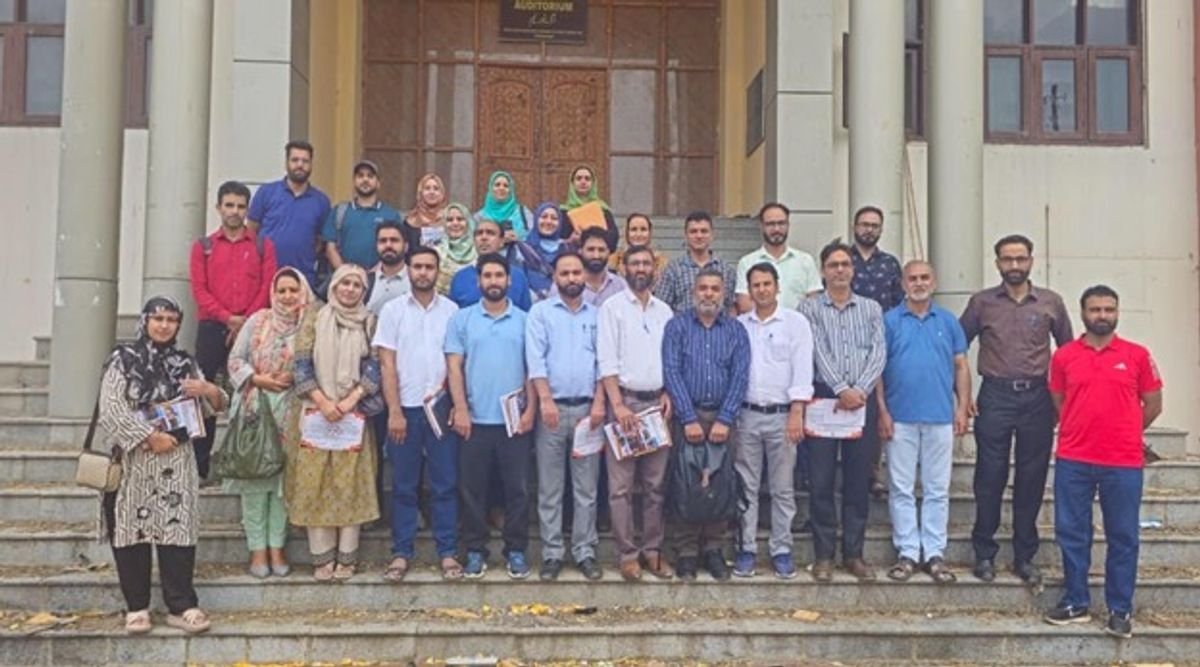
Srinagar, July 12: In a major push towards implementing the National Education Policy (NEP) 2020 and the National Curriculum Framework for School Education (NCF-SE) 2023, the State Council of Educational Research and Training (SCERT), Kashmir Division, on Sunday have concluded a three-day capacity-building programme to equip educators with innovative teaching practices centred on project-based learning.
The programme, organised by the Art and Vocational Education Branch under the guidance of Joint Director SCERT Kashmir Syed Shabir Ahmad, brought together teacher educators, field resource persons and vocational trainers from all ten districts of Kashmir. The participants, who have now been trained as master resource persons, will conduct similar programmes at the District Institutes of Education and Training (DIETs) before taking the initiative to middle and secondary school teachers across the Valley.
Inaugurating the workshop, Asifa Nisar, Head of Academic Unit-I, described the programme as the beginning of a larger educational transformation aimed at making learning more relevant and engaging for students.
“This workshop marks the beginning of a larger movement to connect classroom learning with local life, community knowledge and vocational skills. Our objective is to empower teachers with innovative pedagogical approaches that make learning meaningful, experiential and relevant to the needs of students in the 21st century,” she said.
Over the three-day programme, renowned educationists and subject experts, including Sheikh Gulzar Ahmad, Dr Fayaz Ahmad Bhat, Prof. (Dr.) Pankaj Mehta, Mutahhara Haneef, Gulzar Ahmad Dar and Dr Arshed Rashied, conducted interactive sessions on project-based learning, experiential education, integration of art and vocational education, technology-enabled teaching and entrepreneurship.
Participants also worked collaboratively to design and present interdisciplinary projects rooted in local contexts, demonstrating how classroom teaching can be linked with community resources, real-life challenges and vocational skills to promote competency-based education.
The workshop received an enthusiastic response from participants, many of whom described it as one of the most enriching professional development programmes they had attended.
“We are returning with practical strategies that will help teachers make learning more meaningful, creative and connected to students’ lives. The hands-on approach adopted during the training has given us confidence to implement project-based learning effectively in our schools,” said one of the participants.
During the valedictory session, participants pledged to take the training to the district level and mentor teachers in adopting project-based learning as a regular classroom practice. SCERT officials expressed confidence that the cascading model of training would ensure the effective implementation of NEP 2020 across schools in Kashmir.


