



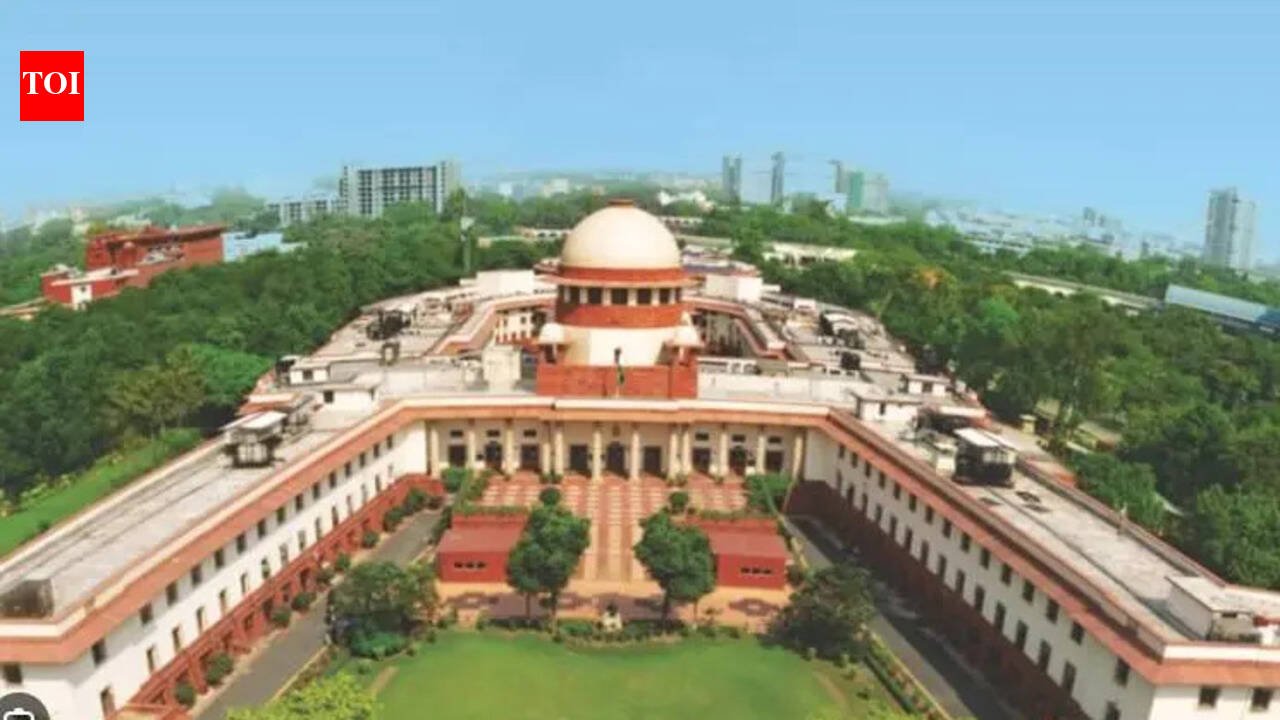
Hyderabad: Supreme Court on Thursday cleared the way for appointment of 563 successful candidates as Group I officers, bringing an end to the prolonged legal deadlock surrounding the selection process.A bench comprising Justices Vikram Nath and Sandeep Mehta dismissed a batch of petitions challenging the Feb 2026 order of the Telangana high court’s division bench, which had permitted the Telangana Public Service Commission (TGPSC) to proceed with issuing appointment orders. The dispute began when a group of aspirants—primarily unemployed youth—approached the Telangana HC, seeking a direction for TGPSC to conduct a re-examination. In Sept 2025, a single-judge bench ruled in their favour, setting aside the final marks list as well as the general ranking list. Aggrieved by this order, TGPSC and the successful candidates promptly moved the division bench, which, in Feb 2026, overturned the single judge’s order. The unsuccessful aspirants then approached the Supreme Court.During the hearing in the apex court on Thursday, counsel for the petitioners argued that there were discrepancies in the number of candidates who had qualified in the mains examination. They also raised concerns about the moderation process, alleging that candidates who wrote the exam in Telugu were disadvantaged due to the absence of a subject expert in the evaluation process.Emphasising this point, the petitioners’ counsel highlighted the distinction between merely knowing a language and possessing expertise in it. They further contended that the Supreme Court had already laid down guidelines on moderation, which, according to them, were not properly followed by the commission.Concerns were raised regarding the absence of a third evaluator, lack of a barcode system, and the alleged non-availability of an evaluator proficient in Telugu script. While the bench observed that some of these claims might be based on apprehension rather than established fact, the petitioners maintained that the evaluation system itself was fundamentally flawed. Referring to the earlier HC proceedings, the counsel pointed out that the single judge had found deficiencies in the moderation process, although the examination itself was not cancelled. They argued that the lack of an effective moderation mechanism undermined the integrity of the entire system, irrespective of the final outcome.In response, counsel for TGPSC and the successful candidates strongly refuted these allegations. They submitted that all issues raised by the petitioners had already been examined in detail by the division bench, which had addressed each contention with clarity.The commission argued that it had undergone intense judicial scrutiny and that the division bench’s intervention was both justified and legally sound. On the issue of Telugu language evaluation, it was pointed out that the petitioners themselves had successfully cleared the preliminary stage, suggesting no inherent disadvantage at that level.Representing the selected candidates, counsel argued that the controversy largely arose after the govt issued a series of web notes aimed at enhancing fairness transparency. Ironically, they suggested, this very transparency became the basis for litigation, despite there being no substantive irregularity in the process. It was further submitted that 26 of the 563 selected candidates had also qualified in the UPSC examination, indicating the overall merit of the selected cohort and underscoring that the case did not warrant judicial interference. During the proceedings, the bench even remarked on whether increased transparency had inadvertently contributed to the dispute.After considering all submissions, the Supreme Court dismissed the petitions, thereby paving the way for the appointment of 563 Group I officers—marking a significant administrative milestone for Telangana since its formation in 2014.


