






New Delhi: For someone living with an aortic root aneurysm, the biggest question may not always be how to replace the diseased part of the aorta. It can be whether the heart’s own valve can be saved. That is where the David Procedure, a valve-sparing aortic root surgery, comes into the picture. The procedure replaces the diseased aortic root while preserving the patient’s native aortic valve potentially allowing younger patients to avoid a mechanical valve and lifelong anticoagulation with warfarin.
But the window for preserving that valve may come much earlier than patients expect.
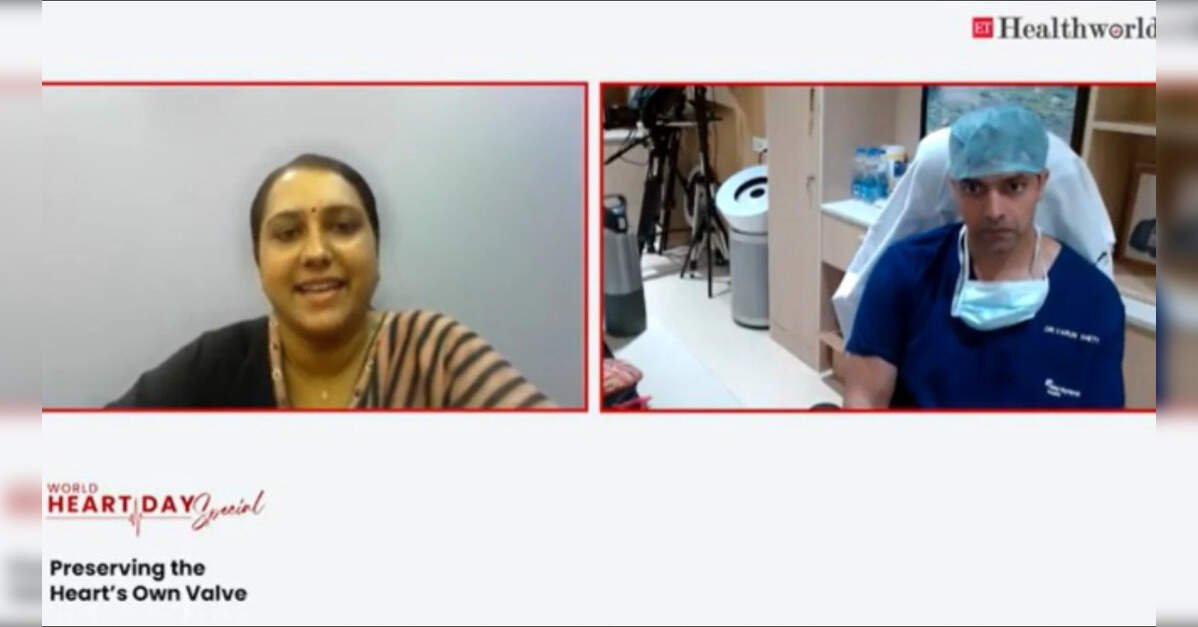
Explaining about the procedure Dr Varun Shetty, Senior Consultant in Adult Cardiac Surgery and Paediatric and Congenital Heart Surgery at Narayana Health City, said aortic disease can remain relatively silent for years. By the time significant valve leakage or deterioration develops, the heart may already have undergone changes that can affect surgical outcomes.
The opportunity may be before symptoms appear. The irony with aortic root disease, Shetty says, is that a patient can have an aneurysm without feeling particularly unwell. In the early stages, the aortic valve may still be functioning relatively well. That can make it tempting to wait. But this may also be the point at which specialist assessment becomes important.
“If you have an aortic aneurysm, especially in the early stages, your aortic valve is not involved. This is actually the right time to send a patient for surgery because you can preserve the valve,” Shetty said.
Once significant aortic regurgitation develops, the heart is exposed to prolonged pressure and volume stress. If the heart’s pumping function subsequently deteriorates, recovery may not always be complete.
For patients, therefore, the question is not simply whether an aneurysm has reached a particular size. The condition of the aortic root, the valve and the heart along with the patient’s overall clinical picture all matter.
Why saving the patient’s own valve matters
In conventional aortic root replacement, the diseased root may be replaced along with the aortic valve. For a younger patient, that could mean a mechanical valve and lifelong warfarin therapy.
That brings its own considerations, including bleeding and thromboembolic complications, as well as the need for ongoing anticoagulation management. The David Procedure takes a different approach as the diseased aortic root is replaced while the patient’s own valve is preserved.
“Having your own valve gives you the freedom,” Shetty said, referring to the possibility of avoiding lifelong warfarin therapy and retaining the native valve.
That can be particularly relevant for younger and physically active patients and for women who may want to become pregnant.But preserving the valve does not mean the story ends with surgery. Valve preservation comes with its own question on how durable will the repaired valve be?
Shetty says this remains one of the important considerations with the procedure. A preserved valve can degenerate over time, particularly depending on the underlying valve anatomy.
Most studies on valve conservation have not extended beyond two decades, leaving gaps in very long-term data.
“If the disease is detected early, before the valve is significantly damaged, and you have a good repair outcome, you can expect to live with your own valve for most of your adult life,” he said.
For a younger patient, the potential benefit is therefore measured not only in the immediate surgical outcome, but also in the years of life that could be lived without a prosthetic valve or lifelong anticoagulation.
The operation is technically demanding
The David Procedure, however, is not a straightforward alternative for every patient with an enlarged aortic root.
The structure and condition of the valve are critical in determining whether preservation is possible. Detailed imaging is used to assess the aortic root and valve, including the mobility, symmetry and quality of the valve leaflets.
The procedure itself also has a significant learning curve.
The aortic root has several interconnected components — including the aortic annulus, the sinotubular junction and the point where the valve leaflets meet, known as coaptation. Achieving a durable repair requires these components to work together properly.
Shetty said the team’s understanding and surgical technique have evolved over time, allowing them to achieve better-quality repairs. He also stressed that experience matters because the long-term durability of the repair is closely linked to the expertise of the surgeon and centre.
Not every patient needs or is suited to valve preservation
The David Procedure is not automatically appropriate for everyone with an aortic root aneurysm. The condition of the valve is a key consideration. Patients with bicuspid aortic valves can sometimes also be candidates for valve-sparing surgery when the leaflets are of suitable quality.
Age is another consideration. For older patients, particularly those above 70, Shetty said his team generally considers a bioprosthetic valve in appropriate cases. For younger patients, avoiding a mechanical prosthesis and lifelong anticoagulation may carry greater relevance.
Patients with connective tissue disorders such as Marfan syndrome also require particular attention because aortic disease can develop at younger ages. Shetty stressed that these patients should be assessed earlier rather than waiting for the aneurysm to become very large.
India’s long-term follow up problem
The procedure may offer a valve-sparing option, but another challenge begins after the patient leaves the operating room the follow-up.Shetty said long-term Indian data remain limited partly because patients can be difficult to track after returning to their home cities or states.
For the study, his team had to go back through historical records, track down patients and obtain follow-up echocardiograms. In some cases, addresses no longer existed and telephone numbers were no longer active.
Even when patients could be contacted, the quality of echocardiograms performed elsewhere was not always adequate for standardised long-term assessment.
This creates a significant limitation when trying to answer a simple but important question: what happens to a preserved valve 15, 20 or 30 years after surgery?
“Based on the available data, it is difficult to give a definitive answer,” Shetty said, pointing out that longer-term evidence from other countries provides some reassurance, but Indian data beyond five years remain limited.
Follow-up is becoming more connected. At his centre, Shetty said electronic medical records and active patient tracking have helped improve follow-up.
Remote consultations also allow the team to review patients who may no longer live close to the centre. Patients can send their echocardiograms for review, and if the quality is inadequate, they can be directed to a specialised cardiac centre closer to home.
For a procedure whose success depends not only on the operation but also on durability, this continuing relationship with the patient becomes important.
For Shetty, the broader message goes beyond the David Procedure.
Aortic disease can progress quietly. By the time a patient develops significant breathlessness, reduced exercise tolerance or other signs of heart failure, the disease may already have affected the heart.
That is why early detection and appropriate specialist referral can change the treatment conversation — from simply replacing what is damaged to asking whether some of the patient’s own anatomy can still be preserved.
Shetty points to imaging as an important part of identifying aortic disease earlier and says cardiac imaging, including CT and echocardiography, can help detect abnormalities before they become an emergency.
His message for World Heart Day is therefore less about one operation and more about timing to recognise the disease, image it properly, refer the patient early and determine what can still be preserved. For a patient with a silent aortic aneurysm, that window may be the most important part of the story.
Watch here


