



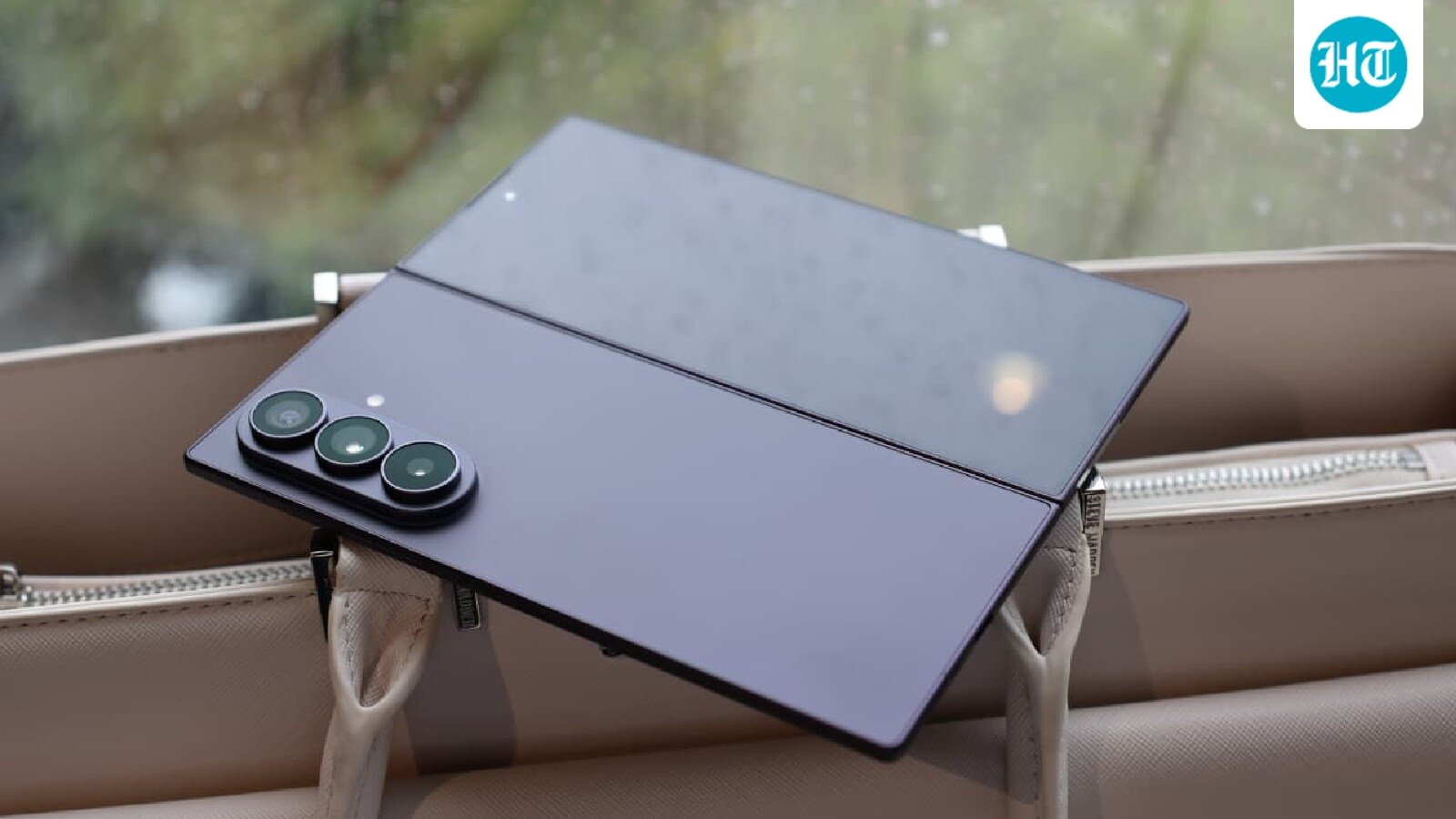
Samsung brought its Galaxy Z series on par with its flagship Galaxy S series smartphones by launching not two but three smartphones this year. It launched the Galaxy Z Flip8 as the successor to last year’s Galaxy Z Flip 7. It also launched the Galaxy Z Fold8 in the brand new form factor and it launched the Galaxy Z Fold8 Ultra as the successor to last year’s Galaxy Z Fold7. Simply put, the Galaxy Z Fold8 Ultra now represents the zenith of what the company can offer in terms of its foldable series smartphone and in essence, it’s the successor to last year’s Galaxy Z Fold7. As the trend goes for ‘Ultra’ smartphones, the Galaxy Z Fold8 Ultra offers a better set of features and specifications than its other siblings. A bigger and better screen, a better camera setup, and a better battery. It also comes with an Ultra price tag, which can easily set you back by up to ₹2.60 lakhs. So the question remains, is the Galaxy Z Fold8 Ultra worth the ‘Ultra’ name and the price tag or not? We’ll try to answer that question and more in the detailed review below. Keep reading. But before that, let’s take a quick look at its top specifications.
Samsung Galaxy Z Fold8 Ultra specifications
| FEATURE | SAMSUNG GALAXY Z FOLD 8 ULTRA |
| Display | 8-inch QXGA+ Dynamic AMOLED 2X inner display; 6.5-inch FHD+ Dynamic AMOLED 2X outer display |
| Build & Design | Aluminium chassis, glass body |
| Water/Dust Resistance | IP48 |
| Processor | Qualcomm Snapdragon 8 Elite Gen 5 |
| RAM & Storage | Up to 16GB RAM, up to 1TB storage |
| Operating System | Android 17 with One UI 9 |
| Front Camera | 10MP main screen; 10MP cover screen |
| Rear Camera | 50MP ultra wide angle + 200MP wide angle + 10MP telephoto |
| Battery & Charging | 5000mAh with 45W wired charging |
| Connectivity | 5G, LTE, Wi-Fi 7, and Bluetooth 6.0 |
| Security | Side-mounted fingerprint sensor |
| Colours | Graphite, Cream, Violet Shadow and Green Shadow |
| Price | ₹1,99,999 (12GB + 256GB variant), ₹2,19,999 (12GB + 512GB variant), ₹2,59,999 (16GB + 1TB variant) |
Samsung Galaxy Z Fold8 Ultra design: Still bold and beautiful
Samsung has opted for a ‘don’t fix what’s not broken’ approach with its Galaxy Z Fold8 Ultra smartphone, which means you get the same design as you saw in the Galaxy Z Fold7 last year. It’s sleek. It’s smooth and it’s light in weight. The only thing that has changed this year is that the Fold8 is 0.1mm thinner than the Fold7 – something you won’t notice at first glance.
Apart from this, Samsung has also redesigned the hinge this year, which makes opening the phone feel a lot more smoother. The company says that it has used an Armor FlexHinge this year and widened the gap of the inner bezel, which is aimed at increasing the user comfort while opening and closing this foldable phone. Samsung has also introduced a dual-layer titanium structure beneath the display, called the Flex Titanium technology, and upgraded the cover glass to Gorilla Glass Ceramic 3, which makes this foldable phone feel more premium and a little more immune to damages. Additionally, the phone also gets Gorilla Glass Victus 2 protecting the glass back.
What I like is that Samsung has managed to make this large device feel surprisingly refined in the hand. Though I have always been a little skeptical of this form factor, Fold8 Ultra’s thin profile, clean lines and overall design and durability make it a compelling case for an upgrade, especially if you are coming from a regular non-fold device and if you can ignore the wobble owing to its large camera module.
Samsung Galaxy Z Fold8 Ultra display: Vibrant with an almost creaseless design
The Galaxy Z Fold8 Ultra gets an 8-inch QXGA+ Dynamic AMOLED 2X display with a resolution of 2,504 x 2,256 pixels and a 120Hz adaptive refresh rate. Its cover screen gets a 6.5-inch FHD+ Dynamic AMOLED 2X display with a resolution of 1,080 x 2,520 pixels, a 120Hz adaptive refresh rate and the company’s Vision booster technology.
Specifications aside, the Galaxy Z Fold8 Ultra’s 8-inch inner display is easily one of its biggest strengths. First of all, it delivers vibrant colours, deep blacks and a noticeably more immersive viewing experience, which is particularly helpful while watching TV shows and movies on OTT platforms like Netflix, JioHotstar and even Prime Video. While the display panel of the Galaxy Z Fold8 is similar to that of its predecessor, the screen is 15% brighter, which when combined with the anti-reflective coating makes a meaningful difference when using the phone outdoors. This includes both the productivity and entertainment experiences. However, what’s a little less than perfect is the screen ratio while viewing content on any OTT platform. The form factor of the Galaxy Z Fold8 is such that when unfolded, the streaming content is unable to make full use of the bigger space, which in my opinion, dilutes the overall viewing experience. Sure, the streaming screen is bigger than the ones available in the traditional non-foldable phones, but is it necessarily better? Well, that can be debated.
Beyond the viewing experience is the crease. Samsung has included a redesigned Flex Titanium display structure that makes the fold considerably less visible than the one available on the Fold7. While this phone is not entirely creaseless, it comes close and it is certainly easy to overlook during everyday use. It’s also less visible (and obvious), which makes using it (when unfolded) feel like using a Kindle or a similar-sized device. Additionally, features like split-screen, which lets you use two or more apps at a time on the inner display, make the inner display much more useful.
Samsung Galaxy Z Fold8 Ultra performance and software: Class-leading performance
Now let’s talk about the performance. The Galaxy Z Fold8 Ultra is powered by the Qualcomm Snapdragon 8 Elite Gen 5 chipset. It’s the same chip that powers the rest of Samsung’s foldable phones this year. It’s also the most powerful chipset available in Qualcomm’s mobile chip portfolio so far. Needless to say that the Snapdragon 8 Elite Gen 5 is a fairly powerful chipset and it delivers the kind of performance you would expect from it in the case of an ‘Ultra’ smartphone. In everyday use, this chipset makes the Galaxy Z Fold8 Ultra feel exceptionally responsive, whether you are switching between multiple apps, editing photos, surfing through social media apps or spending hours on Netflix and Hotstar. Samsung says that the Galaxy Z Fold8 offers a 16% CPU, 15% GPU and 21% NPU improvement over the Galaxy Z Fold7. This claimed performance bump is particularly noticeable when you are running demanding AI workloads on it, be it running editing apps, creating images or using various AI-based productivity tools. It’s also evident when you are running multiple demanding apps on it at once. During my time with it, this phone never threw a nervous fit or heat up exceptionally, especially while using it for long stretches of time.
That said, one area where this phone could have done better is in terms of its speakers. The Galaxy Z Fold8 Ultra (yes, it does take you a minute to get used to the new name), comes with decently loud speakers. While the sound doesn’t fill the room, it’s sufficient for you to enjoy a movie marathon. What I don’t appreciate is the clarity part of the sound. That’s one area where I feel Samsung could have done better and needs to do a lot better, more so because of the hefty price buyers are paying for it.
Coming to the software, it is as ambitious as the hardware or more specifically the chipset. The Galaxy Z Fold8 Ultra runs One UI 9 based Android 17, which brings foldable phone-optimised multitasking features along with a deeper integration of Galaxy AI-based features. For instance, Now Nudge understands the context of what is on screen and it proactively suggests actions based on it. It can bring up Calendar when it detects plans for an event or Maps when you look for places to eat, to name a few. Gemini Notebook is another useful addition. It turns PDFs, meeting notes and recordings into summaries, presentations and quizzes. Samsung has also brought agentic AI automation that can perform multi-step tasks across supported apps, although I would still recommend checking AI-generated actions before letting them run unattended. Overall, the Fold8 Ultra feels less like a foldable with flagship hardware and more like a pocket-sized productivity machine.
Samsung Galaxy Z Fold8 Ultra camera: A curious case of hits and misses
Now the camera. The Galaxy Z Fold8 Ultra gets a triple camera setup at the back, which includes a 200MP primary sensor with a wide-angle lens, f/1.7 aperture and multi-directional PDAF, a 10MP telephoto lens with f/2.4 aperture, PDAF, OIS, and 3x optical zoom, and a 50MP ultra-wide-angle sensor with f/1.9 aperture, 120-degree field of view, multi-directional PDAF. On the front it gets a 10MP wide-angle selfie shooter and a 10MP wide-angle lens on the cover screen. In usage, Samsung has definitely improved its game plan in the case of the Galaxy Z Fold8 Ultra compared to last year’s Galaxy Z Fold7. But it’s also a reminder that Samsung still needs to catch up a bit, especially to just its ‘ultra’ name and price tag. Its 200MP primary sensor, which is carried over from the Galaxy Z Fold7, remains one of the strongest shooters. It produces detailed, vibrant images with sharp colours. It also offers a good dynamic range even in tricky lighting conditions and it does an excellent job at capturing details such as individual strands of hair and the edges. It maintains this clarity and details even in low lighting conditions.
Where Samsung has upped its ante this year is in terms of the secondary shooter or the 50MP ultra-wide-angle lens, which replaces Galaxy Z Fold7’s 12MP sensor. This secondary lens gets a wider f/1.9 aperture and higher-resolution sensor, which in turn produces noticeably better details, sharper edges and brighter low-light shots compared to its predecessor. What could have been better is the 10MP telephoto lens, which remains a weak link in the phone’s triple rear camera setup. While it does capture decent images in good lighting conditions, it quickly loses ground when you push it to 3x zoom. That’s the point where images start looking soft and over-processed, which makes the camera feel less than what the ultra name should offer. Coming to the front camera and the cover lens, both produce decent images in good lighting conditions. While the colours are accurate, details are a curious case of hits and misses.
Overall, the camera system in the Galaxy Z Fold8 Ultra is arguably the best camera system Samsung has put on a foldable, especially for everyday photography. However, Samsung needs to improve or rather refine it further for it to feel truly class leading.
Samsung Galaxy Z Fold8 Ultra review: Pros and Cons
Here’s what we liked in the OnePlus N6 and what could have been better:
Pros
- Slim and light as its predecessor
- Flagship-level performance
- Better hinge
- Better battery
- Long software support
- Almost crease-less design
Cons
- More expensive
- Telephoto lens is average
- Speaker quality could have been better


