






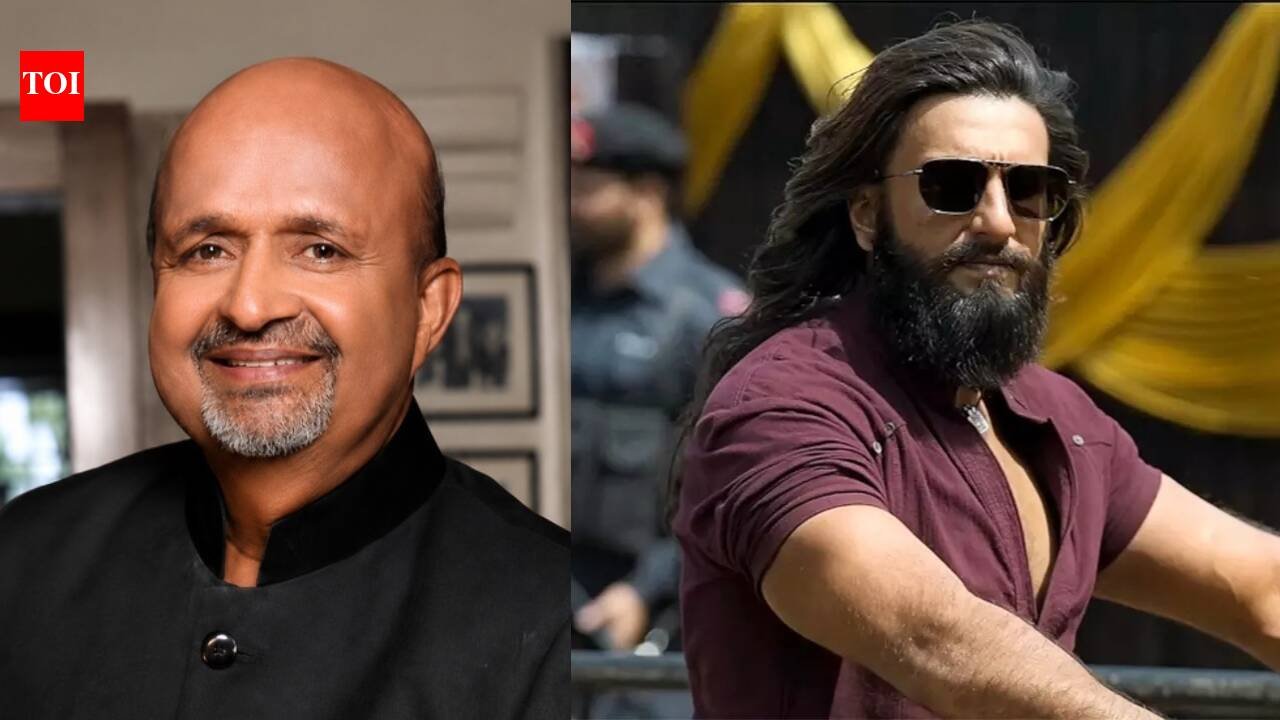
Veteran lyricist Sameer Anjaan–the man behind songs like Kuch Kuch Hota Hai and Tum Dil Ki Dhadkan Mein – recently slammed Ranveer Singh-starrer Dhurandhar for using old songs in the background of sequences filled with violence. In a recent interview, he expressed disappointment over the way Bollywood has been treating music, arguing that experienced lyricists are often dismissed as being out of touch with the pulse of today’s generation.In a lengthy conversation with Komal Nahta on his YouTube podcast Game Changers, Sameer said, “Songs today don’t have meaning because the people today don’t have emotions and depth left in them. Cinema often mirrors society. With the introduction of OTT and other mediums, they are only paying attention to sex and violence and have sidelined music.”Remembering the days when producers and directors paid close attention to every song in their films, Sameer recalled working on Kuch Kuch Hota Hai. He said, “I still remember, when I was writing the title song Kuch Kuch Hota Hai, Karan Johar gave me a narration of over six hours with details including what Shah Rukh Khan and Kajol would be wearing in the song sequence.”He blamed the entry of corporate culture into filmmaking for affecting creativity and attention to detail.“The entry of corporate has also given rise to bad content. People now approach us without any context. They randomly say, ‘Koi hit gaana hai toh dedo.’ Not like we walk with a hit song in our pocket. Producers are now reluctant about sitting over songs, sharing context. If films have 12 music directors and 18 songwriters, how do you expect good work?” he said.When asked about the trend of recreating old songs, Sameer said there are both advantages and disadvantages to it, but there should be a limit.“The fact is that you cannot stop inventions. However, that is not the problem. Recreating a song has both pros and cons. Like when they remade my ‘Dilbar’ song, it got reintroduced to Gen Z. However, the problem starts when, while recreating a song, you ignore the original lyricist even when they are available and give the writing work to someone else, who then gives vulgar lines unrelated to the word ‘Dilbar’. They are insulting the literature. If you can improve something, please do. But don’t play with something to spoil the original,” he said.He added, “Morally, these people cannot touch this creative work without the permission of the original writers. Yet, they do it. This needs to stop. Good things work for a very long time. Good things will stay relevant for the next 100 years as well. People today assume that if a lyricist has become old, he might not be in touch with the pulse of today’s people. That’s not the case.”Sameer specifically criticised Dhurandhar for using old songs out of context, particularly during violent action sequences.“Films like Dhurandhar have made the situation even worse. Satyanash kar diya. They picked the music and put it in the background. In the trailer of Chauhan, they are playing Jumma Chumma during an action sequence. They recreated my song while they are firing guns. Where is the song?” he said.“My father doesn’t own the industry for me to make them stop. But this will continue until they ruin it all completely and then have nothing left. Nadeem tells me, ‘Pandit ji, you don’t worry. Just watch them quietly until they burn out everything we have. We will enter the picture after that,’” he added.Sameer also expressed disappointment with some of Bollywood’s biggest production houses.“I am more disappointed in the top banners owned by Aditya Chopra and Karan Johar. They used to patronise good music. I don’t understand what went wrong with them. They too don’t concentrate on music anymore,” he said.The Dhurandhar franchise, despite receiving mixed reviews, has reportedly earned over Rs 3,000 crore collectively from its two films.Sameer also criticised the practice of replacing experienced professionals with younger talent, while clarifying that he does not believe young artistes lack talent. Without naming the music company, he recalled an incident involving someone he knew.“This one time, someone I know told me that he had hired all young kids in his office. I was like, good. How long has it been? When he said about six years, I told him, ‘I have known your company for so long. There was a time when your company would release at least 10 superhit albums every year. How come you haven’t given a single hit in six years? Who exactly have you hired?’” he recalled. He clarified, “I am not saying that young kids are not talented. They are very talented, but I truly believe that if we merge the young with the old, it will give a great output.”Citing his own experience, Sameer said, “When I collaborated with Sachin-Nigam, I wrote ‘4 Baj Gaye Lekin Party Abhi Baki Hai’. With this song, I attempted to prove that when I can write songs like Faltu which young kids can relate to, what makes them assume I can’t? If you won’t give a chance to old composers and lyricists, how can you assume things?”Sameer further claimed that the industry’s increasing monotony was one of the reasons Arijit Singh distanced himself from the mainstream music industry.“It is this assumption that made Arijit Singh go crazy. Woh itna pagal ho gaya ki industry chhod ke chala gaya. Everything had become so monotonous. Same kind of songs and tunes. He understood that if he continued to do this, it would become monotonous for him. He couldn’t find his type of songs. There was no variety. When singers like Udit Narayan sang, they had so much variety. Any sensible man would quit,” he said.


