


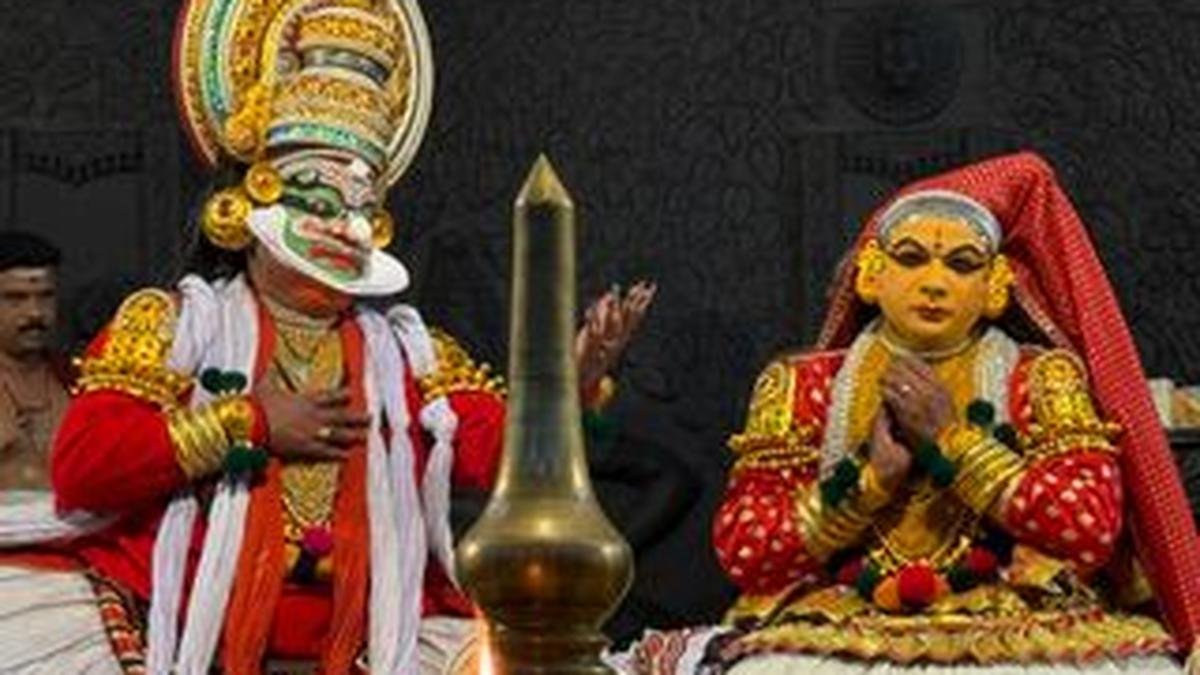
Kottakkal Devadas as Ravana and Kalamandalam Praveen as Mandodari
| Photo Credit: Special Arrangement
Sadanam Harikumar, known for presenting new Kathakali plays every year, has unveiled his latest and 24th production Mandodari . Packed with innovative features Mandodari, doesn’t disappoint. But what stands out in this play is that most of the lyrics are taken from ‘Adhyatma Ramayana’, the Malayalam version written by Thunchath Ezhuthassan.
There are several other interesting features. For instance, the story presents Ravana in a different light. While Ravana is usually depicted as powerful and arrogant, here he is subdued, pensive and a tad regretful. In addition, the introduction of new tala patterns in the pure dance movements known as kalasams, and the variations in yudhavattam or battle drill, help impart a freshness without deviating from the structure of Kathakali.
The plot of Mandodari unfolds a few days prior to Ravana’s death. His sons and allies have been slain, Rama has broken his bow and a defeated Ravana retreats to his palace. The opening scene with Ravana and Mandodari grieving over their children was impactful and innovative. With only background music on chenda and maddalam, it set the tone of the play. Kottakkal Devadas as Ravana and Kalamandalam Praveen as Mandodari were restrained and stoic in their performance, never allowing the scene to sink into melodrama.
A scene from the play
| Photo Credit:
Special Arrangement
Hidden in an underground cave, Ravana undertakes a penance to make himself invincible. But Rama thwarts his penance by sending his monkey army, led by Angada and Nala. When they fail to disrupt Ravana’s concentration, they resort to dragging Mandodari before him and abusing her. Ravana immediately abandons his penance and drives the monkeys away. Once again, Mandodari pleads with him to return Sita to Rama. Ravana refuses, telling her that war is inevitable and that only one of them —Rama or he — will survive. The next day, Ravana returns to the battlefield and meets his end at Rama’s hands.
There is no mention in the Ramayana about Mandodari’s fate after Ravana’s death. In Harikumar’s version, Mandodari arrives at Ravana’s pyre, curses Rama to suffer separation from his wife as he caused her widowhood. Then Mandodari, consumed by grief, ends her life.
Kalamandalam Sreeraman’s brisk movements and impressive body language were a delight to watch. The role of Rama suited him. Singing was by Harikumar and Sadanam Jyothish Babu while Sadanam Ramakrishnan and Sadanam Devadas led the percussion team.
This was the play’s first staging, and it will benefit from some tweaking. The more than three-hour production felt a bit long and tended to lag toward the end, with a few scenes calling for tighter editing. However, these are minor flaws in an otherwise impressive presentation.
New Kathakali plays — shorter than traditional productions — are being crafted to suit contemporary audiences, and Mandodari shows every sign of fitting into that evolving repertoire.
Published – February 18, 2026 04:30 pm IST


