



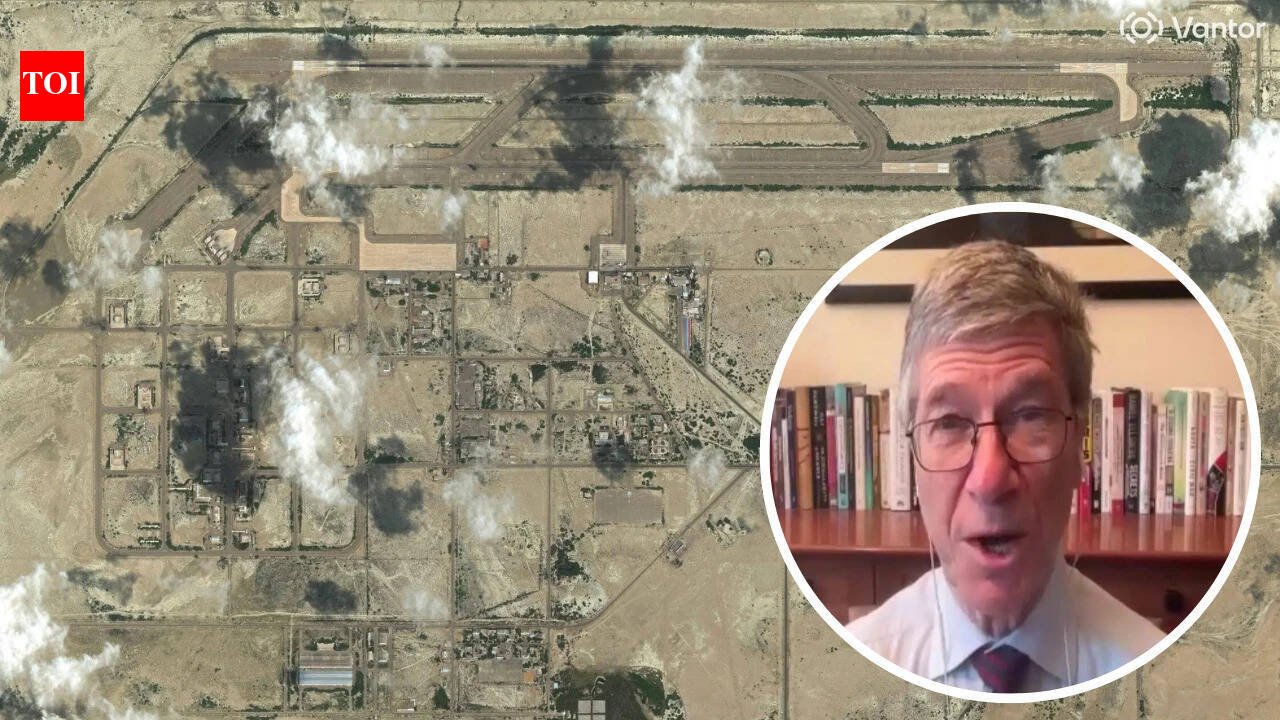
It has been over a month since the first missiles and bombs struck Iran. Now, a month later, the conflict has left physical scars not only in the vicinity of Iran, but as far as Europe, on the island of Cyprus. The world has its eyes fixed on the choked Strait of Hormuz. Although far from the scene of action, countries across the world are facing the consequences of this conflict as the free flow of oil through the arteries of economies is affected.The Times of India (online) spoke to renowned economist and public policy analyst Professor Jeffrey Sachs of Columbia University over the ongoing conflict. The professor accuses US President Donald Trump and Israeli Prime Minister Benjamin Netanyahu of starting the conflict against the advice of experts.“Inside the executive branch, we hear all sorts of stories that the joint chiefs of staff tried to tell the president. This wasn’t a good idea. Probably the CIA tried to tell the president that this wasn’t a good idea, although we’re not sure about that because nobody really talks,” Sachs said.The leading economist added that President Trump is acting without the traditional checks and balances, saying, “Congress doesn’t exist. If you closed it down, you wouldn’t even notice that Congress is there”.Sachs suggests that the current situation has increased the likelihood of miscalculation and a prolonged conflict. “We’re drifting towards an expanded war. I think it is escalating. I do not think that it is getting under control.”From a broader perspective, according to Professor Sachs, the war is framed as part of a larger struggle for influence. Sachs suggests that the US seeks to maintain global dominance in West Asia with the help of Israel.Sachs says, “The US motivation is that it wants control all over the world. It wants to control the Middle East, partly through Israel doing its dirty business.”The risk of attacks on energy infrastructure threatens global oil supplies, which is driving fuel prices sharply and triggering economic instability throughout the world.“We’re just on the verge of blowing up the world’s energy supplies; oil prices could be $130, $140, $150 a barrel”Professor Sachs warns that under such mounting pressure, Iran may reconsider its restraint on nuclear weapons development. Sachs says, “There would be a lot of support for going nuclear. They can do it, they had decided for 25 years not to do it.”Sachs emphasises the urgent need for coordinated global intervention to bring this conflict to an end. The professor proposes the potential role of global leaders such as Indian PM Narendra Modi, Chinese President Xi Jinping and Russian President Vladimir Putin in facilitating a truce.“I do believe that if Prime Minister Modi, President Putin and President Xi… seriously said to Mr Trump, you’ve got to stop this, it would make a difference”, Sachs said. He went on to add that “Prime Minister Modi doesn’t have to do it by himself. He can do it with President Xi and President Putin, the BRICS can do it, and the BRICS should do it”.Without such efforts from global leaders, the conflict could continue, which would lead to a broader regional war and significant global repercussions, according to Professor Sachs.


