



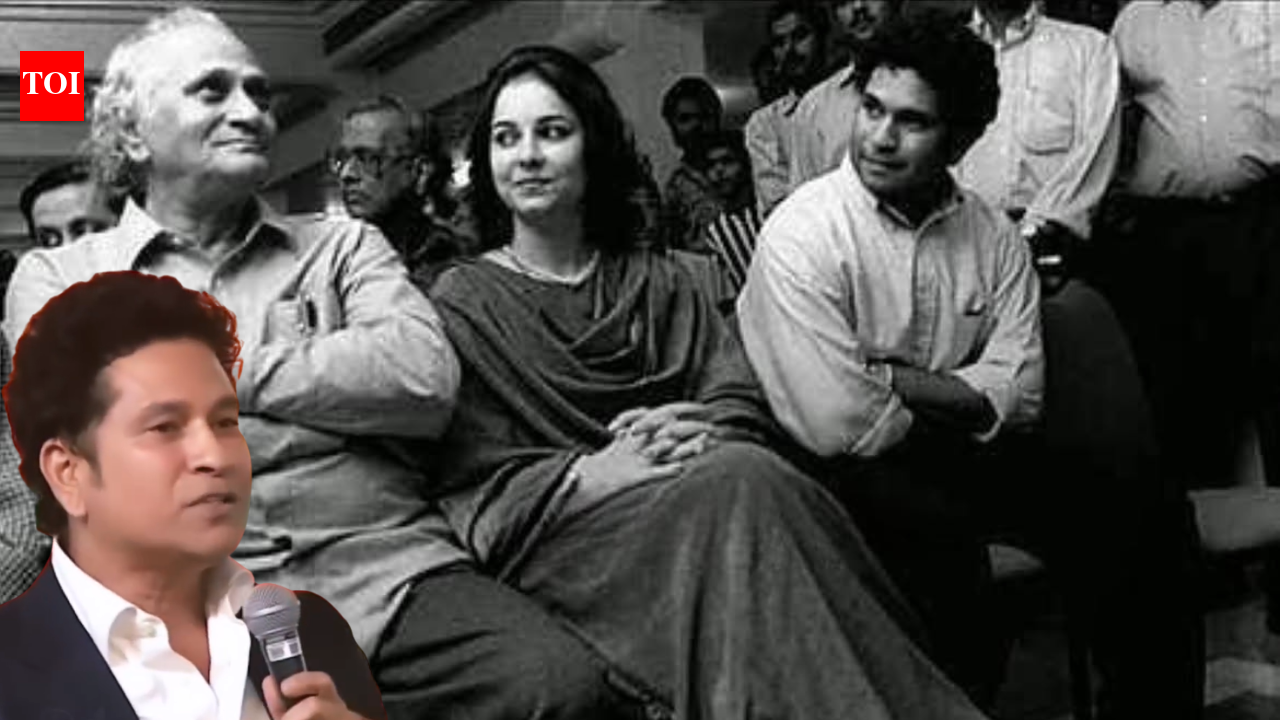
Children often remember the smallest things about their parents. For Indian cricket legend Sachin Tendulkar, one such memory goes back to the time when he had started playing for India and bought his first car. Speaking at an event organised by Andhra University in Visakhapatnam in April, Sachin spoke about his father and one quality he believes stayed with him for life, which is patience.Tendulkar recalled how much he loved listening to music while driving. His father would often sit beside him, engrossed in a book. Tendulkar would play the music loudly, but his father never complained.
28 Jul 2026 | 16:22
How do you teach children about money and financial responsibility?
“He was extremely patient”
“I learned so many things from him. He was extremely patient,” Tendulkar said. He then explained why that particular quality had left such a lasting impression on him. “When I had started playing for India, I bought my own car. I used to love to listen to good music. And most of the times, it used to be loud music in the car while I was driving. And my father would be seated next to me, reading his book,” he recalled during the event.What stayed with Tendulkar was not simply that his father tolerated the loud music. It was that he never made the moment about himself. “Never once did he tell me to reduce the volume because I want to read the book,” Tendulkar said.His father, he explained, remained focused on his book and did not allow the noise around him to disturb his peace. “He was very focused and the outside noise did not matter to him. And that’s something that I learned from him,” he recalled.
Children learn patience by watching it
An old picture of Sachin Tendulkar and his father.
It is an interesting parenting lesson because Tendulkar did not describe a conversation where his father sat him down and explained the importance of patience. He simply remembered watching his father practise it. That distinction matters.Parents often think that teaching children means explaining things repeatedly: Be patient. Don’t lose your temper. Respect other people. Don’t get irritated easily. But children also notice how adults behave when things do not go their way. They notice whether a parent shouts when stuck in traffic, loses patience when a child takes too long to get ready, snaps when interrupted while working or calmly handles an irritating situation.In other words, children are constantly learning from the behaviour happening around them.
His father taught him without making it a lesson
There is another part of Tendulkar’s recollection that is particularly striking. He connected the way his father behaved with the kind of person he himself wanted to become. “You know, being a good person. It’s a practice that every morning you wake up and you remind yourself that you are going to behave in a particular way,” he said.For him, good behaviour was not something that happened automatically. It was a conscious practice. He also linked that behaviour to parenting and the impressions parents leave on their children. “Which is, I feel, kind of conveys how your parents have brought you up,” Tendulkar said. “And that is something which I will always carry for the rest of my life, because that’s the impression my father left with me,” he added.
What parents can take from this: Don’t underestimate the small moments
File photo
Tendulkar’s story offers a useful reminder for parents raising children today. It is that you don’t have to turn every situation into a lesson. Sometimes, what a child needs to see is how you behave when nobody is asking you to behave well.Here are a few practical ways parents can turn everyday moments into quiet lessons.Show patience when your child is being slowInstead of repeatedly saying “hurry up”, pause occasionally and let your child finish what they are doing. Not every delay needs an angry reaction. Children learn patience partly by experiencing it from their parents.Don’t make every irritation a confrontationA child spills something, a sibling annoys them, their homework takes longer than expected, etc. These are ordinary parts of growing up. If parents respond to every small inconvenience with anger, children can start seeing irritation as the normal response to discomfort. Showing them that you can be annoyed without becoming aggressive is a lesson in emotional control.Let children see you respecting other people’s spaceTendulkar remembered his father sitting beside him without demanding that the environment immediately change for his convenience. Parents can model the same quality at home, allowing children, partners and other family members to have different preferences without turning every difference into an argument.Practice the behaviour you ask forIf you want your child to listen without interrupting, let them see you do the same. If you want them to apologize, apologize when you are wrong. If you want them to put their phone away during conversations, do it yourself. The rule becomes far more meaningful when the child sees that it applies to everyone.Don’t underestimate what children rememberA parent may forget a random Tuesday afternoon within days. A child may remember it for decades. The way you reacted when they made a mistake, how you spoke to a waiter, whether you kept your promise, how you treated their grandparents or whether you stayed calm during a difficult moment can quietly become part of their understanding of what it means to be a good person. That may be the most beautiful part of Tendulkar’s memory. His father did not need to give him a long lecture on patience. He simply lived it in front of him. And years later, one of India’s greatest cricketers still remembers it.


