



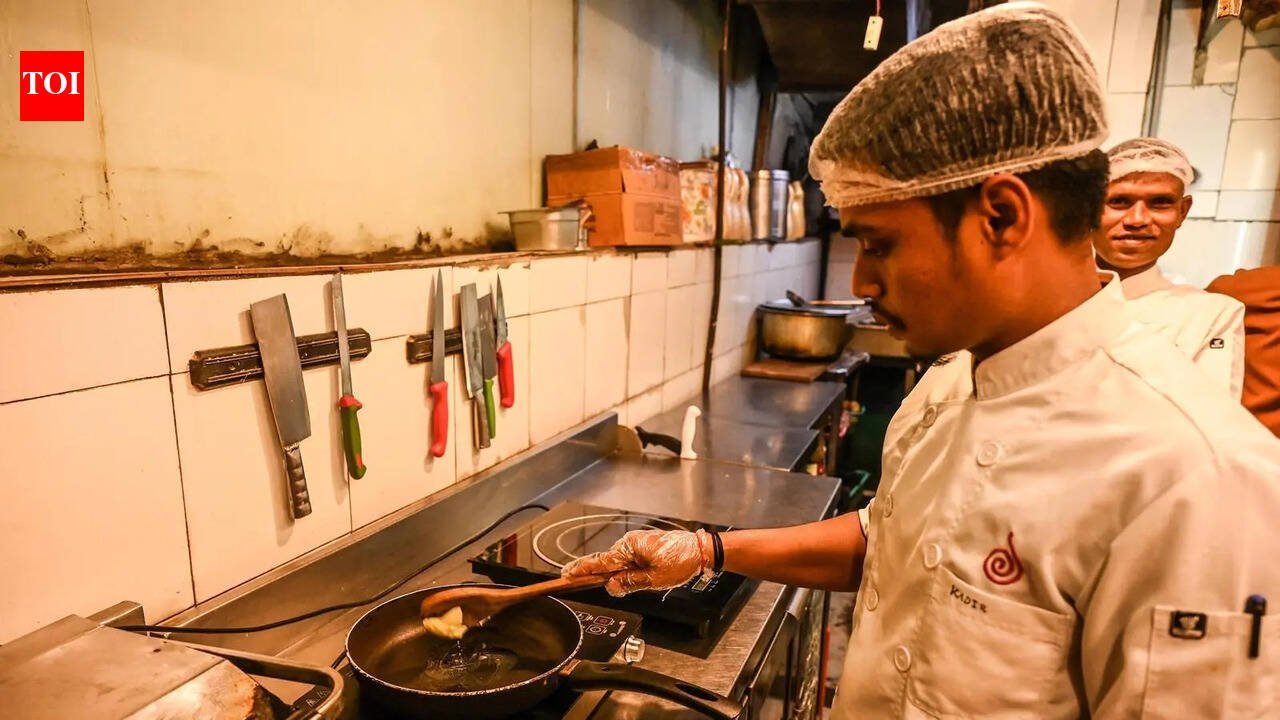
Pune: Restaurants and eateries across the city are preparing for what industry insiders describe as one of the toughest cost pressures in recent months, citing that petrol, diesel, CNG, and commercial LPG prices are expected to rise further in coming days. The anticipated hike is expected to impact everything from kitchen operations and edible oil to transport, deliveries, and imported ingredients.Hospitality operators are already being advised to stock up on commercial gas cylinders and edible oil before revised rates come into effect. Samir Shetty, president of the United Hospitality Association (UHA) has sent a circular to member restaurants on Wednesday, warning them of rising transport costs for vegetables, meat, dry goods, and beverages, which typically set in within 24-48 hours of fuel price revisions, making advance stocking crucial.Ganesh Shetty, president of the Pune Restaurants and Hoteliers Association (Praha), said many restaurants have already begun shifting away from gas dependence. “Nearly 20-30% of members’ kitchens have partially converted to electricity through induction cooking and pellet firing systems. What earlier required 90 cylinders a month has now come down to nearly 40 cylinders for some establishments,” he said. Heavy cooking, especially large gravy batches, is increasingly being done using wood pellets, while induction is replacing gas wherever feasible.Shetty added that raw material costs have already risen by 5-10% over the last few weeks, since the start of the commercial LPG shortage. “Everyone is citing the West Asian conflict and import disruptions. Edible oil prices have sharply increased. A 15kg tin has gone up from Rs42 to Rs45 within a day,” he said. India imports around 60% of its edible oil needs, spending over Rs 1.6 trillion annually on palm, soy, and sunflower oil.Hotels are also bearing the brunt. Gaurav Bhattacharya, general manager at Pride Premier, Pune, said the hospitality sector had already experienced disruptions a few months ago; he feared that another prolonged period of uncertainty could further hurt business. “Commercial LPG costs had already climbed sharply. The cylinders we use in hotels saw a cost hike from around Rs1,900 to nearly Rs3,000,” he said.He added that rising input costs were beginning to squeeze hotels from multiple sides simultaneously. Refined edible oil prices had already started increasing and suppliers had informed businesses about further revisions. “Our profitability, guest headcount and room occupancy are all decreasing,” he said.Bhattacharya also said Pune’s hospitality sector is facing the indirect effect of work-from-home trends, particularly in IT-heavy areas. Hinjewadi and Kharadi have already witnessed a significant slowdown as many employees are not commuting to offices, he said, adding, “If people from other cities are not travelling, hotel occupancy drops and that directly impacts the food business with fewer guests having breakfast and dinner.”Echoing Bhattacharya, the owner of a Koregaon Park-based restobar warned that businesses are already operating under pressure from earlier increases, adding that fuel price revisions tend to trigger a chain reaction across sectors. “Even if petrol increases by Rs5, prices of everything go up,” he said.He added that commercial LPG rates had already seen steep increases in recent months and cited concerns that another revision could push operating costs higher. “Our cylinder prices have already risen sharply in the last four to five months, and it could go up much further now,” he said.The owner said many restaurants had stopped printing physical menus and shifted to digital versions because of uncertainty over pricing revisions. “A lot of us are using digital menus at the moment because nobody knows what could happen next month. If prices increase again, menu prices will have to be hiked again,” he said, confirming that prices of meat, groceries and fuel-linked inputs had already increased over the last few months.Saili Jahagirdar, Pune chapter head of the National Restaurant Association of India (NRAI), who runs Zillionth Bistro in the city, said restaurants are now “going back to the drawing board” and redesigning menus, portion sizes, and pricing models to survive the next few months. “This is affecting both big brands and small eateries. The next two to three months will determine which restaurants can sustain and which cannot,” she said.Convenience to become costlier, tooRising fuel prices are also expected to increase the cost of ordering food online, putting additional pressure on restaurants, delivery platforms, and consumers. Industry experts said that with transport and logistics costs set to increase, there will be a direct effect on app-based deliveries through Swiggy and Zomato.In fact, restaurants in various areas are already reviewing delivery radiuses, minimum order values, and pricing strategies to absorb growing operational expenses. Consumers too have begun expressing frustration online over the steady rise in platform fees, packaging charges, GST, and surge pricing attached to each order.Jahagirdar added that delivery platforms are also expected to increase commissions charged to restaurants as their own fuel and operational costs rise. “There is a limit to how much restaurants can absorb and how much can be passed on to customers,” she said.Cloud kitchens and smaller restaurants may face the harshest impact, she warned, adding, “High commissions, rent, and discount-driven models are already exhausting restaurant owners. Many businesses have stopped hiring and have begun recalibrating operations quietly. This reset has already begun.” While people are unlikely to stop ordering food entirely, Jahagirdar added that changing consumer behaviour over the coming months will decide how the sector adapts.The impact is hard on the wallets of consumers. Karan Mahajan, a college student, said, “Eating out or ordering in used to be affordable for students living away from home. But in the last few months, every order feels more expensive as there are extra charges everywhere, be it delivery fees, platform fees, packaging, or menu prices. If restaurants increase prices again because of fuel and gas costs, students will have to cut down on ordering food entirely and stick to the cheapest options possible.”After long workdays, ordering food is more about convenience than luxury for many, but it is becoming difficult for customers to justify the cost. “Even a simple dinner order for two ends up far more expensive than before once all the taxes and delivery charges are added. Salaries are not increasing at the same speed as daily expenses,” said Aditya Kulkarni, an IT professional from Kharadi.Seeking a solution, Ajinkya Udane, co-chapter head of NRAI Pune, said, “Govt must consider providing relief to the hospitality industry, particularly on commercial LPG rates, as restaurants are already dealing with mounting operational expenses.”


