



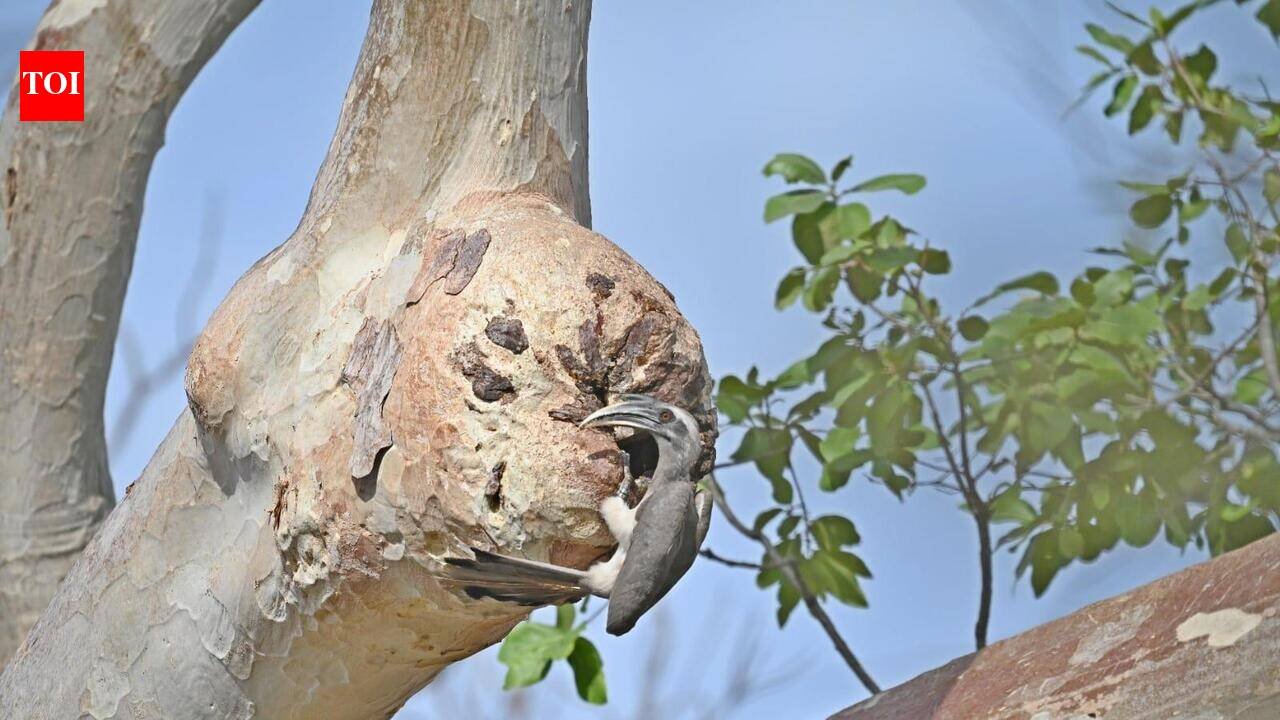
Ahmedabad: More than six decades after the Indian grey hornbill disappeared from Gujarat’s Gir forests, the state’s ambitious reintroduction programme has completed four years with encouraging conservation outcomes, as the birds have survived, bred and gradually established a self-sustaining population in the wild.The findings have been documented in the international peer-reviewed journal ‘Birds’ through a study titled ‘Reintroduction of Indian Grey Hornbills in Gir, India: Insights into Ranging, Habitat Use, Nesting and Behavioural Patterns’, highlighting the initiative as one of India’s most successful bird reintroduction programmes.According to the study by Mohan Ram, the Gujarat Forest Department launched the project in 2021 by translocating 40 hornbills from healthy populations in the Aravali forests of north Gujarat between 2021 and 2023.Officials said the reintroduced hornbills adapted well to Gir, established territories and successfully produced offspring. One breeding pair was recorded in the first year after release, followed by three more breeding pairs in the second year. Breeding has continued over the past four years.Principal chief conservator of forests (wildlife) and chief wildlife warden Jaipal Singh said historical evidence indicates hunting, rather than habitat loss, caused the species’ disappearance from Gir. “The successful breeding, shrinking home ranges and stable habitat use indicate that the reintroduction programme is progressing towards establishing a self-sustaining hornbill population,” he said.Satellite tracking also showed the birds now occupy stable territories and favour mature deciduous forests with old nesting trees.


