





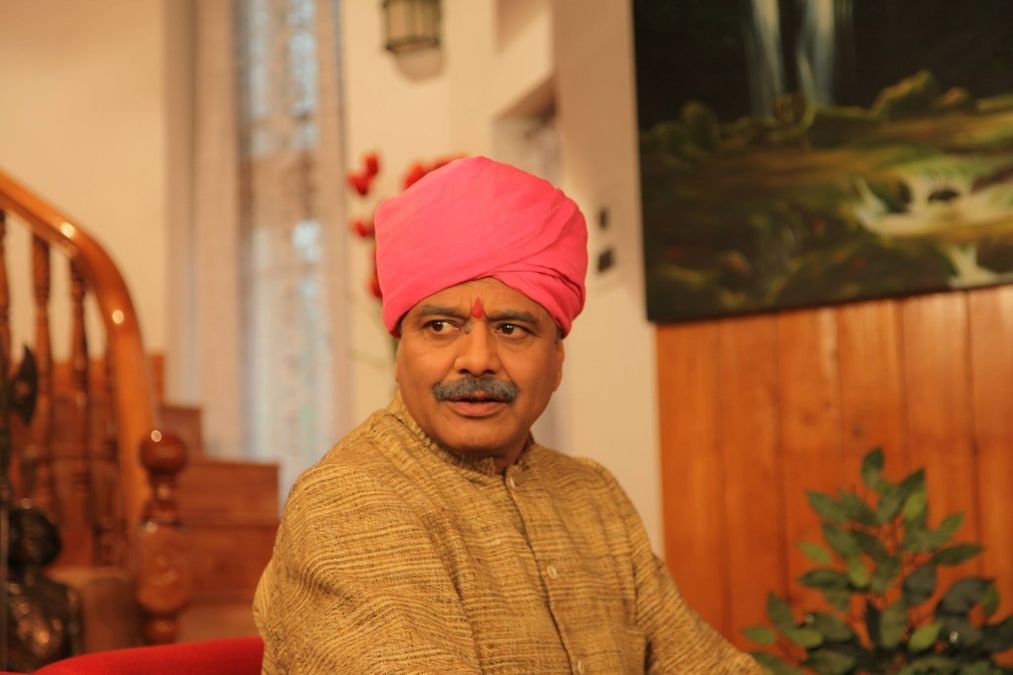
Born on 4 January 1954 into a Kashmiri Pandit family in Chotta Bazar, Srinagar, Shadi Lal Koul was the elder son of his family. From humble beginnings, he went on to become one of the most loved and respected artists Kashmir has ever produced. His popularity was not limited to a particular generation; he became a cultural phenomenon whose work connected with people from all walks of life.
His artistic journey began with the play “Yi Janam Ti Su Janam”, directed by the renowned Jai Kishan Zutshi. It was the beginning of an extraordinary career that would span several decades. There was no looking back after that. His play “Local Taxes Extra” played a historic role in bringing people back to Kashmiri theatre. The craze for the play was so immense that tickets were often sold in black. Such was his ability to attract audiences and make theatre a part of people’s lives.
Although Shadi Lal Koul became famous for his impeccable comic timing and unforgettable comedy characters, his contribution to serious theatre was equally remarkable. Many of his most acclaimed performances were in serious and socially relevant roles, earning him recognition and appreciation from critics and audiences alike. He received several awards during his career, yet his greatest reward was always the love of the people.
The 1980s proved to be a turning point in his life when he became a household name through the television series “Shabrang.” The series created history by becoming the first Indian television play to complete 100 episodes. The popularity of Shabrang was unprecedented. After its success, it became difficult for Shadi Lal Ji to walk through his locality unnoticed. People would gather around him, follow him, and eagerly wait to catch a glimpse of their beloved artist.
Many artists fade from public memory once they disappear from television screens, but Shadi Lal Koul was different. He remained relevant and loved through every decade because of his consistency, dedication, and ability to connect with audiences.
In the 1980s, he captivated viewers through Shabrang. In the 1990s, he delivered memorable performances in “Halyan Banan Wukri Thaan,” where his character Nik Bub became immensely popular among the masses. During the same period, he also appeared in celebrated productions such as “Rangan Hind Rang,” “Chattrass,” and “Hamal Damal.”
From 2000 to 2010, he continued entertaining audiences through productions like “Rustam Gota,” “Ghulam Begum Badshah,” “Cheri Truch,” “Anjar Manjar,” and “Yeli Tohi Badliv Teli Socho.” Even in the following decade, he remained active and relevant through works such as “Voubali Jaan,” “Jatt Wanae,” and “Tafreek Tax Maaf.”
Very few artists manage to stay connected with audiences for such a long period. Shadi Lal Koul did it effortlessly. His performances transcended generations, which is why people of all ages continue to love and admire him. Even today, years after his passing, his clips, reels, and videos regularly circulate on social media, bringing smiles and nostalgia to countless viewers. His work remains as fresh and relevant as ever.
One of the most remarkable aspects of Shadi Lal Koul’s life was the love and respect he received from every section of Kashmiri society. At a time when discussions about Kashmir are often dominated by differences, his life stood as a powerful example of the bonds that unite people. Being a Kashmiri Pandit, he was loved not only by his own community but equally by the Muslims of Kashmir, who considered him a member of their own family. His popularity crossed all social and religious boundaries. Wherever he went, he was welcomed with affection and warmth.
The state could have done much more to celebrate and preserve his legacy as a symbol of Kashmir’s communal harmony and shared cultural heritage. His story demonstrated how art has the power to bring people together and transcend divisions. Few personalities in Kashmir have enjoyed such genuine love across communities. Shadi Lal Koul’s popularity was never based on religion, caste, or region it was built on the immense affection people had for him as an artist and as a human being. Even today, years after his passing, that love remains unchanged and continues to unite people in his memory.
Despite achieving immense popularity and making an unparalleled contribution to Kashmiri theatre and television, many believe that Shadi Lal Koul did not receive the recognition he truly deserved during his lifetime. Ironically, he was awarded the State Award only after his death, though his contribution warranted many more honours and accolades. Yet, those who knew him closely would agree that he never worked for awards. The affection, admiration, and respect of the people were always enough for him.
Today, six years after his passing, the void left by Shadi Lal Koul is still deeply felt. However, legends never truly die. They live on through their work, their memories, and the countless lives they touch. Shadi Lal Koul continues to live in every smile created by his performances, every dialogue remembered by his fans, and every young artist inspired by his legacy.
On his sixth death anniversary, we remember not only a great actor but also a cultural icon who dedicated his life to entertaining, inspiring, and bringing joy to the people of Kashmir. His journey remains a testament to the power of art, humility, and humanity.
Shadi Lal Koul may no longer be with us physically, but in the hearts of Kashmiris, he remains immortal.
( The Author is the son of the late Shadi Lal Koul)


