



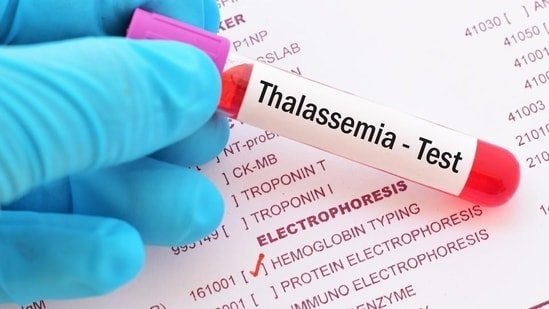
World Thalassemia Day is not only a moment of awareness. It is an opportunity to reassess how India approaches a condition that continues to impose a lifelong burden on thousands of families and a sustained demand on the healthcare system.
India carries one of the highest burdens of thalassemia globally. It is estimated that over 100,000 to 150,000 patients are living with thalassemia major in the country, with approximately 10,000 to 15,000 children born each year with the disorder. Additionally, nearly 3–4% of India’s population are carriers. These numbers are not merely epidemiological indicators; they reflect a continuing cycle that requires both systemic intervention and long-term policy clarity.
For most patients, survival depends on regular blood transfusions, typically every two to four weeks. While these transfusions are essential, they create a secondary clinical challenge. Repeated transfusions lead to iron overload, which, if not adequately managed through chelation therapy, can result in cardiac complications, liver damage, and endocrine dysfunction. Over time, the management of these complications becomes as critical as the transfusions themselves, significantly increasing the cost and complexity of care.
India has made important strides in strengthening its blood ecosystem. According to the ministry of health and family welfare, the country collects over 13–14 million units of blood annually, supported by a growing network of blood banks and voluntary donation drives. The National Blood Policy and the National Blood Transfusion Council have played a key role in improving access and standardisation. However, access alone is no longer sufficient. The next phase must focus on reducing dependency. This is where innovation becomes central to the conversation.
Globally, advances in gene therapy, bone marrow transplantation, and newer pharmacological interventions are beginning to redefine thalassemia care. Hematopoietic stem cell transplantation (HSCT) already offers a curative option, although its accessibility remains limited due to cost, donor availability, and infrastructure constraints. Emerging gene therapies and disease-modifying treatments hold the potential to significantly reduce transfusion requirements, if not eliminate them altogether.
For India, the question is not whether these therapies exist, but how quickly and equitably they can be integrated into the healthcare system. This requires a calibrated policy approach. Regulatory pathways need to be streamlined for advanced therapies. Domestic research and manufacturing capabilities must be encouraged. Public-private partnerships can play a crucial role in improving affordability and scale. The inclusion of such therapies within broader health financing frameworks, including schemes like Ayushman Bharat, could be explored to expand access.
At the same time, the most effective long-term strategy remains prevention.
Thalassemia is a preventable disorder. The ministry of health and family welfare has already recognised this through initiatives such as the National Programme for Prevention and Management of Hemoglobinopathies, which focuses on screening, counselling, and awareness. Several states have implemented premarital and antenatal screening programmes, but coverage remains uneven.
Scaling up carrier screening, particularly among high-risk populations, integrating genetic counselling into primary healthcare systems, and embedding awareness into school and community-level programmes can significantly reduce the incidence of new cases. In recent years, patient advocacy groups and civil society organisations working in the thalassemia ecosystem have also helped bring greater visibility to issues related to prevention, blood safety, access to treatment, and long-term patient care. Platforms such as the Thalassemia Patients Advocacy Group (TPAG) have contributed to strengthening stakeholder dialogue around the need for more patient-centric and future-ready policy approaches. International experience has shown that sustained prevention strategies can bring down disease burden over time. India has the institutional framework to achieve this; what is required is greater scale and consistency.
Equally important is the issue of blood safety. Patients with thalassemia are among the most frequent recipients of blood transfusions, making them particularly vulnerable to transfusion-transmitted infections. Strengthening screening protocols and adopting advanced testing technologies can further reduce these risks and improve long-term outcomes.
The policy direction, therefore, must be clear and two-pronged.
First, India must accelerate the adoption of innovative therapies that reduce or eliminate transfusion dependency. Second, it must significantly strengthen prevention strategies to reduce the number of new cases. These are not parallel tracks; they are complementary pillars of a comprehensive response.
There is also a broader economic rationale. The lifetime cost of managing a thalassemia patient through transfusions and supportive care is substantial. Investing in prevention and curative or disease-modifying therapies can reduce long-term healthcare expenditure while improving productivity and quality of life.
India’s health care journey is increasingly defined by its ability to combine scale with innovation. Thalassemia presents an opportunity to demonstrate this approach in action. The country has the policy intent, institutional mechanisms, and growing technological capability to shift from a model of lifelong management to one of meaningful reduction in disease burden.
World Thalassemia Day should, therefore, mark a shift in narrative. From transfusion dependence to therapeutic advancement. From fragmented awareness to structured prevention. From managing the present to securing the future.
The path ahead is not without challenges. But it is clearly visible. The imperative now is to act with urgency, alignment, and a long-term vision that places patients at the centre of policy.
(The views expressed are personal)
This article is authored by Tuhin A Sinha, national spokesperson, BJP.


