



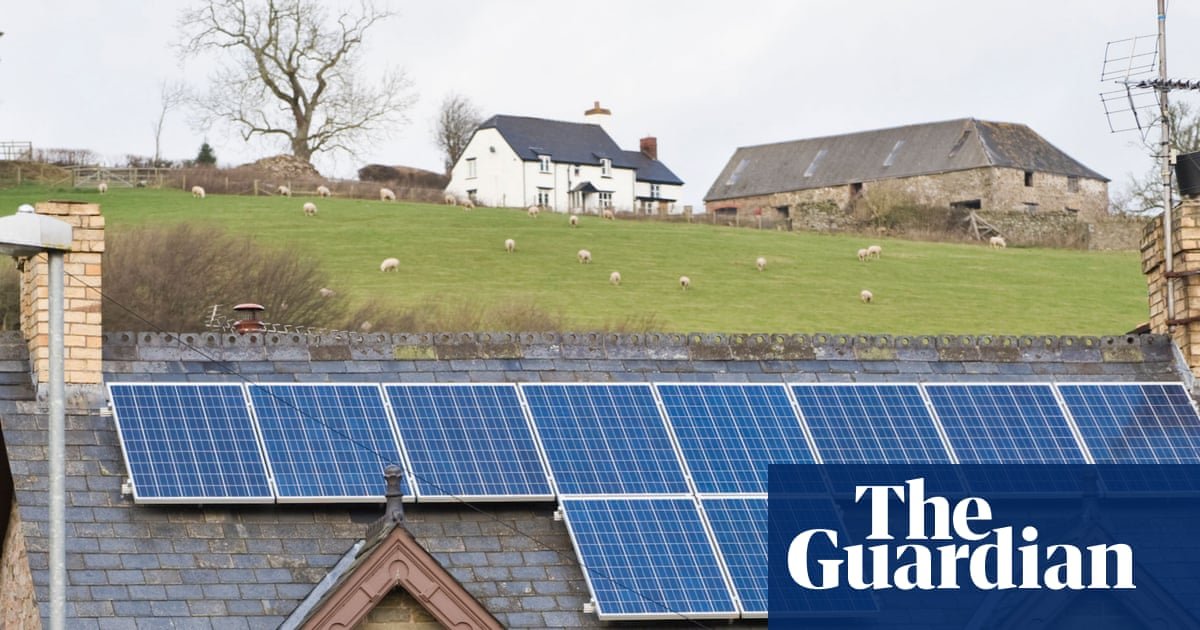
British households are turning to green home energy upgrades in record numbers to try to keep bills down as the Iran crisis sends global oil and gas prices soaring, data from leading energy suppliers suggests.
Figures show demand for solar panels, electric vehicles and heat pumps in Great Britain has leapt since the war began on 28 February, as households brace for a sharp increase in monthly payments when the next energy price cap takes effect in the summer.
Energy bills are expected to increase by 18% from July – to the equivalent of £1,929 for the typical annual dual-fuel tariff – after Europe’s benchmark gas price rose by about 50%.
Octopus Energy, the biggest GB energy supplier, shared figures with the Guardian showing its heat pump orders had more than doubled in March compared with February, while sales of solar power systems were up almost 80% and new leases of electric vehicles rose by more than 85%.
The same trend was noted by the sector’s second biggest player, British Gas, which has recorded a 250% increase in solar panel installation inquiries since 28 February. It has also noted a “significant increase” in those expressing an interest in heat pumps, a spokesperson said.
“British families are tired of being held hostage by global fossil fuel prices,” said Rebecca Dibb-Simkin, the chief product officer at Octopus. “We’re seeing a massive shift as people take matters into their own hands – switching to solar, heat pumps and EVs, locking in low running costs and shielding themselves from future price shocks.”
Allan Burgess, from Great Yarmouth, was one Octopus customer who chose last month to install a heat pump rather than rely on heating oil, which is used by more than 1m UK households to warm their homes and provide hot water, especially in rural areas not connected to the gas grid.
“Once the war in Iran started I knew I had to switch,” he said. “I’d been paying £250 for 500 litres of heating oil, but this rocketed up to £700 in less than a week. I was really worried about what might happen because I was running low on heating oil and had absolutely no idea how high prices could go.”
Heating oil is not covered by Ofgem’s cap, and British users have complained of rocketing prices and supply shortages since the war broke out. Its price is closely linked to the cost of jet fuel, which has soared since Iran in effect closed the strait of Hormuz. Europe relies on the Gulf refineries for about 60% of its jet fuel imports, and the UK is considered one of the countries most at risk of shortages.
“I was desperate to get a heat pump to protect us from this,” Burgess said. “But my wife’s disabled so I couldn’t afford to have any disruption to our heating for an extended period of time.”
Burgess arranged a heat pump fitting on 12 March. A survey was carried out two days later and the pump was installed by 17 March, he said.
His home already had a water tank, which kept the cost of installing the heat pump system to £1,500 after the government’s £7,500 grant. Burgess also has solar panels and a battery, which now supply electricity to run the heat pump without the need for extra electricity from the grid.
Furbnow, a home energy upgrades provider, has recorded a 42% increase in the number of inquiries since the end of February, with a marked increase in new inquiries specifically about cutting reliance on fossil fuels.
Becky Lane, the company’s chief executive, said: “These aren’t panicked reactions, they’re considered decisions. Families have realised the most resilient thing they can do is reduce how much energy their home needs in the first place. No price spike can touch a home that barely needs energy.”
Almost three-quarters of its prospective new customers have requested solar panels, and more than half have shown an interest in trading in their gas or oil boilers for an electric heat pump. About 40% have requested a quote for upgrading their insulation.


