



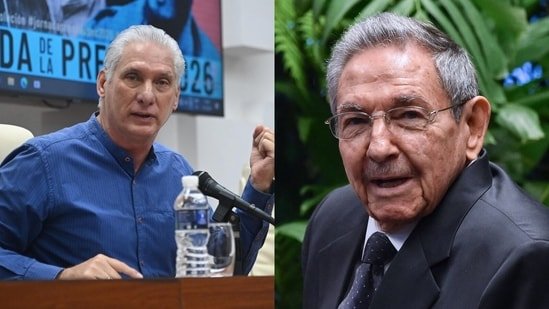
Cuban President Miguel Díaz-Canel reacted to the US indictment of his predecessor, Raúl Castro, over the 1996 downing of two planes, calling it a “political move with no legal basis.”


In a post X, Díaz-Canel said that the charges aim to “add to the file they are fabricating to justify the folly of a military aggression against Cuba.”
The US’s move to charge former Cuban president Raúl Castro with murder has further escalated the tensions between the two countries, with the Trump administration trying to force change in Havana after nearly seven decades of communist rule.
ALSO READ | Where is Raul Castro now? Ex-Cuba president’s current whereabouts in focus after DOJ indictment
Acting Attorney General Todd Blanche announced Castro’s indictment on Wednesday.
Raúl Castro’s US murder indictment
The charges relate to the February 1996 downing by Cuba of two civilian aircraft run by the Florida-based exile group Brothers to the Rescue.
The Cessnas were reportedly shot down outside the Cuban airspace, killing four people, according to an International Civil Aviation Organisation investigation.
The incident, which occurred when Castro was a defense minister, quickly snowballed into a highly sensitive diplomatic flashpoint between Cuba and the United States.
“For the first time in nearly 70 years, senior leadership of the Cuban regime has been charged in this country, in the United States of America, for acts of violence resulting in the deaths of American citizens,” Blanche said.
Blanche further told reporters that the US expects Castro to appear in the country “by his own will or by another way” after being indicted on murder charges.
Further, the US Department of Justice has sought to unseal the indictment against Raúl Castro and five other people in a filing in a federal court in Florida.
ALSO READ | Raúl Castro: 5 things to know as US indicts former Cuban President, with Trump eyeing to oust regime
Raúl Castro, who turns 95 next month, succeeded his brother Fidel as Cuba’s President in 2008 and as head of the Communist Party in 2011.
Miguel Díaz-Canel took over the presidency in 2018 and as party chief in 2021. Though Castro no longer plays a formal role in the government, he is believed to retain significant influence within the inner circle.
Castro pursued economic reforms and was a central player in the brief reset in ties with the US under President Barack Obama.


