



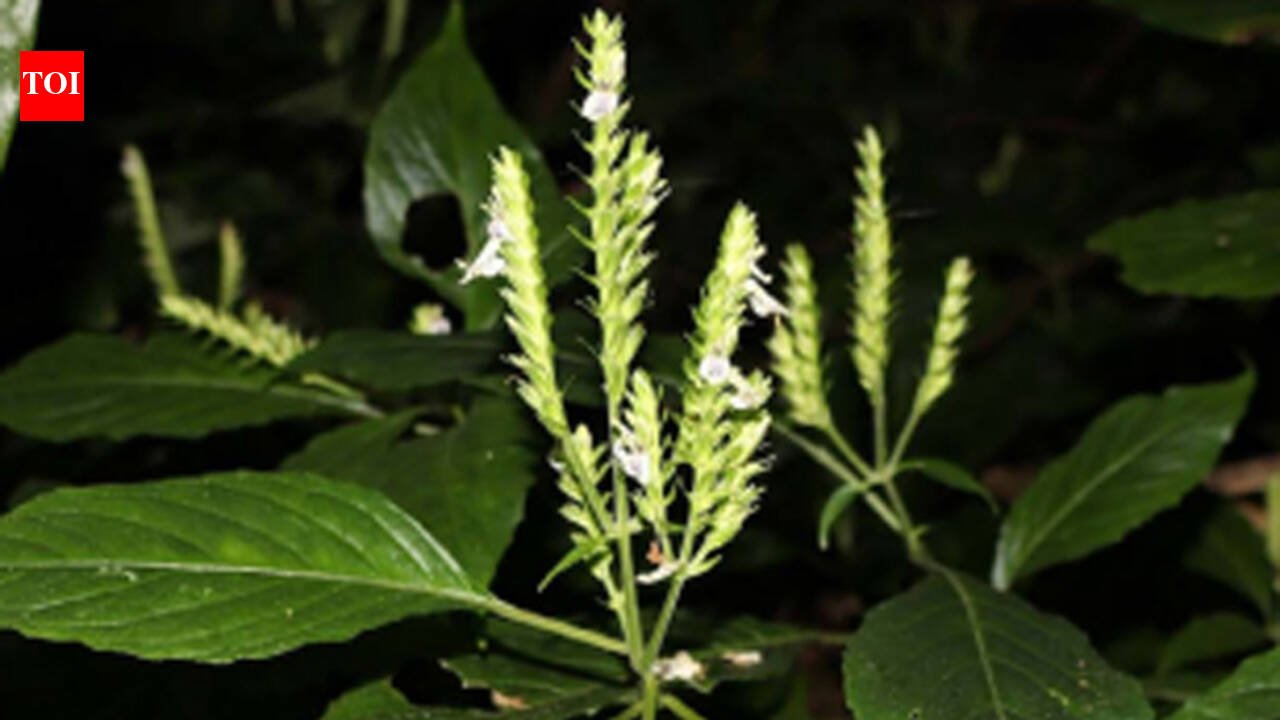
Silchar: A plant lost to science for nearly 180 years has resurfaced in Assam’s Jatinga Hills, spotlighting the northeast’s hidden botanical wealth.Assam University researcher Kankan Kumar Das and Prof Debjyoti Bhattacharyya of the department of life science and bioinformatics rediscovered Rungia mastersii during field surveys in Dima Hasao district.The rare plant was growing in moist, shaded rock crevices beside a stream. The finding has been documented in an international peer-reviewed botanical journal.British botanist J W Masters first collected the species in 1845 from an unidentified site along the Sundar River in Assam. No living specimen was since reported anywhere in the world. The Botanical Survey of India had only one preserved herbarium specimen.Belonging to the Acanthaceae family, Rungia mastersii is a shrubby herb that grows 60-110 cm tall in moist forests at elevations of 900-1,250 metres. It bears pale green to whitish flowers with delicate purple streaks.Researchers have found only one natural population of around 40 plants, highlighting the species’ extreme rarity.Though listed as “not evaluated” under the International Union for Conservation of Nature Red List criteria, its tiny known population makes it highly vulnerable, the researchers said. They called for immediate monitoring and habitat protection to prevent its extinction.The rediscovery underscores the rich yet poorly explored biodiversity of Assam and the wider northeast, where scientists believe other rare and undocumented species may survive in remote forests.
Researchers have found only one natural population of around 40 plants, highlighting the species’ extreme rarity
Researchers have found only one natural population of around 40 plants, highlighting the species’ extreme rarity


