


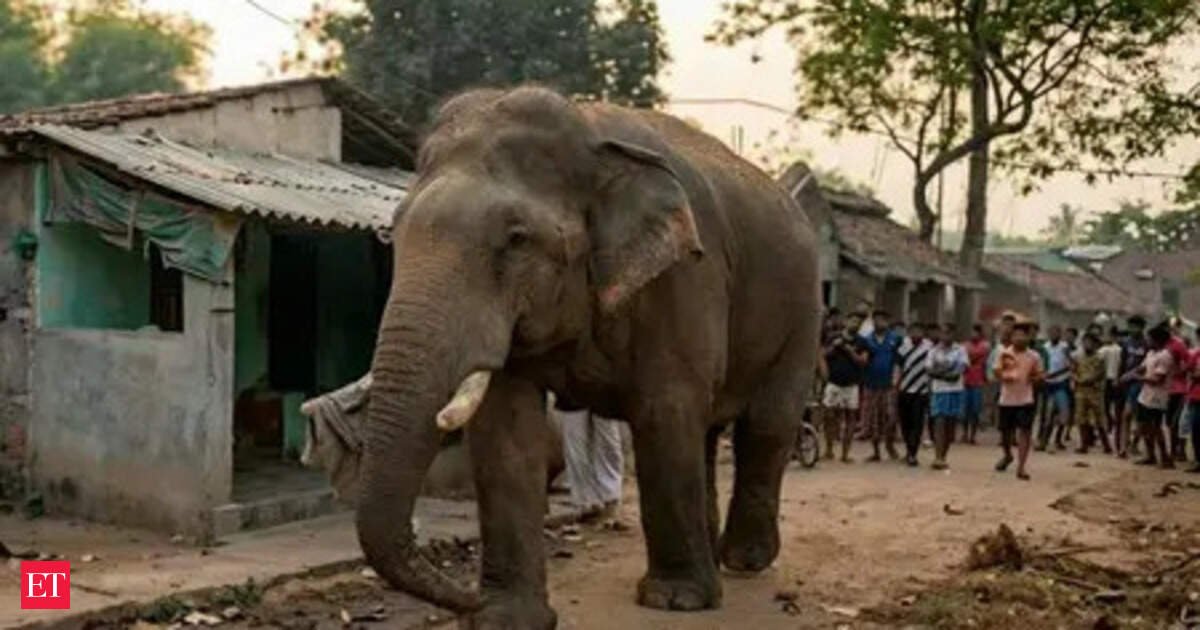
Before polling could gather pace at Jitushol Primary School, a booth tucked deep inside the forested belt of Jangalmahal, the jumbo ambled in, turning an otherwise routine start into a spectacle that blended anxiety with amusement.
Also Read: West Bengal Elections 2026 who will win? US-based Polymarket betting site shows BJP 52%, TMC 47%; bets cross $2 million
Polling officials were still settling in, voters were trickling towards the booth, and then came ‘Ramlal’ – swaying past the queue, peering curiously at a parked vehicle, and momentarily holding up the democratic exercise with its own brand of silent assertion.
For a state accustomed to political heavyweights flexing muscle during elections, this was a different kind of “show of strength”.
Forest officials rushed in from the Lodhashuli range and gently nudged the tusker away to a safe distance, clearing the way for polling to begin. Within minutes, the booth was back to business- voters queuing up not for a glimpse of the elephant, but to press the EVM button.
By 11 am, around 41 per cent turnout was recorded across the 152 constituencies in the first phase, with officials describing the process as largely peaceful, barring a few stray incidents reported overnight.Also Read: EC orders report on alleged voter intimidation in Murshidabad’s Domkal
But in Jangalmahal, where man-animal conflicts are part of life, the administration had prepared for this possibility as seriously as it had for any political flashpoint.
Special teams, including elephant trackers and rapid response units, were deployed across the region. The forest department pressed its ‘Airavat’ vehicles into service, while experienced “hulla” parties remained on standby not to disperse crowds, but to drive wandering elephant herds away from polling stations.
Officials said coordination between polling personnel and forest teams had been tightened, with emergency contact networks put in place to ensure a swift response to any wildlife movement.
‘Ramlal’, locals say, is no stranger to these parts. Known for his solitary wanderings across Jhargram, Paschim Medinipur, Bankura and even neighbouring Odisha and Jharkhand, the tusker is often welcomed by villagers with offerings of paddy, fruits and vegetables.
If elections are about managing the unpredictable, Jhargram offered a reminder that not all disruptions come with party flags.
As ‘Ramlal’ disappeared back into the forests and voters returned to the queues, the message was clear: in Bengal’s ballot battle, even the wild may wander in, but the vote goes on.
