



Last Updated:
With six candidates in the fray for five seats, the election has turned into a test of legislative arithmetic, alliance discipline and possible cross-voting
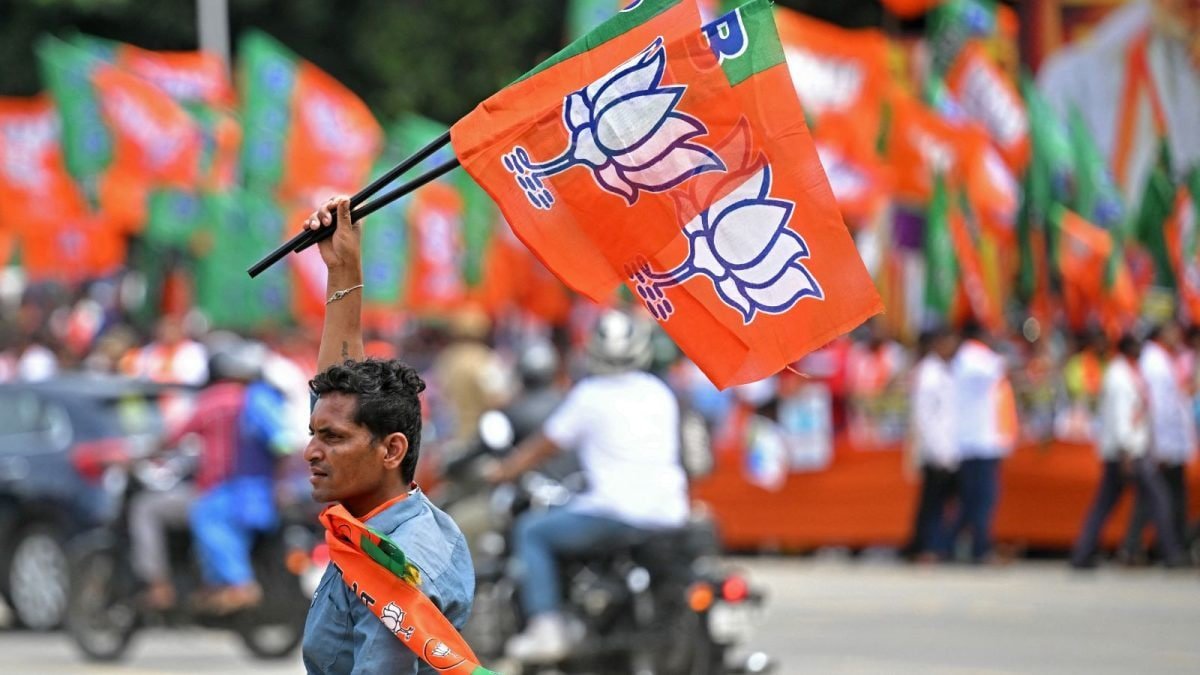
While the NDA is confident of winning four seats, its fifth candidate— Shivesh Kumar—will need at least three cross votes from the Opposition for the alliance to make a clean sweep. (AFP)
Even as voting for 37 Rajya Sabha seats across 10 states is underway, the political spotlight is on Bihar, where five Upper House seats are being contested amid intense manoeuvring between the ruling NDA and the opposition bloc.
With six candidates in the fray for five seats, the election has turned into a test of legislative arithmetic, alliance discipline and possible cross-voting. While the NDA is confident of winning four seats, its fifth candidate— Shivesh Kumar—will need at least three cross votes from the Opposition for the alliance to make a clean sweep. On the other hand, the Opposition led by the RJD hopes to secure at least one seat with support from smaller parties, making Bihar the most closely watched battleground in Monday’s Rajya Sabha polls.
What Is Cross-Voting?
Cross-voting happens when an MLA votes for a candidate other than the one nominated by their own party or alliance. Because Rajya Sabha voting is done through a secret ballot using the single transferable vote system, it sometimes allows legislators to defy party instructions without immediate detection.
How The Vote Quota Is Calculated
The Bihar Assembly has 243 MLAs.
To elect one Rajya Sabha MP, the formula is: Quota = [Total MLAs/Seats + 1] + 1
In Bihar, for the five seats in question, the number would be: [243/6] + 1, which is equal to approximately 41. This means every candidate needs 41 first-preference votes to win a seat.
Now, let’s see the approximate bloc strength and the current political strength in the Bihar assembly. The ruling alliance – NDA – consists of the Bharatiya Janata Party, Janata Dal (United) and allies, making up a total of about 202 MLAs.
In the opposition bloc, the strength of the Rashtriya Janata Dal is 25 MLAs, Congress is six, and Left parties are at three, making up about 35 MLAs. The others include All India Majlis-e-Ittehadul Muslimeen at five and Bahujan Samaj Party at one, according to NDTV.
Seat Arithmetic
For the NDA, the votes available are 202. This means the number of guaranteed seats is 41 × 4, which is 164 votes. Now the votes left after four seats is 202-164 = 38 votes. To win a fifth seat, NDA needs three more MLAs from outside.
In the opposition bloc, the votes are 35, and the number needed for one seat is 41. This means the Opposition needs six more MLAs from AIMIM/BSP/others to win one seat.
This is why cross-voting becomes crucial because the fifth seat is numerically tight.
What Are The Possible Scenarios?
Scenario 1: NDA gets cross-votes
If three opposition MLAs cross-vote, NDA wins all five seats.
Scenario 2: Opposition unites
If AIMIM (5) + BSP (1) support Opposition, it will mean 41 votes, which means the Opposition wins one seat.
Scenario 3: Split among smaller parties
If AIMIM fields its own candidate, opposition votes split, which means NDA could win the fifth seat easily.
The race is down to the wire as a few MLAs can turn the game on its head. The political parties are on the edge as 1-3 MLAs switching sides can decide the last seat. Apart from this, smaller parties like AIMIM hold kingmaker power and can flip the result. Also, given the secret nature of voting, alliances are trying to keep their flock together.
March 16, 2026, 10:54 IST
Read More


