






Tracy McGregor recalled the derailment as like a “metal tube carving through the earth”, picking up dirt from the field.
She said: “When it did stop, there was this almighty cloud of mud and earth and everyone had mud on their faces.”
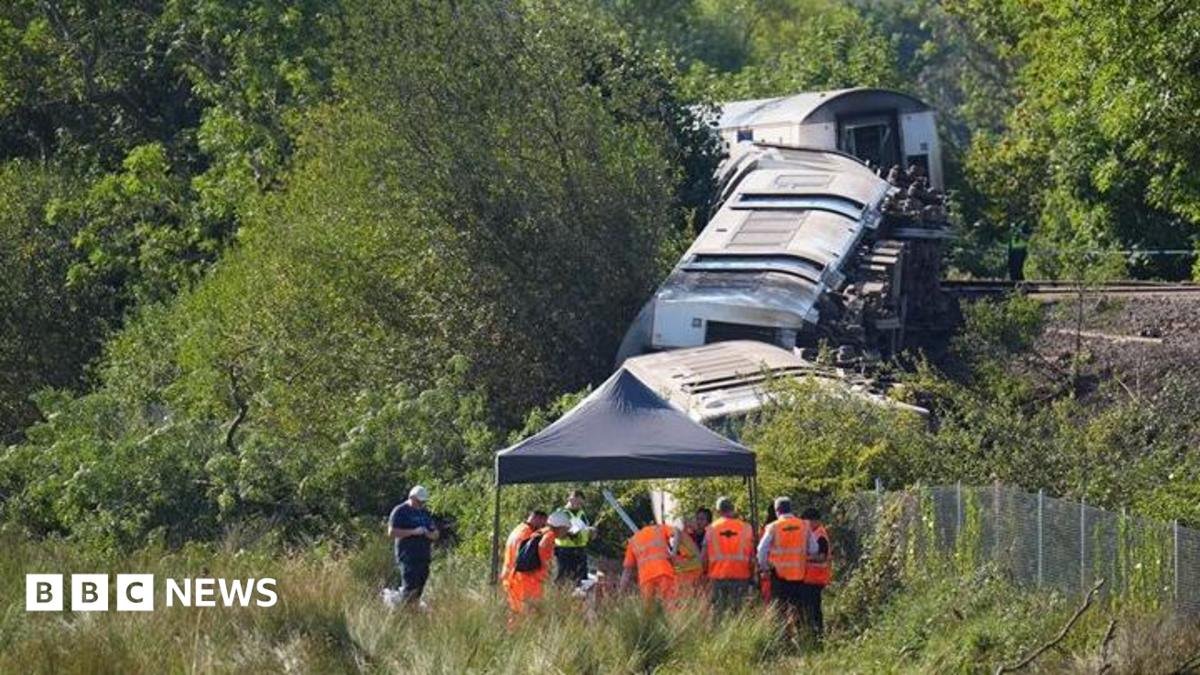
Pictures at the Lewes derailment have shown how the force of the train leaving the tracks had flattened trees and left a piece of track strewn across the embankment.
Preparations were being made on Friday for the use of a crane to remove the derailed carriages.
Investigators, along with emergency teams and Network Rail, are operating from a command centre set up in a nearby field.
Work includes examining the accident site, the derailed train and railway infrastructure.
An RAIB spokesperson said investigators expect to provide an update next week.
Following the Lewes and Wickford train derailments, Network Rail’s safety director confirmed investigations will look at whether the impact of the heat on tracks and other infrastructure were factors in the derailment.
In an interview with the BBC, Martin Frobisher also said speed restrictions were not in place in either location at the time.
Asked if there had been a safety inspection of the section of track involved in the derailment near Lewes the previous day, he said: “Yes, but look, I don’t want to speculate on the cause.”
Frobisher added it was “too early to speculate on the full findings”.


