






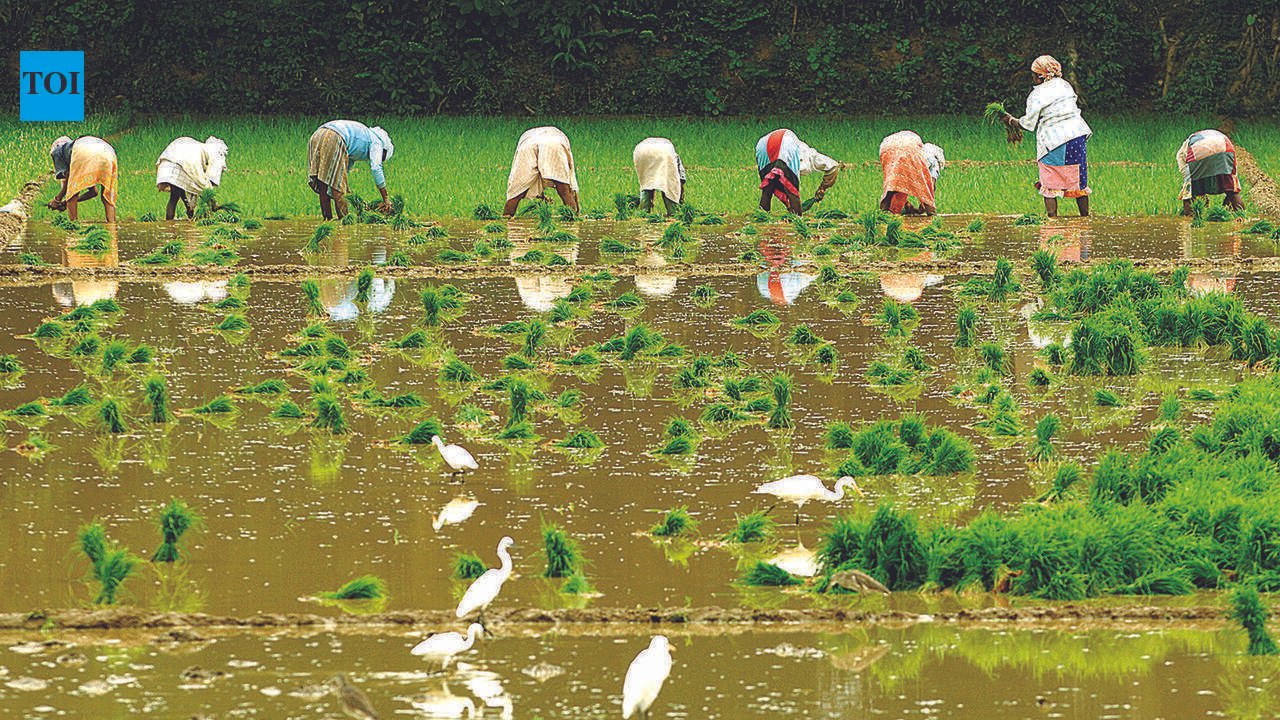
Panaji: Traditional farming practices may be fading into history, but Raia’s farmers are turning back the clock by reviving a centuries-old irrigation network that had remained defunct for nearly four decades.The initiative, led by the Raia biodiversity management committee (BMC) and the village panchayat, aims to restore the village’s traditional Ganvkari irrigation system.“Raia had a remarkable irrigation system where freshwater from the surrounding hills and natural springs was channelled through canals to irrigate fields during both the kharif and rabi seasons,” said Antonio Xavier Fernandes, chairman of the Raia BMC. “Over the last 40 years, the entire network had collapsed. We have now managed to revive nearly 50% of it,” he told TOI.The restoration involved repairing age-old canals and rebuilding three traditional bandharas — small dams constructed within irrigation channels to store freshwater. The structures regulate water flow through sluice gates, enabling farmers to irrigate fields during the rabi season.“With logistical support from the water resources department and financial assistance from the village panchayat for operating the sluice gates, we have brought the forgotten system back to life. Four more bandharas are now awaiting restoration. Nearly one lakh square metres of farmland, which lay fallow during the rabi season, has returned to cultivation as a result,” Fernandes said.The BMC has also introduced Rakthashali, an indigenous rice variety from Kerala and Karnataka that is on the brink of disappearing.K K Manohara, senior scientist (plant breeding) at ICAR-Central Coastal Agricultural Research Institute, Old Goa, told TOI that the traditional red rice variety is prized for its reddish-brown husk, nutrient-rich unpolished grain, and reputed health benefits, particularly for people with diabetes.“We transplanted the crop only about ten days ago. Rather than producing grain for commercial sale, the current cultivation is aimed at establishing a seed bank that will enable the variety to be multiplied and distributed among more farmers in the coming seasons. Our objective is to preserve the seeds so that this traditional variety does not disappear,” Fernandes said.The BMC plans to introduce two more indigenous rice varieties next year under the same seed conservation initiative.


