



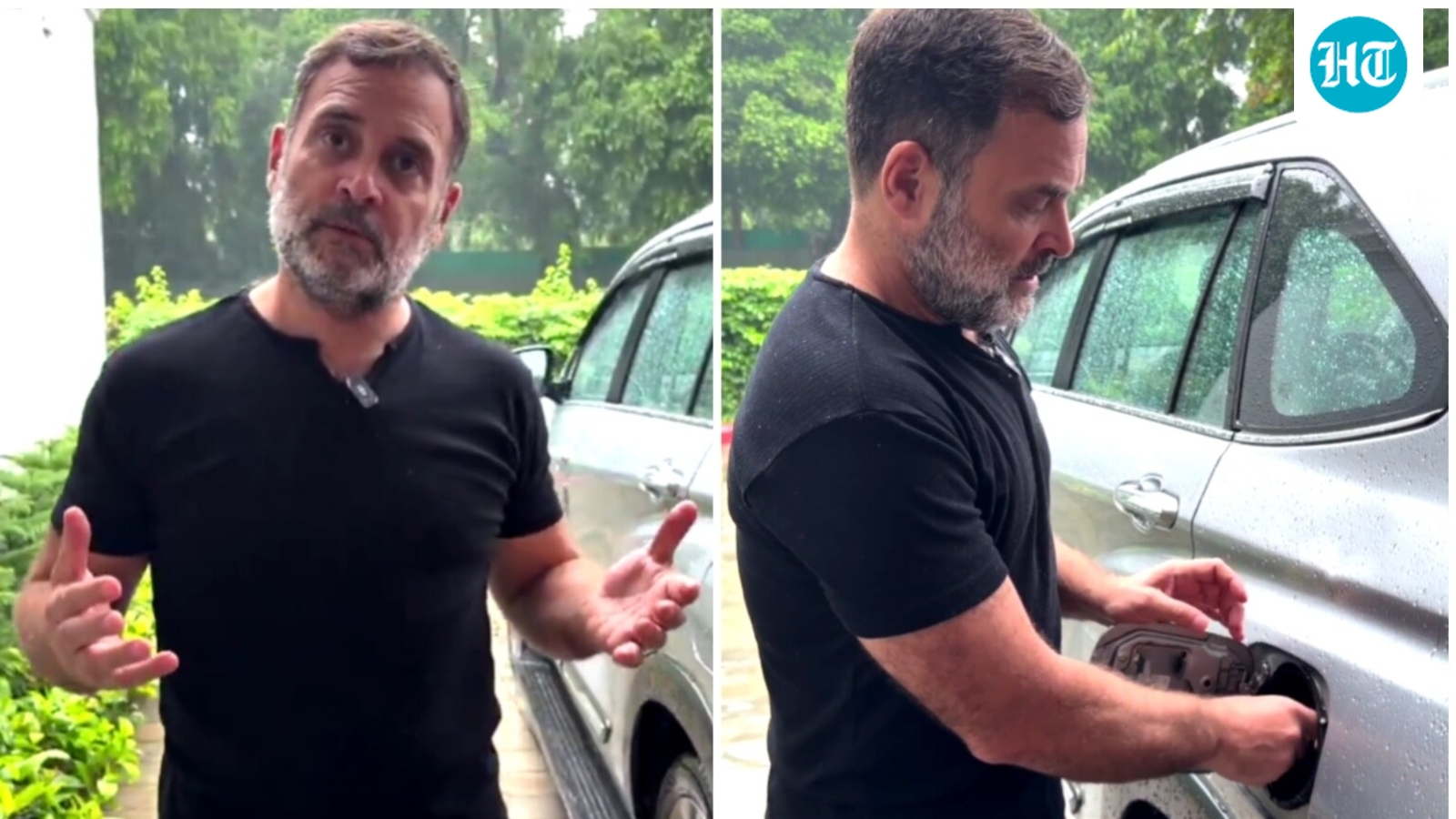
Congress leader Rahul Gandhi on Friday stepped up the opposition’s attack on the Centre’s nationwide rollout of E20 petrol. The Leader of Opposition in the Lok Sabha said it was a “very big issue” and alleged it was damaging vehicles and burdening consumers.

In a video message, the Congress MP said the party would take up the issue aggressively and claimed the rollout was hurting vehicle owners across the country.
“The issue of E-20 is a very big issue. Normally, we say Daal mein kuch kaala hai, but yahaan toh puri Daal hi kaali hai. (There is something wrong with lentils. But this lentil itself is wrong),” Gandhi said.
ALSO READ | AAP raises concerns over E20 fuel policy, seeks greater consumer choice
“This is a matter of sequencing. In any campaign, we have to decide the sequence of affairs. Our problem right now is that there is so much corruption that there is a huge line in what we have to sequence,” Rahul Gandhi said.
He said that the Congress would launch a campaign on the issue. “Don’t worry, this issue, we are going to take it up in a massive way because this is destroying people’s cars, destroying people’s scooters, destroying people’s lives and literally is stealing directly from them,” he said.
What is the E20 issue?
The debate revolves around the Centre’s rollout of E20 petrol, which contains 20% ethanol and 80% petrol, across the country.
The government says the policy will reduce crude oil imports, lower carbon emissions, improve energy security and support farmers by increasing demand for ethanol produced from crops such as sugarcane and maize. India achieved its 20% ethanol blending target in 2025, ahead of schedule, and E20 is now the standard petrol sold nationwide.
That said, Opposition parties, some vehicle owners and sections of the automobile industry have raised concerns over its implementation.
ALSO READ | SIAM’s now-withdrawn letter: What the science says about chloride, moisture and your E20 petrol
The key concerns of E20 use
Vehicle compatibility: Owners of older petrol vehicles fear E20 may affect engines and fuel system components that were not designed for higher ethanol blends.
Lower fuel efficiency: E20 will reduce mileage by around 2-6%, depending on the vehicle, said Union road and transport minister Nitin Gadkari in Parliament recently. Petroleum minister Hardeep Singh Puri also made the same claims earlier this year.
Lack of consumer choice: Motorists should be allowed to choose between E20 and conventional petrol, particularly those driving older vehicles, commuters told HT earlier.
Vehicle damage concerns: Some motorists have reported engine-related problems after using E20 fuel. There is currently no conclusive nationwide evidence that E20 itself is causing widespread vehicle failures.
Earlier this week, the Society of Indian Automobile Manufacturers (SIAM) withdrew an earlier warning related to possible damage from contaminated ethanol-blended fuel, saying the available data required further verification.
AAP also questions E20 rollout
The Aam Aadmi Party (AAP) has also raised concerns over the policy, calling for transparency and consumer choice.
AAP’s national convenor Kejriwal referred to an alleged SIAM report that, according to him, showed concerns over chloride and moisture levels in E20 fuel and their possible impact on vehicle engines. He questioned why the report was reportedly withdrawn and demanded that any technical findings be made public.
The party has asked the Centre to allow consumers to choose between E20 and conventional petrol instead of limiting them to a single fuel option. It has also sought an independent review of the issues it says have been flagged regarding the fuel blend.
AAP says that consumers should have complete information about the policy and the flexibility to select the fuel best suited to their vehicles.
ALSO READ | Is Centre planning to mix ethanol in Aviation Turbine Fuel? What Union minister said
Government backs E20 policy
The Centre has defended the E20 programme, saying it has been scientifically evaluated and is a key part of India’s biofuel strategy.
According to the government, the initiative aims to reduce dependence on imported crude oil, cut emissions, support domestic ethanol production and strengthen India’s long-term energy security.
In June, the government approved the regulatory framework for E100 fuel. Nitin Gadkari announced that he signed the regulations which would create a legal framework for automakers to introduce E100-compatible vehicles.


