



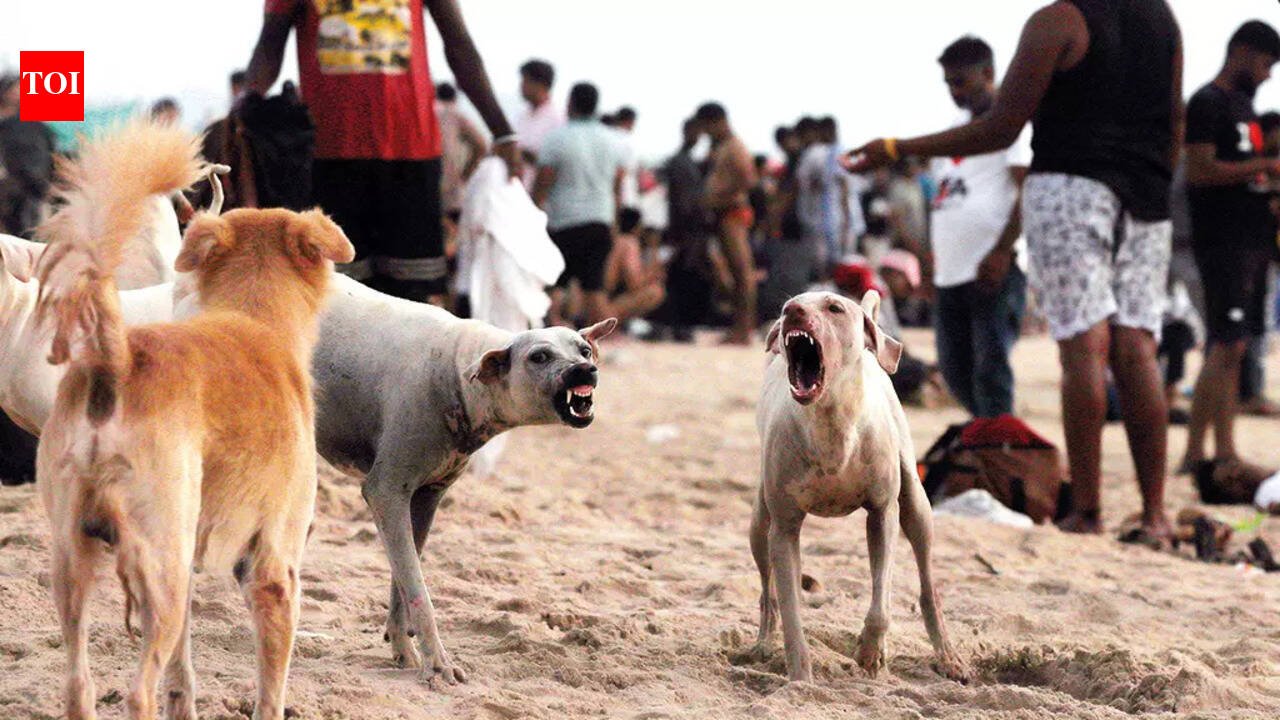
The spread of this highly contagious virus, often fatal and incurable, has been a cause of concern for animal welfare groups in the state. Besides, the disposal of animal carcasses also poses sanitation risks
Goa’s hard-won reputation as a ‘rabies-controlled’ state is facing a fresh animal health challenge as canine distemper cases grip the state burdening animal welfare groups.According to Dr Murugan Appupillai, director of education, Mission Rabies, “Earlier the cases were sporadic. But now, it looks like it is getting repeated from time to time.”
The directorate of animal husbandry has been unable to provide consolidated statewide data on canine distemper deaths. However, animal welfare groups and organisations report that on average, at least two dogs succumb to the disease each day.“Though distemper cases remain widespread, many dog deaths go unreported,” said Atul Sarin, founder of Welfare for Animals Goa (WAG).Data shared by animal welfare organisation, Panjim Animal Welfare Society (PAWS), reveals that in Panaji and surrounding areas such as Taleigao, Merces, Santa Cruz, Curca and Bambolim, there were 14 dog deaths in Feb. Sweta Sardesai, who runs PAWS, said that recovery is possible in mildly affected dogs, but advanced neurological cases often have a poor prognosis.“As distemper is not curable, we have to euthanise the dogs when they get to a very bad stage. There have been zero survivors,” Sardesai told TOI.
In Oct 2025, the directorate of animal husbandry and veterinary services (AHVS) issued a warning that cases of canine distemper were observed in parts of the state and advised pet owners to vaccinate their dogs, as there is no specific antiviral treatment for the disease.Canine distemper virus (CDV) is a highly contagious viral disease affecting dogs, particularly unvaccinated strays and puppies. It attacks the respiratory, gastrointestinal and nervous systems, often leading to severe neurological symptoms and death. The symptoms are often very similar to that of the rabies virus.It is not transmissible to human beings and spreads only from dog to dog through respiratory droplets, saliva, or contact with the urine and faeces of infected animals.As the disease progresses, the virus can affect the nervous system, leading to muscle twitching or convulsions, partial or complete paralysis, head tilt, circling movements, and seizures.
“We would see distemper only in the colder months of the year,” said Dr Stacy Sequeira from World Veterinary Services (WVS) India, Assagao. “However, since last year, we are seeing a much more severe outbreak than normal, which is lasting throughout the year.”According to the veterinarian, its rapid spread among street dog populations creates sanitation and environmental concerns.One of the most pressing challenges is the scientific disposal of carcasses. With no dedicated animal incinerators available in Goa, animal welfare groups are forced to bury infected carcasses themselves, digging graves at least six feet deep to prevent contamination and reduce the risk of further spread.“This is a matter of basic sanitation and health. In general, all animal species suffer when there is unscientific disposal of waste. An incinerator is a necessity not just for distemper cases but any animal carcasses that need to be scientifically disposed. We need at least two incinerators each in North and South Goa,” said Sejal Vora, trustee, Alpha Angels Welfare Trust.“In some villages, carcasses are often buried in shallow graves and there is no action taken by the panchayats,” a volunteer said, expressing concern that without proper disposal infrastructure, this could spiral. “If we are aiming to become the first rabies virus-free state in India, we cannot ignore canine distemper,” he added.As cases mount, animal welfare groups say immediate policy attention is required before it deepens into a full-blown crisis, putting Goa’s ambition of becoming the first (dog-related) virus-free state in India at risk.“This matter heavily threatens Goa’s status. We encourage people to vaccinate pet as well as community dogs because this a very contagious disease,” said Atul Sarin.


