






A wall can keep people apart. So can distance, fear, pride, anger, timing or circumstances. But Maya Angelou imagined love as something that refuses to stop at any of them.“Love recognizes no barriers. It jumps hurdles, leaps fences, penetrates walls to arrive at its destination full of hope.”It is an unusually physical way to describe something we usually think of as an emotion. Angelou does not make love sound quiet or passive. In her words, it climbs, jumps, pushes through and keeps going. And that may be what makes this quote feel so powerful even decades after it was written.
What did Maya Angelou mean by “love recognizes no barriers”?
Angelou’s words suggest that genuine love is not defined simply by how strongly we feel something. It is also reflected in what we are willing to overcome for someone.The “walls” in the quote do not necessarily have to be physical. They can be misunderstandings between two people, differences in background, fear of rejection or even the emotional distance that develops after years of hurt.The interesting part is the word “hope”.Angelou could have ended the sentence with love reaching its destination. Instead, she describes it arriving “full of hope”. That changes the feeling of the quote. Love, in this sense, is not about winning or possessing someone. It is about continuing to believe that connection is possible.And that idea has a surprisingly strong connection with what psychologists know about human relationships.
Why do people try so hard to stay connected?
Humans are deeply social creatures. Our relationships are tied to emotional wellbeing, belonging and even how we see ourselves.When people feel connected to others, they tend to experience greater emotional support and a stronger sense of belonging. On the other hand, loneliness and social disconnection can affect both mental and physical wellbeing.That does not mean love can magically overcome every obstacle. Some barriers are real, and some relationships are unhealthy or unsafe. Walking away can sometimes be the healthier act.Angelou’s quote is better understood as an observation about the human desire to connect, the instinct that makes people reach across differences and try again after disappointment.
Maya Angelou knew something about overcoming barriers
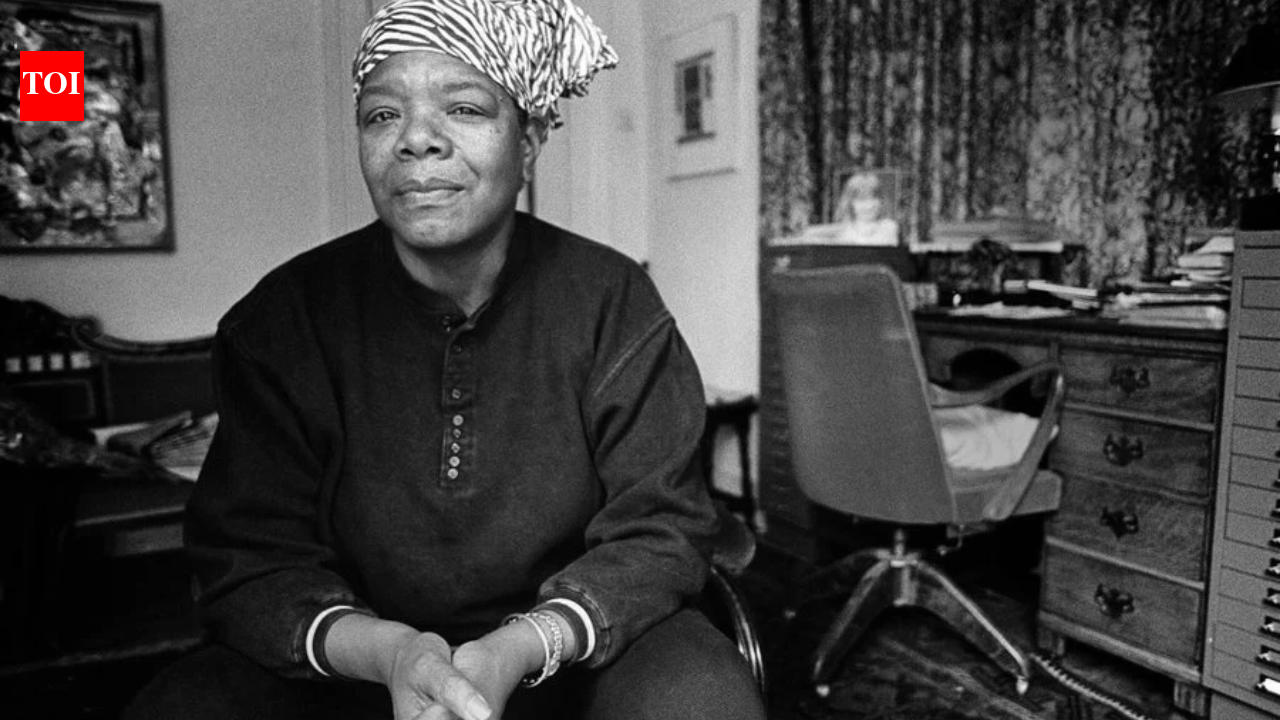
Angelou’s own life gives the quote another layer.Born Marguerite Annie Johnson in 1928, she became a poet, author, performer, activist and one of the most recognisable literary voices in America. Her childhood included severe trauma, racism and years in which she barely spoke.Yet her life eventually became a story of finding a voice and using it.Her writing repeatedly returned to themes of dignity, resilience, identity, love and human connection. That is why a line about love climbing over fences feels particularly fitting when read alongside her wider body of work.She understood that people can be shaped by the barriers placed in front of them without necessarily being defined by those barriers.
The quote is really about more than romance
“Love” is often reduced to romantic relationships. Angelou’s words allow for something much bigger.Love can exist between parents and children, friends, siblings, communities and people separated by culture or circumstance.Sometimes the barrier is something as ordinary as an apology that has not yet been made. Sometimes it is thousands of kilometres between two people. Sometimes it is simply the fear of saying, “I still care.”That is where the image in Angelou’s quote becomes memorable.A hurdle is jumped. A fence is crossed. A wall is penetrated.Each image is about movement.Love, in her telling, does not sit on one side of the obstacle and wait for it to disappear. It tries to find a way through.
But there is an important catch
The quote should not be read as saying that love requires people to tolerate everything.Healthy love needs boundaries too. A relationship cannot always be repaired simply because one person wants it badly enough. Abuse, manipulation, repeated disrespect and serious differences in values are not obstacles that someone is morally required to overcome.Sometimes the most loving decision is to create distance.So perhaps the deeper message in Angelou’s words is not that love conquers every barrier. It is that meaningful human connection is worth making an effort for when the relationship itself is healthy and worth preserving.And that makes the final word of the quote especially significant: hope.Not certainty. Not possession. Hope.A small belief that despite the wall, the distance or the hurt, there may still be a way to reach the other side.That may be why Angelou’s words continue to resonate. We have all encountered some version of a wall in our relationships. Sometimes it is enormous. Sometimes it is only one difficult conversation.And sometimes, all it takes to begin crossing it is the courage to take the first step.


