



Every day, we come across situations that test our patience, confidence, and emotional balance. Even the tiniest of actions like a delayed reply, criticism at work, unexpected setbacks, or even a simple misunderstanding, can instantly affect our mood. And while we often wish that the world around us would become kinder, calmer, and more quiet, it real life, it’s far away from that. It is scientifically believed that every action has an equal and opposite reaction, but how and in what manner we react is what makes the true difference.The difference is not whether difficulties arise, but how we respond when they do. Our thoughts silently define our emotions, decisions, relationships, and overall well-being. The words we repeatedly tell ourselves become the lens through which we see the world.Life coach and engineer turned monk has beautifully weighed in on this outlook and his wise words seem to make a huge impact and keep ringing.
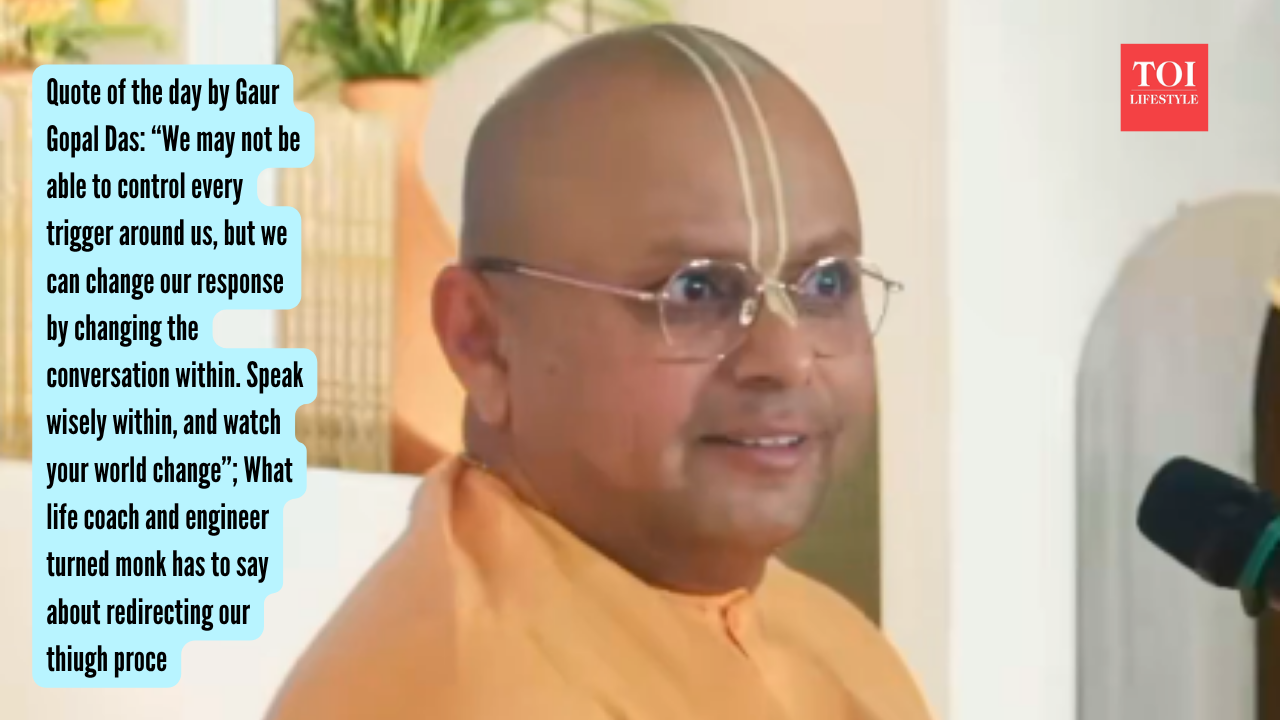
Gaur Gopal Das (Photo: X)
Quote of the day
We may not be able to control every trigger around us, but we can change our response by changing the conversation within Speak wisely within and watch your world change
Gaur Gopal Das
What does the quote mean?
Das talks about the important truth around emotional resilience. We cannot stop every difficult situation, criticism, disappointment, or conflict from entering our lives. However, we always have some influence over the way we interpret and respond to these experiences. The “conversation within” defines our inner dialogue which includes the repeated thoughts and beliefs running through our minds.Many times, it is not the situation itself that causes suffering and disturbance but the story we create around it. If someone criticises us, we might immediately think, “I’m not good enough.” If we fail, we may tell ourselves, “I’ll never succeed.” Such negative self-talk increases stress, anxiety, and self-doubt.Modern psychology strongly supports the importance of healthy inner dialogue. Cognitive Behavioural Therapy (CBT), one of the most widely researched forms of psychotherapy, teaches that our thoughts influence our emotions and behaviours. By identifying and replacing unhelpful thinking patterns with more balanced ones, people can improve their emotional well-being and cope better with life’s challenges.We may not be able to eliminate these external triggers, but we can choose not to let them define our self-worth.Changing our inner conversation does not mean to completely overlook upon problems or look as if everything is perfect. Instead, it could just mean to redirect out though process with awareness. Instead to taking failures to our minds we could just believe to learn from them.Practising mindfulness, journaling, gratitude, or simply taking a few moments before reacting can help better this inner dialogue.


