



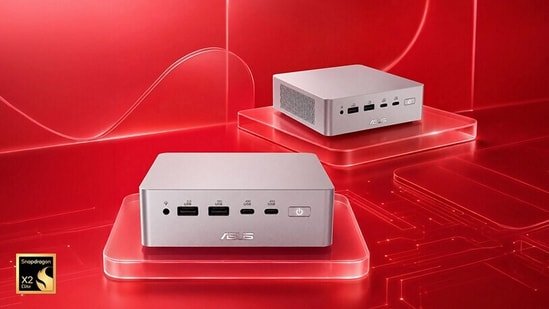
Qualcomm has taken another step beyond the laptop market by introducing its Snapdragon X2 Elite platform in a compact desktop computer. At Computex 2026, the company joined hands with ASUS to unveil the Asus Ascent QN10, a mini-PC built around Qualcomm’s latest Snapdragon X Series processor.
The launch signals Qualcomm’s push into the growing market for compact desktop systems that can handle artificial intelligence tasks locally while maintaining a smaller footprint than conventional desktop computers. The company said the new device combines AI capabilities, computing performance and power efficiency in a form factor designed for homes, offices and professional environments.
Snapdragon X2 Elite Brings AI Processing to Mini-PCs
The Asus Ascent QN10 is powered by the Snapdragon X2 Elite, which is designed to support a range of computing workloads. According to the company, the processor can manage tasks such as software development, data analysis, AI model work and multitasking across several applications.
A key component of the platform is its Neural Processing Unit (NPU), which delivers up to 80 TOPS of AI performance. This allows AI workloads to run directly on the device without depending entirely on cloud-based processing.
Qualcomm said users can run AI tools and coding platforms locally, including applications such as Claude Desktop, Cursor, OpenAI Codex, OpenCode and OpenClaw. Local processing can help reduce latency and give users greater control over their data.
The company also noted that the platform includes security measures that operate across both hardware and software layers, with the aim of protecting data during processing and transfer.
Designed for Developers, Businesses and Commercial Use
One of the major selling points of the Asus Ascent QN10 is its compact size. Qualcomm said the system occupies less than 0.7 litres of volume, making it substantially smaller than many traditional mini-PC designs.
The device is intended for a wide range of users. Developers can use it for AI-assisted coding, local inferencing and software testing, while businesses may benefit from its security-focused features and low-noise operation.
The mini-PC also offers broad connectivity options. It comes equipped with seven USB ports, including three USB4 ports, three USB 3.2 Gen2 ports and one USB 2.0 port. For commercial deployments, the system supports up to four 4K displays, making it suitable for applications such as digital signage, monitoring stations and workplace setups.
Qualcomm Expands Its Desktop Strategy
The debut of the Asus Ascent QN10 marks Qualcomm’s latest effort to expand Snapdragon-powered computing beyond notebooks. Over the past few years, Snapdragon processors have become more visible in Windows laptops, particularly as AI-focused computing gains momentum.


