



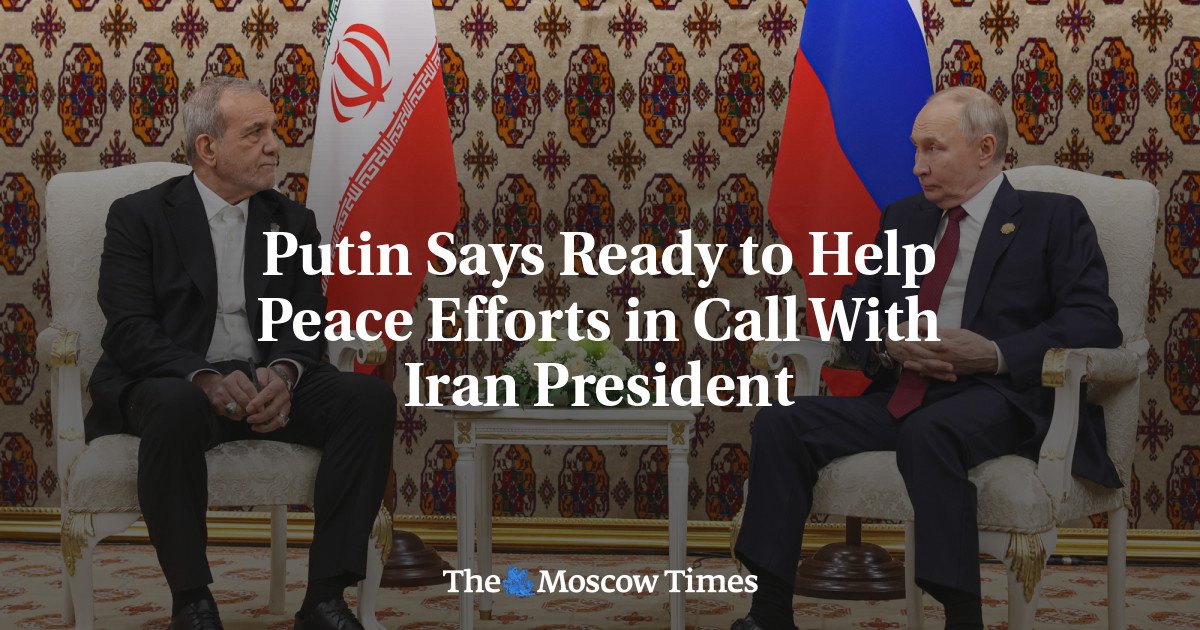
Russian President Vladimir Putin told his Iranian counterpart Masoud Pezeshkian on Sunday that he was ready to help mediate efforts to achieve peace in the Middle East, the Kremlin said.
“Vladimir Putin emphasized his readiness to further facilitate the search for a political and diplomatic settlement to the conflict, and to mediate efforts to achieve a just and lasting peace in the Middle East,” the Kremlin said in its readout of the call.
Iran and the United States failed to strike a deal Sunday to end the war in the Middle East, but there was no immediate return to hostilities and world leaders quickly urged both sides to pursue the diplomatic route to peace.
U.S. Vice President JD Vance left Pakistan after the talks — the highest-level meeting between the two sides since the 1979 Islamic revolution — and warned that Washington had made Tehran its “final and best offer” for a deal.
“We leave here with a very simple proposal,” he said. “We’ll see if the Iranians accept it.”
Iran’s parliamentary speaker Mohammad Bagher Ghalibaf said his negotiating team had “put forward constructive initiatives but ultimately the other side was unable to gain the trust of the Iranian delegation in this round of negotiations.”
Iranian and U.S. reports said the two sides were unable to agree on who would control the Strait of Hormuz shipping lane nor whether Tehran would have the right to enrich uranium under any deal.
The failure of the talks will raise concerns that a return to fighting could drive world energy prices higher and further damage shipping and oil and gas facilities in the Gulf, while civilians in the region were concerned that airstrikes could resume with no political endgame in sight.
The United States and Israel attacked Iran on Feb. 28, sparking retaliation from Tehran that has plunged the Middle East into conflict and shaken the global economy.
Iran and the U.S. had entered the talks mediated by Pakistan with maximalist positions, with Washington piling pressure by saying it had sent minesweeping ships through the vital Strait of Hormuz maritime route.
Signs of strain in the negotiations appeared when Iranian media accused the United States of making “excessive demands” over the strait, through which one-fifth of the world’s oil transited before its effective closure by Iran during the war.
Iran’s demands for any agreement to end the war include unfreezing sanctioned Iranian assets and ending Israel’s war against Hezbollah in Lebanon. The opening of the Strait of Hormuz has also presented a friction point.
Throughout the war, Iran has wielded global economic leverage by asserting control of the maritime route, sending oil prices soaring and piling political pressure on Trump as U.S. fuel costs rose.


