


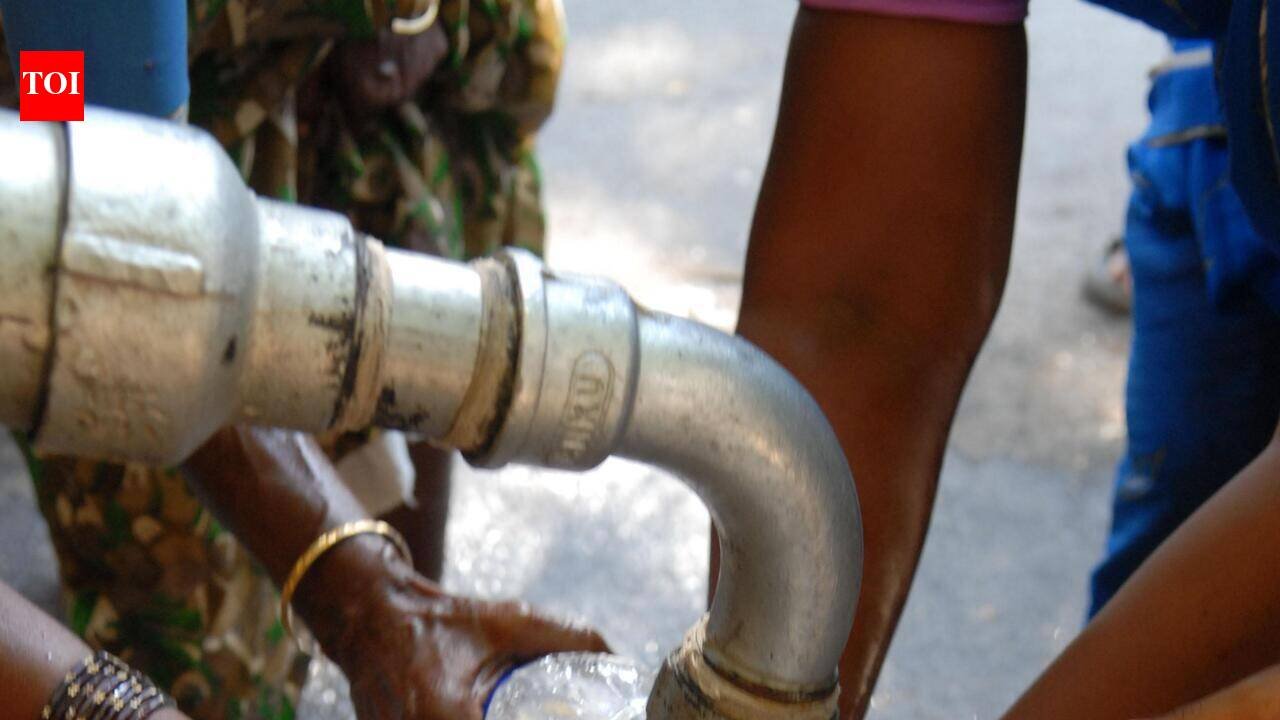
Pune: The problem of polluted water supply in the Guillain-Barré syndrome (GBS)-affected areas can be resolved in days as the Pune Municipal Corporation (PMC) is pushing for a water supply project worth Rs890 crore, claim civic body officials.The standing committee of PMC approved a private consultant for this initiative on Thursday.The project will provide clean water to 12 newly merged villages. As per the locals, the civic administration has been making claims to provide treated tap water to their areas, but the ground reality has not improved much. The localities are dependent on tanker water. The consultant will prepare the mandatory environmental and social impact assessment (ESIA) report.Out of the 32 villages recently merged into the PMC limits, an outbreak of GBS was detected in Jan 2025 across 12 villages. They included Nanded, Kirkatwadi, Nandoshi, Narhe, Sanasnagar, Khadakwasla, Dhayari, Jambhulwadi, Kolewadi, Mangadewadi, Gujar Nimbalkarwadi and Bhilarewadi. “The problem of water supply in the areas is as it is. The civic officials responsible to deal with water distribution are not paying enough attention. Even the water that we get via tankers has quality issues. But the administration is not taking enough steps to deal with it,” said Shriang Chavan, a resident of Dhayari areas.“The water supply was affected in these areas. But the situation became worse after the water cuts. Many people in our areas complain about low-pressure water supply or lack of availability,” said Ketki Paranjape, a resident of Sinhagad Road.“Since majority of the affected patients were from this specific cluster, experts highlighted contaminated water supply as one of the likely causes. Against this backdrop, a dedicated clean water supply scheme has been developed for these villages,” said a senior official of PMC.“There are no major issues as far as purity of water supplied to these areas. If complaints come, it is resolved periodically,” said Lalit Bendre, superintending engineer of PMC’s water supply department.At present, these 12 villages receive approximately 47.50 MLD (million litres per day) of untreated, chlorinated water, while an additional 2.49 MLD of clean drinking water is supplied separately via tankers.A detailed project report, the project encompasses constructing a jackwell and pump house to draw water from the Khadakwasla dam, setting up two water treatment plants, each with a capacity of 100 MLD, laying main pipelines and distribution networks, constructing storage reservoirs and installing a SCADA automation system. The municipal corporation is now in talks with an international finance company to fund project.
