



Maharashtra chief minister Devendra Fadnavis on Friday said the state government has prepared a comprehensive plan to transform Pune and the wider Pune Metropolitan Region (PMR) over the next two years, with a focus on infrastructure and mobility.The announcement is significant for one of Maharashtra’s fastest-growing urban and commercial markets, where rapid expansion has outpaced the development of supporting infrastructure.
Pune’s growth has outpaced infrastructure, says Fadnavis
Speaking at the inauguration of the Magnum Ice Cream Company’s Global Capability Centre (GCC) in Pune, Fadnavis acknowledged the infrastructure challenges facing Pune and the PMR.“It is true that the pace at which the entire Pune and the Pune Metropolitan Region (PMR) have expanded, somehow we could not keep the pace of infrastructure that matched its pace of urbanisation,” he said.According to the chief minister, a coordinated team comprising municipal commissioners, the district collector, the PMR commissioner and the Maharashtra Industrial Development Corporation (MIDC) CEO has prepared a plan for the region.“We are going to transform this entire area in the next two years. It will be one of the most livable areas,” Fadnavis said.He said the state government would finance the plan and implementation would begin within the next two months.“Next two years, things will be totally changed. And this will be one of the most sought-after urban areas to live and work. That is my promise to all of you,” he added.
Outer ring road, Metro and new tunnels in focus
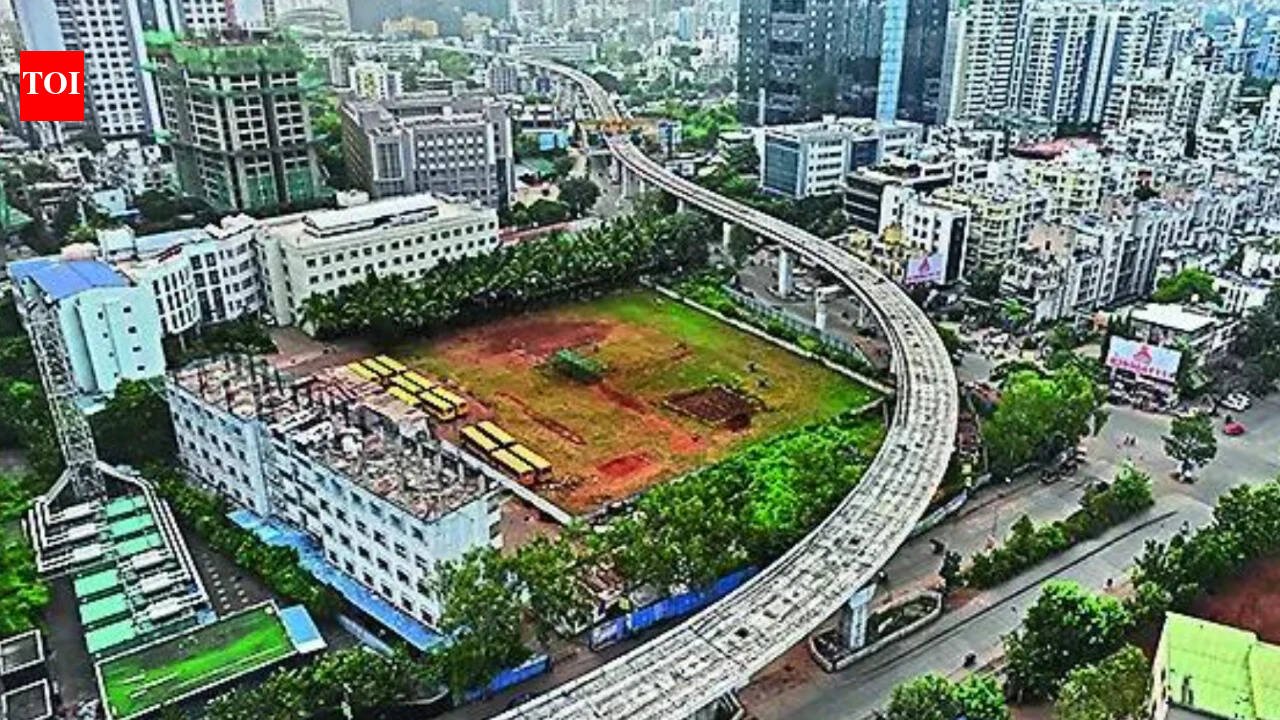
The government is also working on improving mobility across Pune, Pimpri-Chinchwad and the wider PMR.Fadnavis said the proposed infrastructure network would include projects such as the outer ring road, inner ring road and High Capacity Mass Transit Route (HCMTR), along with new tunnels.“We are focused a lot on increasing the speed of commutation and the speed of mobility in Pune, Pimpri-Chinchwad and PMR area,” he said.The Shivajinagar-Hinjawadi Metro corridor is also expected to begin operations this month, according to Fadnavis.“All this work is not a distant dream. It’s going to start very soon. Few initiatives have already started. And we want to complete all the work in the next three years — by 2029,” he said.The state government aims to make Pune, Pimpri-Chinchwad and the PMR among the country’s most advanced mobility-enabled urban areas by 2029.
GCC growth adds to Pune’s commercial real estate demand
Alongside the infrastructure push, Fadnavis highlighted Pune’s growing role as a destination for Global Capability Centres.He said Maharashtra’s GCC policy had initially set a target of attracting 400 GCCs, while the number of centres had crossed 130 in the first year.Fadnavis said Pune ranked second in GCC leasing last year and called for efforts to make the city the country’s top destination in 2026.“We have to make it number one. And I am very sure that when we see the results of 2026, Pune will be number one, Maharashtra will be number one,” he said.According to IANS, demand for commercial office space from GCCs in Pune reached around 6 million square feet over the past 15 months, while 130 new or expanded GCC units were set up across Maharashtra during the last 18 months.The state has set a target of hosting 400 GCC companies and more than 700 units in the coming period, as per IANS.
Magnum’s Pune centre to employ over 1,000 people
Fadnavis welcomed the establishment of the Magnum Ice Cream Company’s GCC in Pune, saying the facility would employ more than 1,000 people and generate indirect employment.The company’s Pune Global Business Solutions Centre will use artificial intelligence, automated technologies, logistics and other advanced solutions to support its global operations.Fadnavis said the government and businesses working together could create an ecosystem for investment and employment.“When the government and the businesses work together, we create a great ecosystem,” he said.The Maharashtra government is taking measures to strengthen physical infrastructure across Pune’s industrial sectors, with a particular focus on addressing IT infrastructure challenges in Hinjawadi.The chief minister said the state remained committed to implementing its GCC policy and expressed confidence that Maharashtra could eventually cross its target of 800 GCCs and potentially reach 1,000.


