






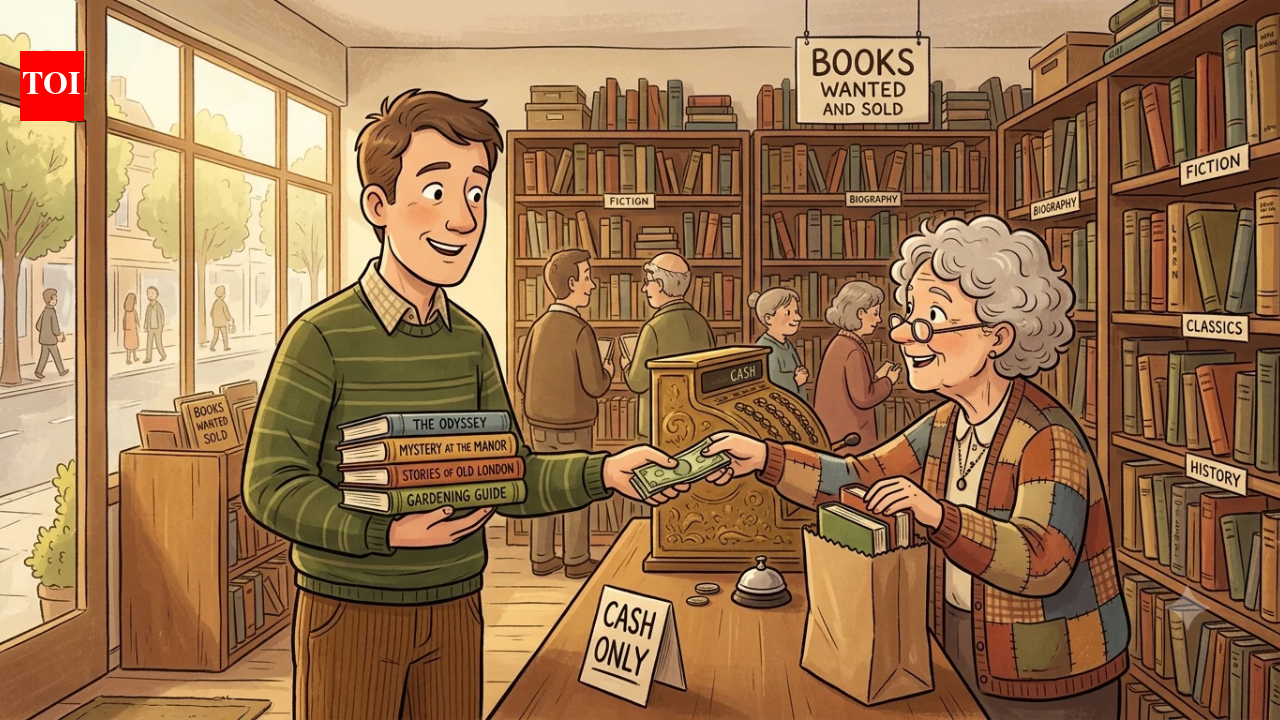
Imagine finding a battered paperback in a dusty old bookstore. Its cover is faded, its pages have yellowed, and someone has underlined a sentence in blue ink. A few pages later, you discover a handwritten note: “Read this when you need to feel less alone.”You do not know who wrote it, who received the book or what was happening in their life when those words were put on paper. Yet, suddenly, the book feels different. It is no longer just a story waiting to be read. It carries traces of a life you know nothing about.You could buy a pristine copy online, delivered to your doorstep in a day. Instead, you walk out with the old one.Why?For some readers, the appeal of second-hand books goes well beyond saving money. There is the pleasure of discovering an unexpected title, the attraction of objects with a past, the comfort of familiar reading rituals and, sometimes, the curious feeling of connecting with a stranger through something they once owned. Research into consumer behaviour offers several possible explanations, although no single motive explains every second-hand book buyer.
The thrill of finding something you were not looking for
A new bookstore is usually designed to help you find what you came for. An old bookshop can feel like the opposite. Books are stacked in uneven piles, titles compete for space, and a forgotten classic may be hiding between two books you have never heard of.You might enter looking for one author and leave with a book you did not know existed.That unexpected discovery is part of the attraction. Researchers studying second-hand shopping have identified recreational motivations alongside economic and critical ones. In a 2010 study published in the Journal of Retailing, researchers developed a framework for understanding second-hand shoppers and found that their motivations could be grouped into these three broad categories. The work also identified different types of shoppers, including people drawn to nostalgia and enjoyment.This helps explain why a visit to an old bookstore can feel like a treasure hunt rather than a routine purchase. The reward is not simply getting a book for less. It is finding something worthwhile when you did not know where to look.
An old book offers something a new copy cannot
A new book begins its life with you. A second-hand book arrives with a past, even if that past remains largely unknown.A name written on the inside cover, a folded corner, a library stamp or a faded dedication can hint at the people who owned it before. These marks may be insignificant to one reader and fascinating to another. They give the object a sense of history that a newly printed copy does not yet possess.Research on the relationship between people and old objects has explored how their real or imagined histories can shape the way owners value them. A 2020 paper in the Journal of Business Research, for instance, examined how vintage enthusiasts interpret objects as they move between owners. The researchers described a process through which people acquire, interpret and preserve connections to the past. .A second-hand book can invite the same kind of curiosity. Who bought it first? Was it a favourite, a gift or a book someone never finished? Did its previous owner pause at the same passage that made you stop reading?There may be no way to answer these questions. That is part of the appeal: the book gives you evidence of another person’s presence without revealing their entire story.
The appeal of buying differently
There is also a practical and ethical side to the choice. Buying a pre-owned book can cost less than purchasing a new one, and passing books between readers can extend the useful life of an existing object.For people who value reuse, the purchase may also fit a broader preference for consuming fewer newly manufactured goods. Research on second-hand shopping, however, shows that economic, recreational, identity-related and environmental motivations can overlap. A person may care about sustainability while also enjoying a bargain or the thrill of finding a rare edition. One motive does not cancel out the others.It is also worth remembering that buying second-hand is not automatically a guarantee of a lower environmental impact in every situation. The outcome depends on factors such as whether the purchase replaces a new one, how the book is transported and how frequently someone shops.Still, the appeal is easy to understand: a book that already exists can find a new reader without needing to be made from scratch.
Why the old copy can feel more rewarding
Perhaps the most interesting thing about buying second-hand books is that the choice is rarely just between two copies of the same text. It can be a choice between two different experiences.One offers a clean beginning: crisp pages, an untouched cover and the certainty of knowing no one else has owned it. The other offers a little uncertainty. It may contain a surprising find, a connection to a memory, a trace of another reader or simply the satisfaction of having discovered something worth keeping.Psychology does not provide one definitive explanation for why someone prefers a pre-owned book, even when they can comfortably afford a new one. But research on second-hand shopping, nostalgia, material objects and symbolic connection suggests that price is only one part of the decision.Sometimes, the attraction is the hunt. Sometimes, it is the history. Sometimes, it is the feeling that a well-loved object deserves another life.And sometimes, the old book is simply the one that catches your eye.


