



India’s recent economic performance has been strong enough to inspire confidence. Over the past decade, and particularly in the post-COVID-19 pandemic period, India has combined relatively high growth with macroeconomic stability in a way that few large economies have managed. Real GDP growth has remained robust, reaching 6.5% in FY2024-25, making India one of the fastest-growing major economies globally. This performance has been underpinned by strong domestic demand, subdued inflation, gradual fiscal consolidation, and a broadly stable financial sector.
While India’s productivity growth has been meaningful over recent decades, sustaining high growth will require acceleration, particularly as India aspires to become Viksit Bharat by 2047. That transition will require not just maintaining macroeconomic stability but also activating all engines of growth, labour, capital, and improved productivity, through deeper structural reforms.
Manufacturing without depth
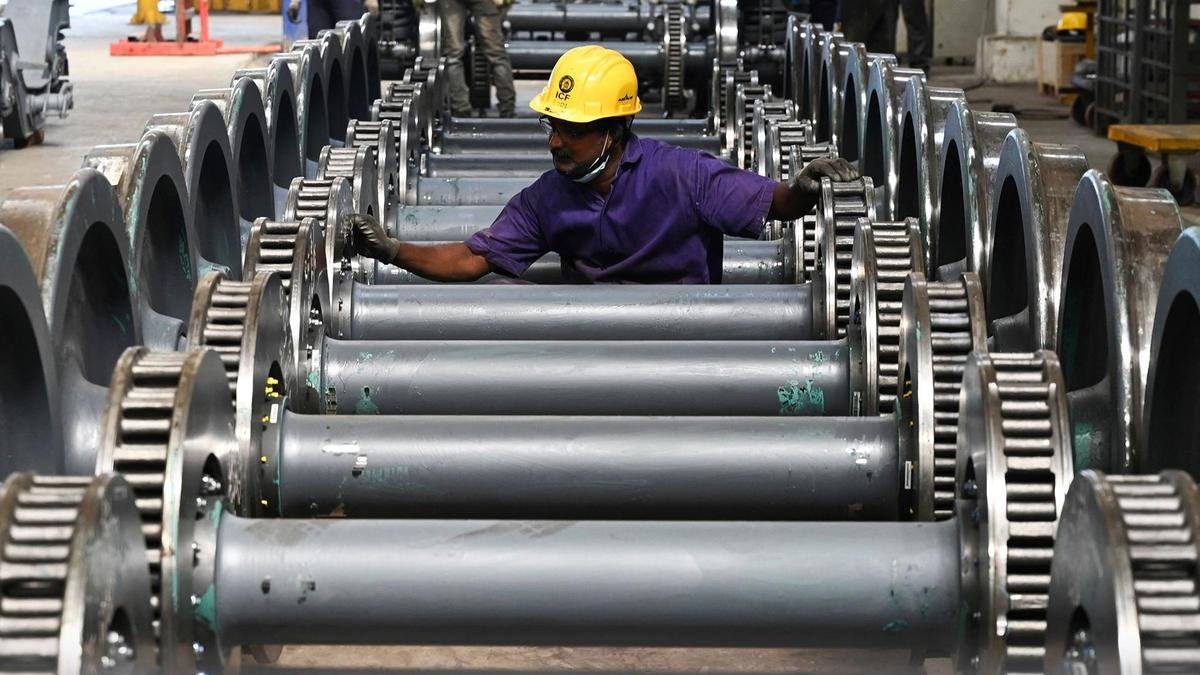
There is now growing recognition, reflected in the Economic Survey 2025-26, that manufacturing must anchor this next phase. The challenge, however, is not just expanding manufacturing, but also making it more productive. India’s structural transformation has been skewed. While services have driven growth, manufacturing has not expanded sufficiently to absorb labour or generate broad-based productivity gains. In most successful development experiences, manufacturing acts as the bridge between low-productivity agriculture and high-productivity modern sectors.
The Economic Survey reinforces this point, emphasising that manufacturing is central to sustaining growth and generating employment at scale. Without it, India risks a growth pattern that is neither sufficiently robust nor structurally stable. While productivity growth in services has been strong, manufacturing productivity has lagged behind both its potential and that of its international peers. A key issue is firm structure. India’s manufacturing sector is characterised by a large number of small, low-productivity firms and relatively few mid-sized firms capable of scaling up. This is in stark contrast to economies that successfully industrialised, particularly in East Asia, which saw the emergence of a strong cohort of medium and large firms that drove exports and productivity growth.
Therefore, the current structure creates a challenge for efficient factor allocation, leading to a significant share of labour remaining in agriculture, where productivity is far lower than in manufacturing and services. Most importantly, despite significant investment — particularly in infrastructure — efficiency gaps remain.
Zombie firms, stalled reallocation
These structural constraints converge into a deeper problem, reflected in a weak business dynamism. In economic theory, productivity growth is often driven by creative destruction, in which new, more efficient firms replace older, less productive ones. In practice, this process remains slow in India. As a result, the persistence of small, low-productivity “zombie” firms impedes the efficient reallocation of resources. Zombie firms that are no longer economically viable but continue to operate nonetheless tie up capital and labour that could otherwise be deployed in more productive uses.
Evidence from recent studies further reinforces this concern. A paper, Zombie Firms in Emerging Markets: Survival and Funding Mechanisms (2025), shows that while zombie firms constitute a relatively small share of firms, they account for a disproportionately large share of total debt and assets. This implies that a significant volume of capital is locked into low-productivity uses, creating systemic inefficiencies. The research also shows that zombification is a gradual process. Financial deterioration begins well before firms are classified as zombies, and once they enter this state, they become increasingly dependent on debt while showing little recovery in core performance indicators. The problem is persistent, not cyclical. Crucially, the nature of financing matters. Bank-financed firms are more likely to become zombies, remain in distress for longer periods, and relapse even after partial recovery. In contrast, equity-financed firms are less prone to zombification and more likely to recover sustainably.
These findings point to a deeper institutional issue. Financial and regulatory structures often sustain inefficient firms rather than facilitating exit. This weakens reallocation by crowding out credit from more productive firms, thereby undermining overall productivity growth.
Two-pronged strategy
India’s path to Viksit Bharat requires a manufacturing-led strategy that addresses both scale and efficiency. India has demonstrated that it can grow rapidly. The next phase is about ensuring that this growth translates into sustained increases in productivity and income. There is growing recognition that manufacturing is the weak link in India’s development story and that expanding manufacturing will require deeper integration into global value chains, managing trade barriers, and continued infrastructure investment. Equally important is improving productivity through stronger business dynamism and productive research and development. This means enabling firms to grow, but also allowing inefficient firms to exit. Reforms must therefore focus on simplifying regulations, easing labour constraints, strengthening insolvency processes, improving credit allocation, and expanding access to financing.
The vision of Viksit Bharat ultimately depends on whether India can complete this transition. Growth has laid the foundation, but enhanced productivity and the exit of inefficient firms will determine whether it can sustain the leap to Viksit Bharat.
Saumitra Bhaduri is Professor at the Madras School of Economics
Published – May 16, 2026 12:08 am IST


