



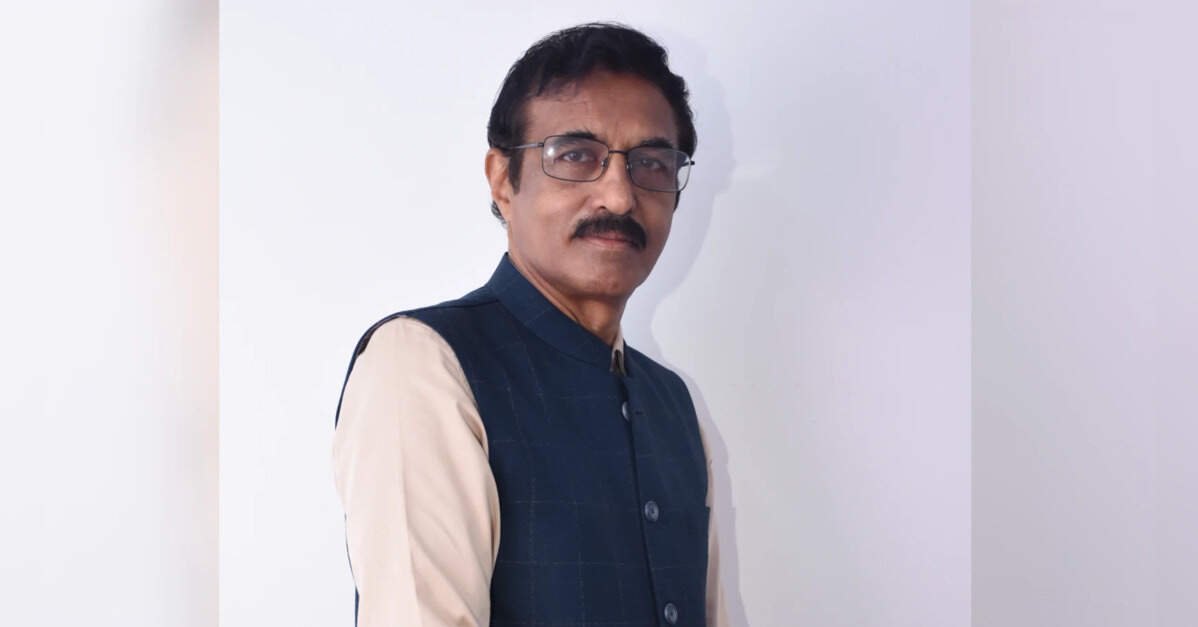
Mumbai: India’s private healthcare sector has been in the spotlight lately, amid growing private equity investment and calls for price regulations. But private equity isn’t the villain it is made out to be, HCG Founder and Non-Executive Chairman, Dr B.S Ajaikumar told ETHealthworld.
Private equity firm KKR bought a 54 per cent stake in the cancer specialist chain in February last year. When asked how this has changed the way HCG operates and balances patient care with investor expectations, Dr Ajaikumar said that the perception of how private equity is seen needs to change.
“The perception out in the market is that they come in and tell you what to do. That is not true. They do not interfere in how we manage the patients. They have never done it. They bring in finances, and since we don’t pay out dividends, that money gets poured back into improving quality. So, what private equity like KKR has done is really brought in a lot of investment into healthcare in India. Today, we have advanced a lot in oncology, with technologies like Cyberknife and more. All of that would not be possible without that investment.”
From Dr Ajaikumar’s perspective, private equity investors bring in discipline in operations and margins, which doctors turned entrepreneurs can sometimes lack.
“At the board level, private equity investors focus on efficiency. Are we procuring drugs and consumables at the right price? Is there operational excellence? Those are the things they help improve, so margins get better. But it depends on how you navigate the relationship and understand your partners. It’s like any stock they invest when HCG is worth X, it grows to 2X, they exit at 3X. As a doctor-entrepreneur, I bring the medical knowledge and commitment to doing right by patients and they bring capital and financial discipline. That collaboration works beautifully, which somehow is not understood by the public at large,” he added.
Price Capping not the solution
As the gap between private and public healthcare costs continues to grow and come under scrutiny after the recent parliamentary committee report, Dr Ajaikumar believes that price capping of hospital room rents isn’t the right way forward.
“Price capping is not the answer. There’s real demand for high-quality care, even if it’s from just five or ten percent of India’s population, which is still a huge number. Either we move toward universal healthcare, where rich and poor are treated equally and government reimburses for the poor, like Medicare in the US, or we think this through properly. It can’t just be an arbitrary cap. As doctors trained for decades, we want to do right by the patient, rich or poor. That’s why we built these centers in the first place.”
KKR is expanding deeper into the Indian healthcare sector with its recent acquisition of Medicover Hospitals for a sum of $1.39 billion. When asked if this opens us new synergies and opportunities for HCG, Ajaikumar said they operate with a different branch of the PE firm and the two do not overlap.
Ethics Committee Suspension
As per recent reports, CDSCO suspended the registration of HCG-Bangalore Institute of Oncology’s Ethics Committee for two years in June this year.
The suspension followed alleged violations of multiple norms related to adverse event reporting, protocol deviations and participant safety.
Responding to this, Ajaikumar pushed back on the suspension emphasising that it hasn’t impacted the hospital operationally or the wider network.
“The ethics committee has nothing to do with the hospital. This is something not understood in the public. CDSCO flagged some problems, but there were no major issues in terms of records, and no patients were affected. Because of this they have suspended that particular ethics committee. But we feel that is not correct. We have appealed for that, and we will even go to the court if needed,” Dr Ajaikumar emphasised.
“Meanwhile, things are functioning as normal, and we are now likely to form another ethics committee and go through the process for the same. Our existing clinical trials haven’t been affected and continue as planned. The only impact has been on new drug trials that would have gone through that specific ethics committee. But it’s had absolutely no effect on the rest of HCG,” he affirmed.
Immunotherapy breakthrough
Immunotherapy drugs like pembrolizumab and nivolumab have transformed cancer treatment in recent years, but their steep cost has kept them out of reach for a large share of Indian patients. Dr Ajaikumar, however, believes that the affordability picture is shifting fast.
“Technologically, generic and biosimilar versions of these drugs are now coming into the market, so costs are already beginning to come down. Drug companies are also offering free-drug programs, so it won’t remain as big a burden.”
He added that lower-dose trials could be just as significant in bringing costs down.
“The most important development, though, is around biological effectiveness at lower doses. We’ve run a trial at HCG and published the data showing that a low dose can be biologically as effective as the full dose. That could bring the cost down to roughly a quarter, which means far more patients can access it.”
However, the treatment cannot reach the majority of India’s population without the government’s support, he believes.
“So far only one government scheme in Ranchi covers immunotherapy costs. If we want to see real change, this needs to change. We need as many schemes and support from the government as possible to help cancer patients,” he added.
Role of Government
Dr. Ajaikumar is critical of the government’s efforts in healthcare, arguing that public infrastructure simply hasn’t kept pace with the scale of the country’s needs.
He believes private players have stepped in to fill that gap, and should be encouraged for doing so.
“The government alone can’t meet India’s healthcare needs today. I once asked a driver why he goes to a private hospital when it’s more expensive. He said, ‘What choice do I have? They’re the ones who actually care for me. At the government hospital, I stand in line and don’t even know if the doctor will show up.’ If the government wants to be in healthcare, they have to seriously improve their infrastructure beyond a few centres. Yes, we have AIIMS and other top institutions, but India is a vast country. If they can’t scale up themselves, they should support and encourage private healthcare instead,” he added.
