



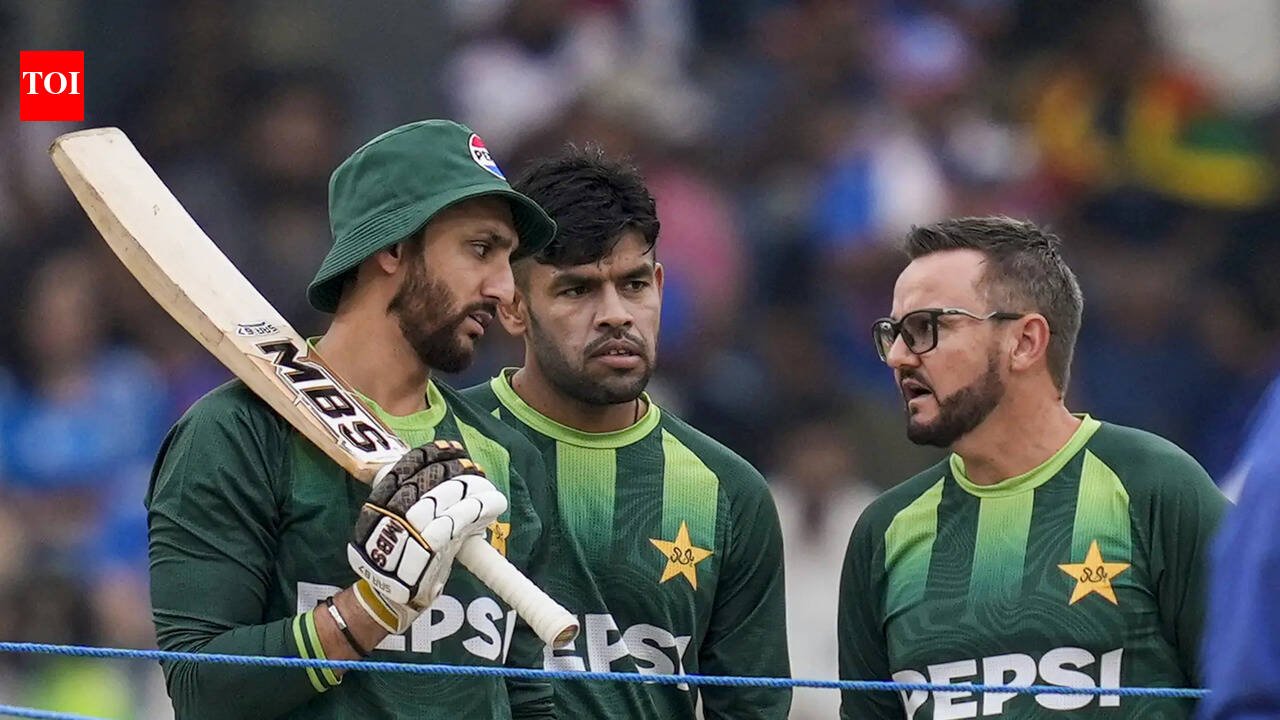

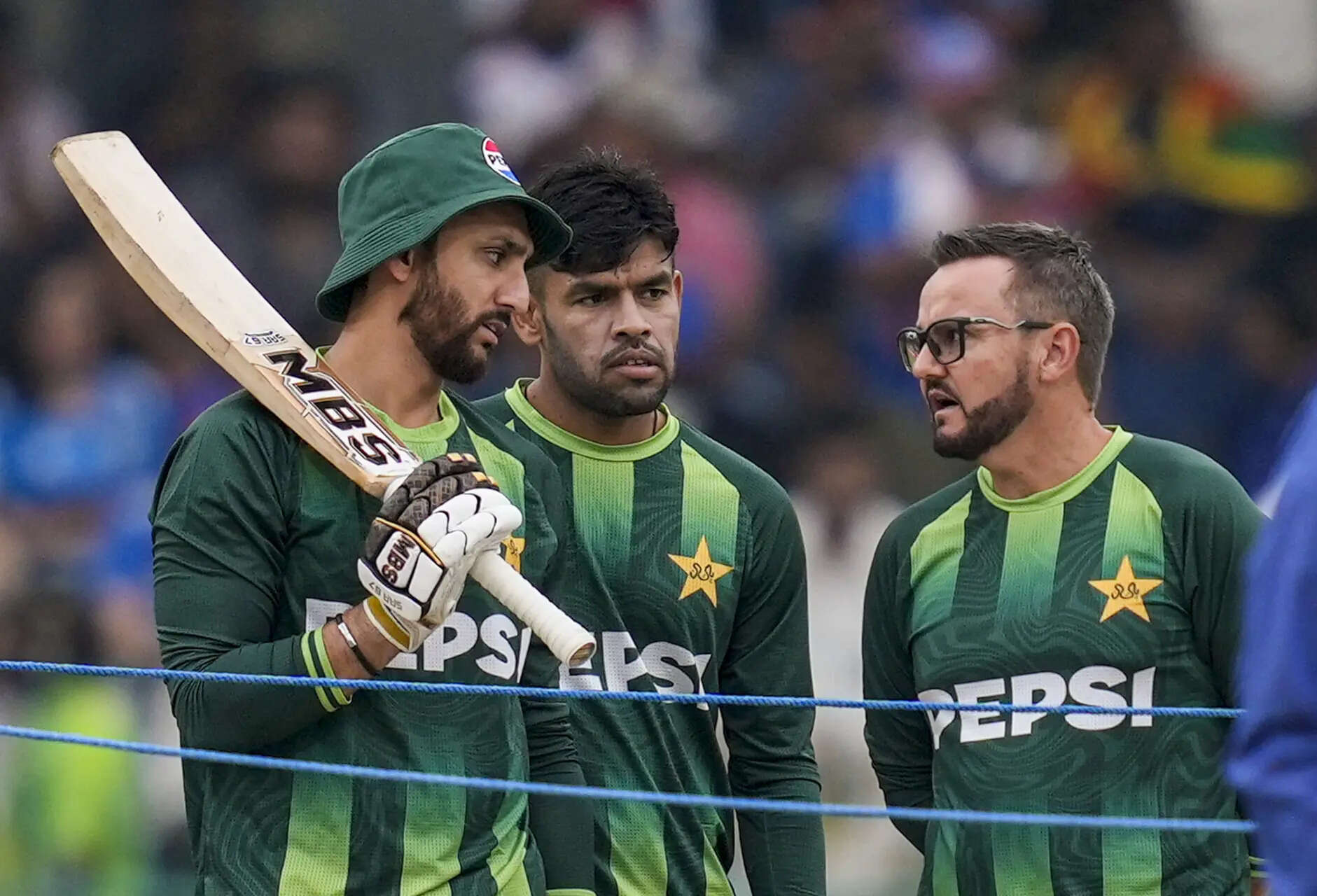
When Pakistan look back at the 2026 T20 World Cup, they will remember it as one that got away. They had a lot running in their favour — staying put in Sri Lanka, playing matches on surfaces of their choice, winning important tosses — but they couldn’t deliver what was expected of them: consistency. As a result, Salman Ali Agha’s team is out of the competition before the semifinals, ensuring that the Sri Lanka leg of this World Cup ended on Saturday.Go Beyond The Boundary with our YouTube channel. SUBSCRIBE NOW!It’s true that, the India defeat apart, they weren’t exactly shambolic. The New Zealand wash-out and a Harry Brook classic played significant roles in them not making the semifinals, but then World Cups are decided by fine margins.
There were already talks about Agha’s resignation from captaincy, and the right-hander said at the post-match press conference on Saturday that “such decisions shouldn’t be emotional”. “We will go back and take some time and then make the required decision,” Agha said.But he can’t deny that there were some serious decision-making errors that hurt Pakistan in this World Cup. While, in the India game, their decision to win the toss and field at the Premadasa was suicidal, not bowling a second finger-spinner right after dismissing Abhishek Sharma in the first over was equally poor. But those decisions only cost Pakistan pride, because they managed to get into the Super 8s.But there were enough hints in the first four games that Babar Azam was looking a misfit at No 4. Still, the Pakistan team management decided to persist with him, and it was his slow batting in the England game that was one of the reasons behind the defeat. In that match, Babar managed a 24-ball 25 and couldn’t accelerate. Pakistan’s 164-9 was taken down by Brook’s century.Agha, though, tried to defend the senior batter, who was finally dropped in the Sri Lanka game. “Babar had a different role in this World Cup. He was a No. 4 and we needed a batter who could come in the middle-order and give us stability and save us from collapse,” the captain argued.It took the decision-makers — coach Mike Hesson and captain Agha — the entire tournament to figure out that Fakhar Zaman is best suited as an opener. The attacking left-hander was finally given a go against Sri Lanka at the top of the order, where he smashed a 42-ball 84 that gave the team some hope.“We make the playing XI based on conditions and situations. The captain and the coach make the 11 together. We had to win this game in 13 overs or win by 65 runs and play according to that. As for Fakhar, he didn’t come to the tournament with good form, but yes, right now, you can say that he should have played the first four matches,” Agha said.According to the captain, it’s the team’s inability to take correct decisions in crunch moments that have hurt them in ICC tournaments. “Whenever there is pressure, our decision-making is not as good as it should be. When you come to the World Cup or ICC events, there is always pressure,” Agha said, bluntly.It may well have been a dig at the way Shaheen Afridi, the premier pace bowler, often let his team down at crucial junctures, bowling the wrong length. It almost cost them Saturday’s game as well, when he conceded 22 trying to defend 28 off the last over.Amidst the doom and gloom, the performances of Farhan with the bat and mystery spinner Usman Tariq should come as a breath of fresh air.
REASONS FOR PAKISTAN’S EARLY OUSTER
- A batting line-up overreliant on Sahibzada Farhan and stuck in the past.
- Former captain Babar Azam struggled with a strike rate of just 112.34
- The middle order repeatedly collapsed in high-pressure games.
- Made tactical blunders against big teams like India where they elected to field on a spin-friendly pitch and introduced Usman Tariq late.
- The death bowling was poor too Against England, Pakistan failed to defend 165, allowing Harry Brook to smash a century. Even in the final win against Sri Lanka, Shaheen Afridi conceded 4, 6, 6, 6 in the final over, nearly losing a game they dominated.


