



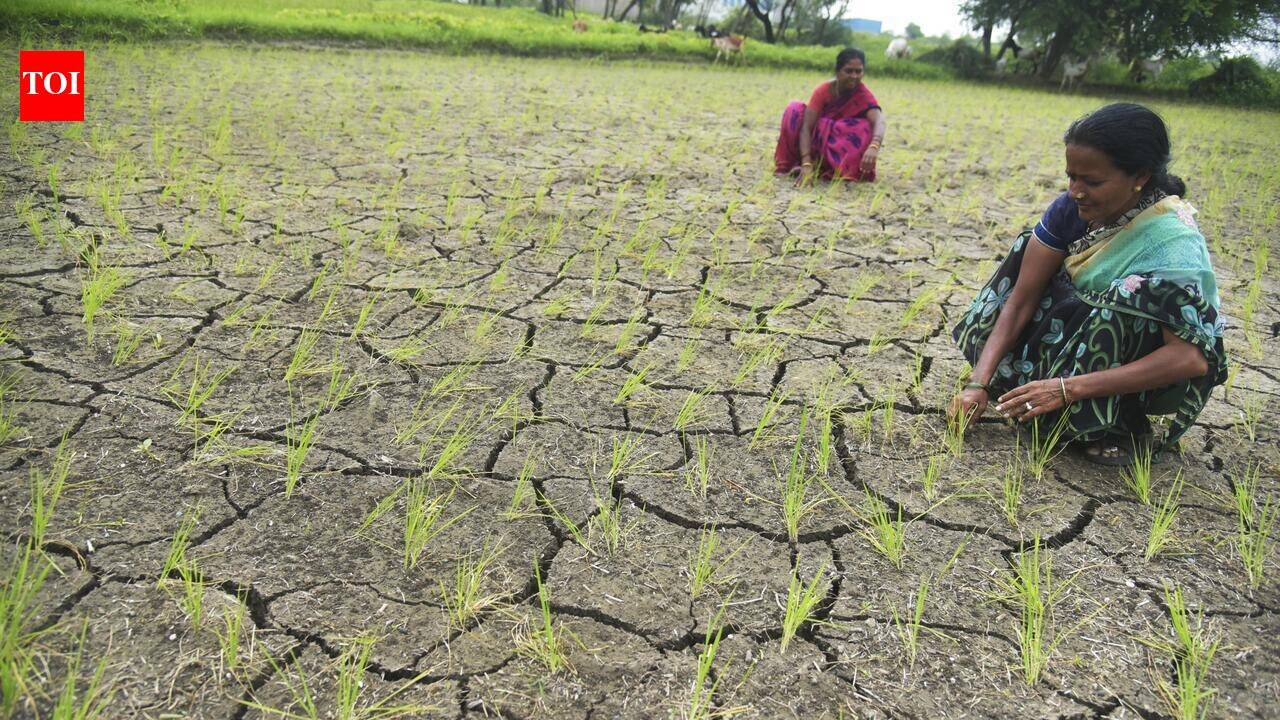
Gaya: A nearly 54% rainfall deficit in Gaya district has dealt a severe blow to the paddy crop with transplantation reaching only about 37% against the target of 1,82,518 hectares. The optimum transplantation window ended on July 31, leaving the district with a shortfall of nearly 73%.According to official data, Gaya normally receives 140-180mm of rainfall in June and 290-338mm in July. This year, rainfall during the two crucial months was only about 46% of normal. Since July is the wettest month and critical for paddy cultivation, the deficit has badly affected the district’s principal kharif crop.Confirming the low transplantation figure, district agriculture officer Sanjeev Kumar said the govt had begun promoting contingency crops requiring less moisture to partly offset the losses. He identified maize and kulthi (horse gram) as the most suitable alternatives for Gaya’s soil, adding that both crops would be harvested before the wheat sowing season.Although the ideal transplantation period has ended, farmers can continue planting for another fortnight, albeit with lower yields. Recent rainfall has provided some relief, but its impact is yet to be assessed, Kumar said.Officials of the South Bihar Power Distribution Company Limited (SBPDCL) said farmers were being supplied electricity for at least 12 hours a day to support irrigation.However, experts warned that excessive extraction of groundwater for irrigation could lead to a drinking water crisis in several blocks. They recalled that under similar conditions a few years ago, restrictions had to be imposed on groundwater pumping for irrigation.On diesel subsidy, Kumar said improved rural electrification and better power supply had virtually eliminated the use of diesel pump sets. However, farmers who produce credible proof of using diesel pumps would be eligible for the subsidy.Farmers also blamed delays in the north Koel irrigation project for worsening the crisis. Had the project, originally scheduled for completion by March 31, been finished on time, nearly 30,000 hectares in Amas, Gurua, Guraru and Paraiyya blocks would have received assured irrigation.“We feel cheated,” said Mahindra Singh, a farmer from Amas block.


