



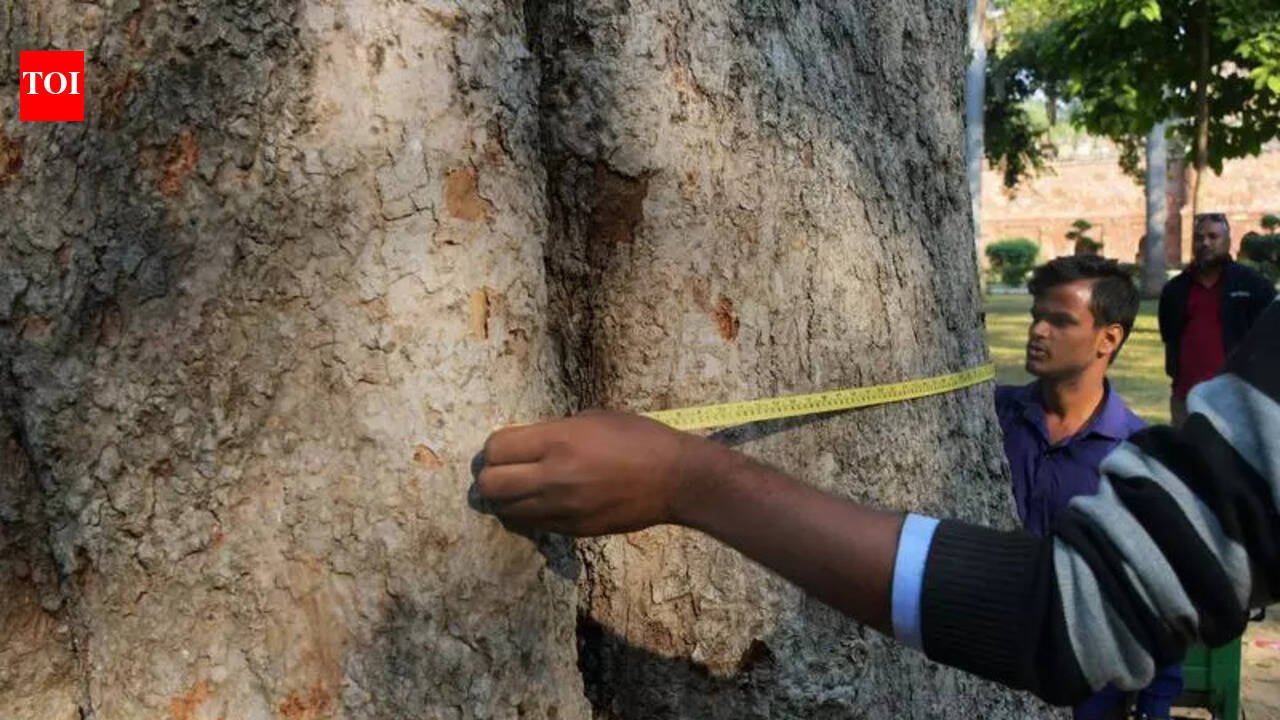
Pune: The civic body has decided to halt the implementation of its latest tree census following strong objections over rising costs.The decision was finalised during a standing committee meeting of the Pune Municipal Corporation (PMC) on Thursday after elected members raised concerns regarding tender estimates. “The members questioned the rates quoted by the private contractor and were not convinced by the high estimates,” said Shrinath Bhimale, chairman of the standing committee. “We will now explore options to conduct the census using civic staff and NGOs. For now, the ongoing tenders have been virtually scrapped.” Bhimale highlighted a significant discrepancy in the pricing. A private firm had requested Rs35 crore for the exercise, despite charging approximately Rs18 crore for the same task just a few years ago. Standing committee members noted that the civic administration has not made adequate budgetary provisions for such an expensive undertaking. The current tenders far exceed the funds allocated to the garden department. Officials warned that diverting funds from other projects to cover the shortfall could adversely impact essential development works in other departments. Despite the financial hurdles, a senior PMC official emphasised that the census remains a legal necessity. “The tree census is mandatory under the Maharashtra (Urban Areas) Protection and Preservation of Trees Act, 1975. Furthermore, several directives from the high court and Supreme Court have placed the responsibility of this exercise on local self-governing bodies,” the official said. To manage future efforts more efficiently, the administration plans to prioritise GPS mapping for better data management. According to the PMC’s environment status report, the census is a critical tool for maintaining the city’s biodiversity and green cover. Past exercises, conducted across 15 wards using GIS (geographic information system) and GPS technology, have provided a detailed map of Pune’s environmental health. These surveys cover diverse terrains, including the hills of Taljai, Pachgaon-Parvati, Katraj, Vetal, Chaturshringi, and Baner. The latest census data reveals that the city is home to 5,581,578 trees, spanning 430 different species across 75 botanical families. While the most common species found in the city is the giripushpa (gliricidia sepium), the census also identified 124 rare species that require conservation. In addition to common foliage, the documentation identified 2,838 ‘heritage trees’ located in public spaces. The city’s largest recorded specimen is a banyan tree (Wad) with a massive trunk circumference of 1,202 cm.


