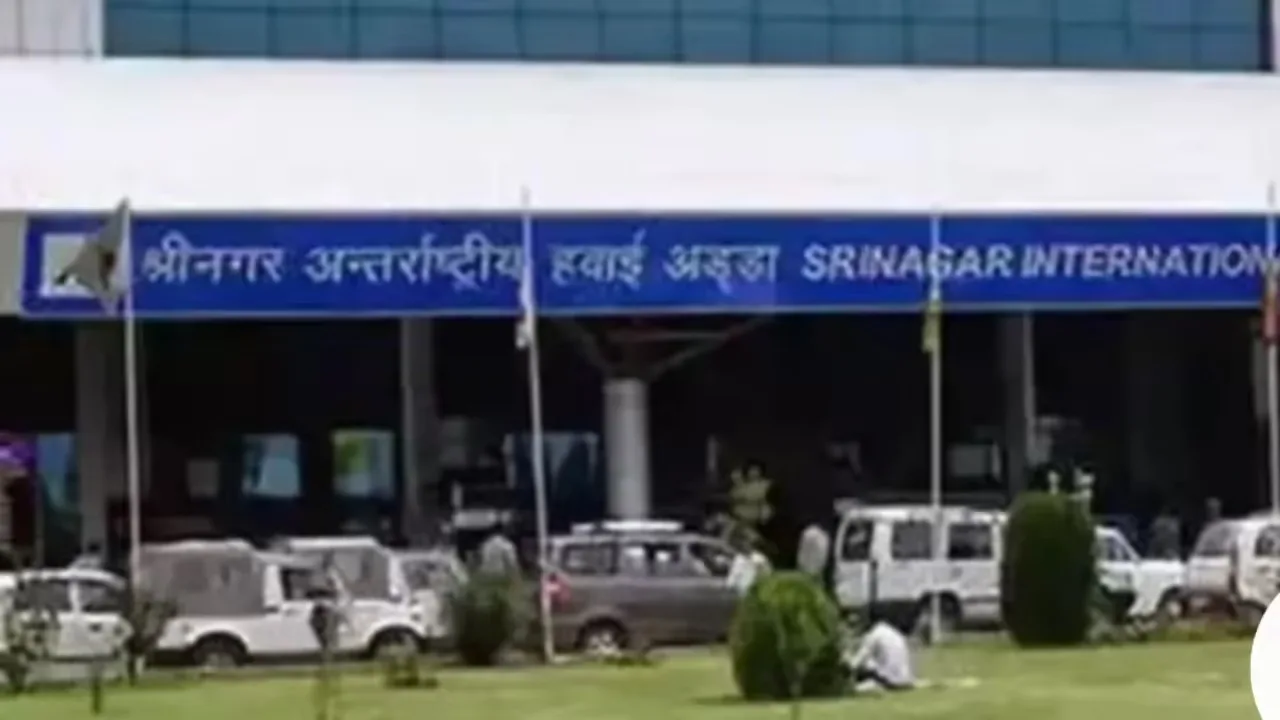
Srinagar, Feb 24: In a major infrastructure push for Jammu and Kashmir, the Cabinet Committee on Economic Affairs, chaired by Prime Minister Narendra Modi, on Tuesday approved the development of a new Civil Enclave at Srinagar International Airport at an estimated cost of Rs 1,677 crore.
The airport, located about 12 km from Srinagar city, operates within the Budgam Airbase of the Indian Air Force (IAF). While the civil terminal is managed by the Airports Authority of India (AAI), the 3,658-metre-long and 45-metre-wide runway will continue to remain under the operational control of the IAF. Srinagar airport was designated as an international airport in 2005.
According to official details, the Civil Enclave project will be developed over 73.18 acres and will centre around the construction of a new, state-of-the-art terminal building.
The proposed terminal will have a total built-up area of 71,500 square metres, which includes 20,659 square metres of the existing structure. The facility is being designed to handle 2,900 passengers during peak hours, with an annual capacity of 10 million passengers per annum (MPPA), more than double the current operational capacity.
Officials said the existing terminal is reaching saturation at around 3.0 MPPA, making expansion necessary to accommodate projected growth in passenger traffic.
The project also proposes expansion of the apron area to allow parking of 15 aircraft bays, up from the existing nine. This includes provision for one Code E widebody aircraft, enabling the airport to handle larger international aircraft in the future.
The project also includes the construction of barracks for CISF and security personnel, strengthening safety and security infrastructure at the airport. A multi-level car parking facility with capacity for 1,000 cars will also be built to ease congestion and improve passenger convenience.
Traffic data accessed shows that after a decline during the Covid-19 period due to global travel disruptions, Srinagar airport has witnessed a strong recovery.
The airport handled 4.50 million passengers in 2024-25, and projections indicate sustained year-on-year growth going forward. The long-term forecast suggests that passenger traffic is expected to cross 10 million by 2034-35, effectively doubling within a decade.
The historical compound annual growth rate (CAGR) between 2019-20 and 2024-25 stands at 9.76 per cent, while the projected CAGR between 2024-25 and 2029-30 is estimated at 9.40 per cent.
Officials said this steady growth trajectory formed the core rationale for scaling up infrastructure capacity now rather than responding after saturation.
Beyond capacity enhancement, the new terminal is being designed to reflect the cultural and architectural heritage of Kashmir.
Plans include the incorporation of traditional elements such as intricate woodwork and locally inspired craftsmanship, while ensuring modern operational efficiency through streamlined passenger processing areas, expanded waiting lounges, advanced check-in systems and upgraded security infrastructure.
Officials said the aim is to create a terminal that serves not only as a transport hub but also as a visual and cultural gateway to the Valley.
Sustainability has been built into the design framework of the project. The Civil Enclave is targeted to achieve a 5-star GRIHA rating, one of the highest benchmarks for green buildings in India.
Proposed features include advanced water harvesting systems, maximised natural lighting to reduce electricity consumption, and the use of locally sourced, eco-friendly materials to minimise carbon footprint.
Officials said the expanded infrastructure is expected to improve travel access and convenience for residents as well as tourists, reduce congestion during peak seasons and enhance overall passenger experience.
Improved air connectivity is likely to strengthen tourism flows to key destinations such as the Dal Lake, Shankaracharya Temple and the Mughal Gardens, while also facilitating business travel and investment into the Union Territory.
With additional aircraft bays and enhanced terminal capacity, the airport will be positioned to accommodate higher flight frequencies and potentially expanded international operations.
Officials described the project as a structural upgrade of Kashmir’s primary air gateway, aligning infrastructure capacity with projected passenger demand, strengthening safety architecture within the dual-use military-civil framework, and reinforcing Srinagar’s position as a key tourism and economic hub in northern India.