






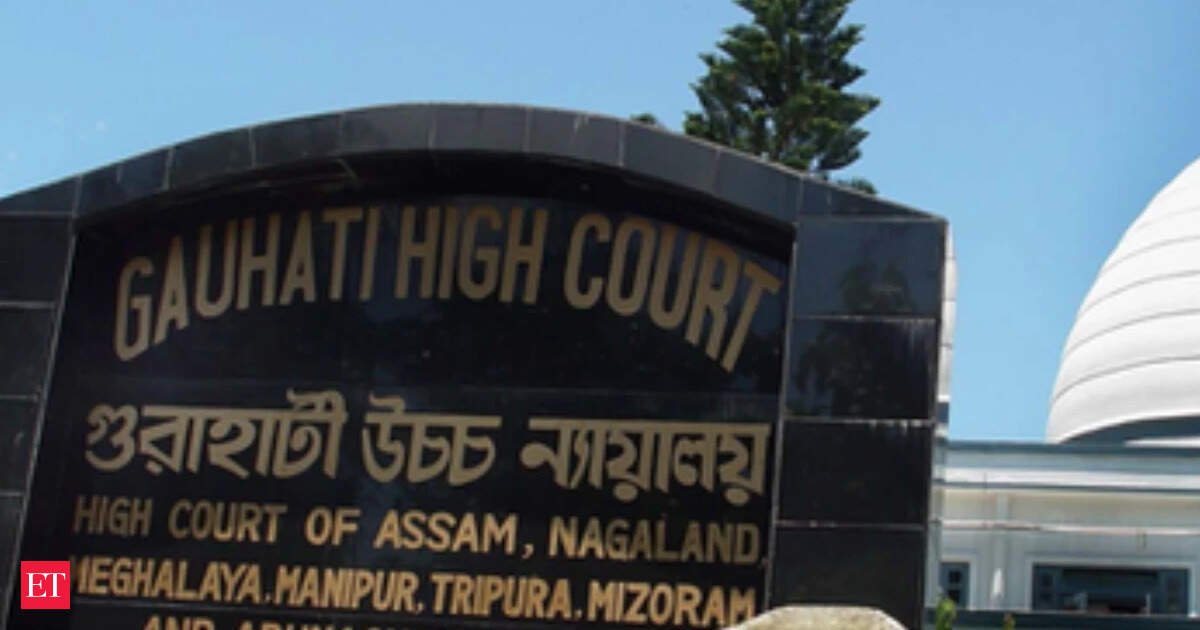
The PIL has been filed by Congress leaders Guptamani Sharma and Ripun Bora along with Assam Jatiya Parishad (AJP) leader Ziaur Rahman. The petitioners have alleged that widespread irregularities involving EVMs contributed to the BJP securing a single-party majority in the 2026 Assam Assembly election. These allegations are now before the court for judicial examination.
The maintainability of the PIL came up for hearing before the Chief Justice’s court on September 18. According to the petitioners, the court observed that the matter was serious and sensitive and involved issues connected with cases concerning EVMs pending or decided before the Supreme Court and other High Courts. The court indicated that the issues would require detailed consideration and fixed November 4 for the next hearing on maintainability.
Also read | India is staring at its driest monsoon in 17 years
The petitioners have pointed out that earlier challenges concerning the reliability of EVMs before the Supreme Court and other High Courts have not resulted in findings establishing that EVMs are inherently unreliable. However, according to the petitioners, the present PIL raises a distinct issue by specifically questioning the microchips or semiconductors used inside the EVMs and the transparency surrounding their programming.
Ziaur Rahman has alleged that the microchips or semiconductor components used in the EVMs were manufactured by Japan-based company. He has also questioned the extent to which information relating to the programming of such chips is available for public scrutiny.
According to Rahman, countries that use electronic voting systems have, in various instances, provided greater disclosure regarding the programming and source code of the relevant technology before elections. He alleged that the Election Commission of India has not made the source code of the relevant EVM technology publicly available. He further referred to an RTI response which, according to him, described the source code as classified information connected with national security.Also read | India’s dependence on Chinese imports keeps deepening despite Modi, Xi-led border thaw
The petitioners have also drawn attention to Assam Chief Minister Himanta Biswa Sarma’s reported visit to Japan in January 2025. Rahman has pointed out that Sarma met representatives of the Japanese company in Tokyo on January 22, 2025. The petitioners have also raised questions over information concerning Assam government efforts to attract semiconductor investment and cooperation from Japanese companies.
Rahman further referred to the Chief Minister’s Japan visit after polling in Assam and before the counting of votes, questioning the circumstances surrounding the visit.
Another issue raised by Rahman concerns polling data from the 2026 Assembly election. He claimed that an analysis of constituency-wise polling data showed that between 1 pm and 3 pm on April 4, exactly 17 per cent polling was recorded during that period in each of 35 constituencies, while the same figure was recorded in another 37 constituencies. He questioned whether such a precisely identical polling pattern across such a large number of constituencies could occur naturally.
Senior advocate Kamal Nayan Choudhury appeared for the petitioners and advanced arguments before the court. Counsel for the Election Commission also placed its position before the Chief Justice’s court. The State government is expected to present its position in the subsequent hearing.
The next hearing on maintainability has been fixed for November 4, when the remaining parties are expected to be heard and the court will consider whether the PIL is maintainable.
The petitioners have made an important distinction regarding the relief sought. They have not claimed in the petition that the 2026 Assam Assembly election should itself be declared illegal at this stage. Their contention is that the fundamental issue before the court is the legality and credibility of the EVMs used in the election.
BJP in Assam had swept the assembly polls and formed the government for a third consecutive term in Assam in May this year. BJP for the first time crossed the majority mark on its own.
From 60 seats in 2021, the party won 82 in the 126-member assembly. NDA together won 102 seats. Both Asom Gana Parishad (AGP) and Bodoland People’s Front won 10 seats each.


