



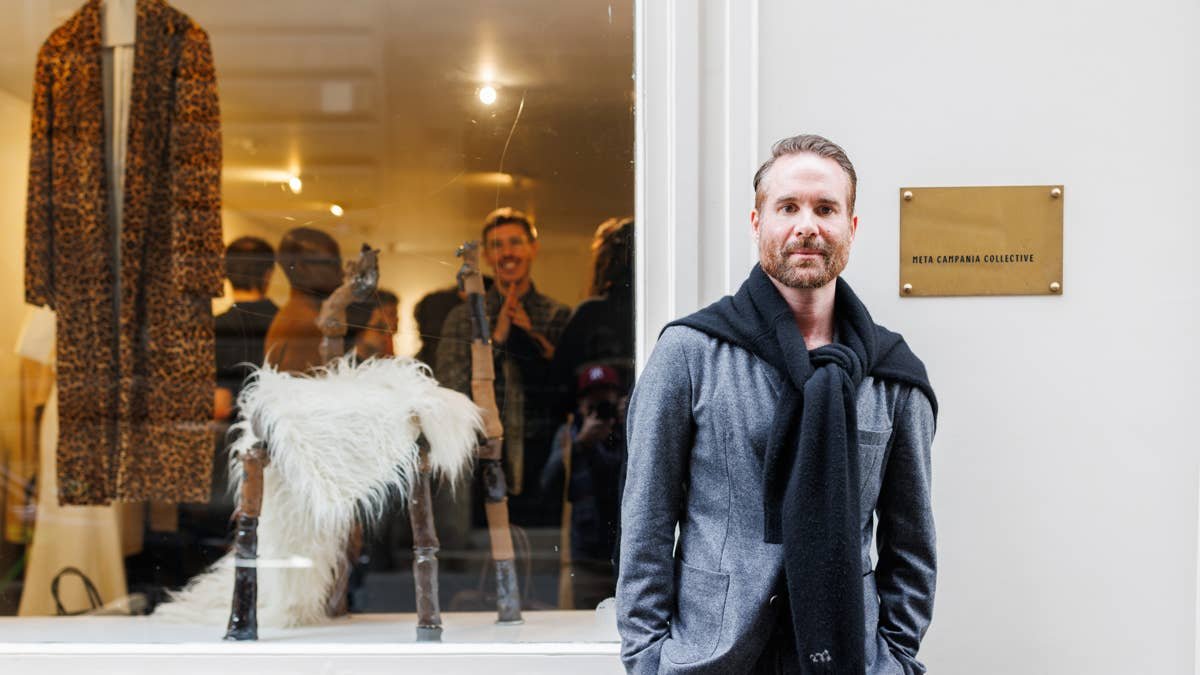
With Saks Global filing for Chapter 11 bankruptcy after failing to pay vendors and Ssense owing millions to its stocked brands amid its own financial troubles last year (to name just a couple recent retail crises), the fashion wholesale landscape may look pretty grim. But from retail veteran Nicholas Parnell’s perspective, “wholesale is not dead.”
“Wholesale is important, but I think what wholesale is becoming, is changing,” the founder of new London- and New York-based consultancy Agency Parnell tells Fashionista. Against a backdrop of geopolitical tensions, ongoing tariff turmoil and shifting consumer habits, the fashion industry is in flux. U.S. department stores are now reckoning with their stalled “bulk buying” strategies from the past five-to-10 years, Parnell says, which is paving the way for an updated approach to luxury wholesale. “When things soften, it creates room for new growth,” he adds.
This April, Parnell opened his consultancy to rethink luxury fashion‘s wholesale strategies, but before that, he clocked in nearly 16 years of sales experience at top designer brands. “Ultimately, we might sell product at wholesale to retailers, but to understand the flow of product and to develop the understanding of what it’s like to be on the floor and sell these things is really critical,” he says.
After stints at DKNY, Mary Katrantzou, Varana, By Malene Birger and Stine Goya, Parnell was approached by a recruiter who asked a career-defining question: “Have you ever heard of Phoebe Philo?”
“I was like, ‘Have I ever heard of Phoebe Philo?’ What a bloody weird thing to say,” Parnell quips. Fashion insiders are well versed in the cult of Philo, the British designer who helmed Chloé for five years and Celine for a decade before launching her eponymous luxury label in 2023. Parnell stood out from the applicant pool thanks to his global wholesale experience and ultimately snagged the gig of a lifetime leading Phoebe Philo’s wholesale launch as the brand’s wholesale director.
Phoebe Philo is now stocked in top retailers like Bergdorf Goodman, Dover Street Market and 10 Corso Como. “The strategy was interesting because it was very much about the distribution being discerning and selective, but at the same time, it wasn’t the usual strategy that you would think of in wholesale,” Parnell explains. Rather than solely focusing on brand mix, “it was more about the store vibe and the energy.” He focused on the client, prioritizing stores where the team clearly understood who the target customer was.
After a year and a half of steering Phoebe Philo’s wholesale strategy, Parnell exited the high-stress role after he discovered he had a heart condition and had to undergo open-heart surgery at 35 years old. While recovering, Parnell decided to finally take the leap and start his own wholesale consultancy. “I know it sounds so cliché, but it really became a thing of ‘we have one life to live, let’s make our mark,'” Parnell says.
Many agencies boast double-digit brand rosters, but Agency Parnell is taking a more deliberate approach to consulting. Parnell wants to function as an “embedded extension” of a brand: “Bringing in Agency Parnell allows [brands] to almost have a sales department where they can trust that we’re going to operate with the care and detail and intention that an internal team would,” he explains. It’s a hands-on process where Agency Parnell aims to provide feedback across product development, pricing and retail distribution. “It’s about being as close to them as possible,” he shares.
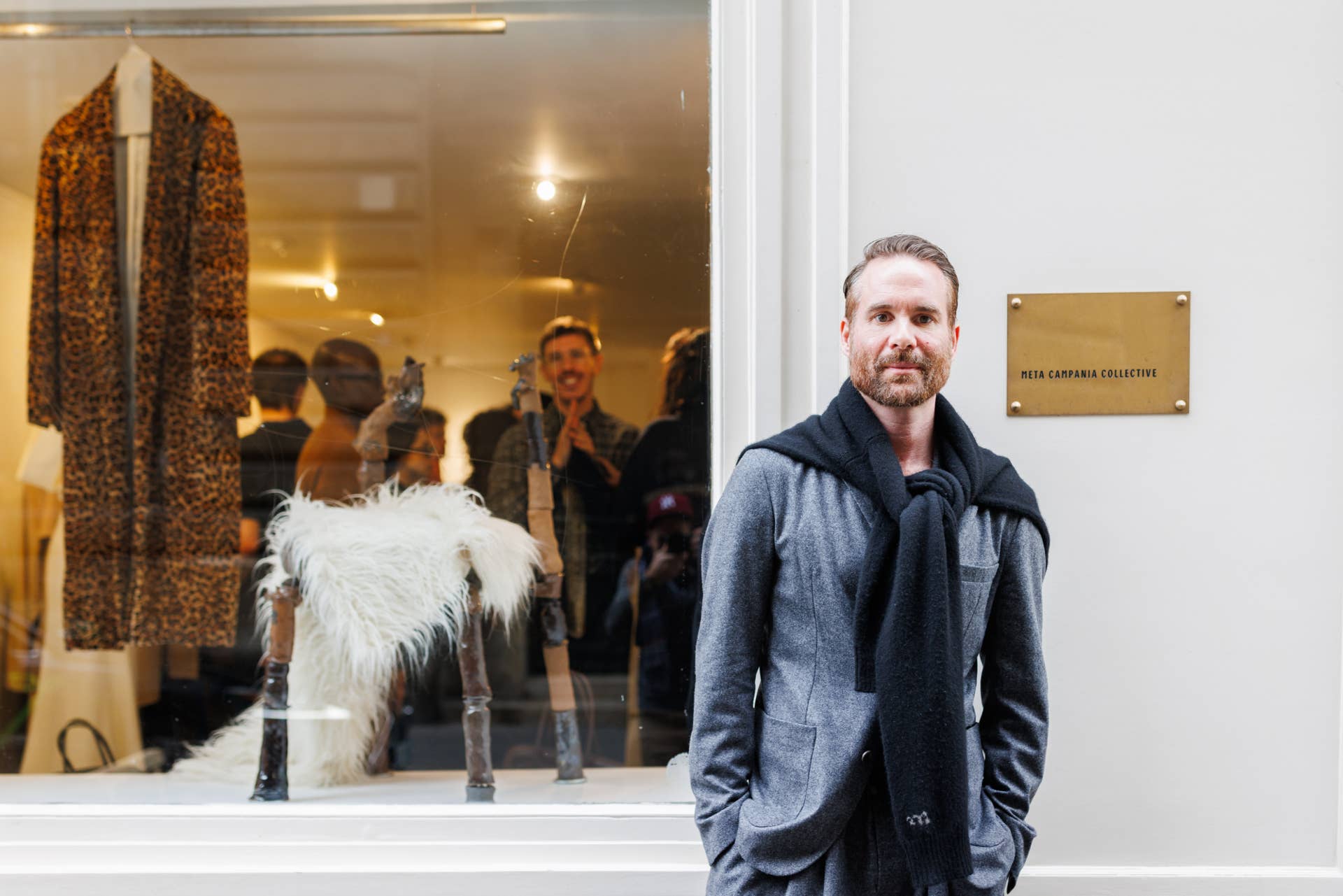

Photo: Richard Bord/Getty Images
Agency Parnell plans to onboard four brands in its first year, eventually growing its roster to eight clients over the next couple of years. Its inaugural partnership is with Meta Campania Collective, a Paris-based luxury label led by Jon Strassburg, Bottega Veneta‘s former chief merchandising officer. Much like Hinge (a.k.a. the dating app designed to be deleted), Agency Parnell wants to grow its brands to the point where they feel comfortable eventually taking their wholesale business in-house. “We should celebrate that moment because it’s fantastic,” Parnell says. “Well done.”
After years of tight timelines and heavy workloads, Parnell understands the inherent stress that comes with a top wholesale position. He wants Agency Parnell to be a space that staff can “enjoy, and they can grow from it and really benefit from it,” he shares. He even penned three manifestos addressed to prospective brands, retailers and the agency’s team to hold himself accountable as the company grows. To further ensure these founding standards are upheld, Parnell also established a board of advisors consisting of Marco Gentile (former CEO of Theory Europe, chief commercial officer at Chloé and president of Burberry EMEIA) and Yvie Hutton (former director of designer relations and membership at the British Fashion Council).
Despite the challenges facing major department stores and e-commerce giants, Parnell points out that many global independent boutiques are “thriving” due to distribution control and a client-minded perspective. He singles out Labels in the Netherlands as a key example: Though the multi-brand luxury retailer is located outside of fashion’s capitals, it caters to a core consumer base interested in brands like Rick Owens, Willy Chavarria, Acne Studios and Jil Sander.
“It should be about the customers, not just about what’s hot because not every customer cares about what’s hot,” Parnell says. “It’s got to be customer-centric.”
Beyond curated brand mixes, indie boutiques’ welcoming atmospheres are increasingly drawing in consumers. Luxury brands’ gallery-like flagships can be intimidating in comparison. “To walk into a designer store like a Louis Vuitton store is actually quite intense for quite a lot of people,” Parnell notes. In a multi-brand concept, shoppers can explore. “It’s like a treasure trove that you want to get into and rummage through,” he adds. “You can still have a beautiful display without it feeling like you can’t touch it.”
As Parnell looks to the future of wholesale, niche shops like Maxfield in Los Angeles, Hirshleifers in Manhasset and B1ock (pronounced “block”) in China are at the forefront. “I’m a believer that the independent [business] has returned, but it’s going to continue,” Parnell says. He also hopes that the return of the U.K.’s High Street — or the hub of smaller businesses that were replaced by major chains — is nigh.
Ahead of a full-fledged indie renaissance, fostering an emotional connection is what’s paying off across wholesale strategies. “That’s where you can build a community that can trust your product, because it’s got emotion and storytelling behind it, but it also is quality and product first,” Parnell says. “I think that that’s where the future is.”


