



Breakdown Sparks Demand for Better Emergency Transport Plan
Bangalore metro disruption
Bangalore metro disruption
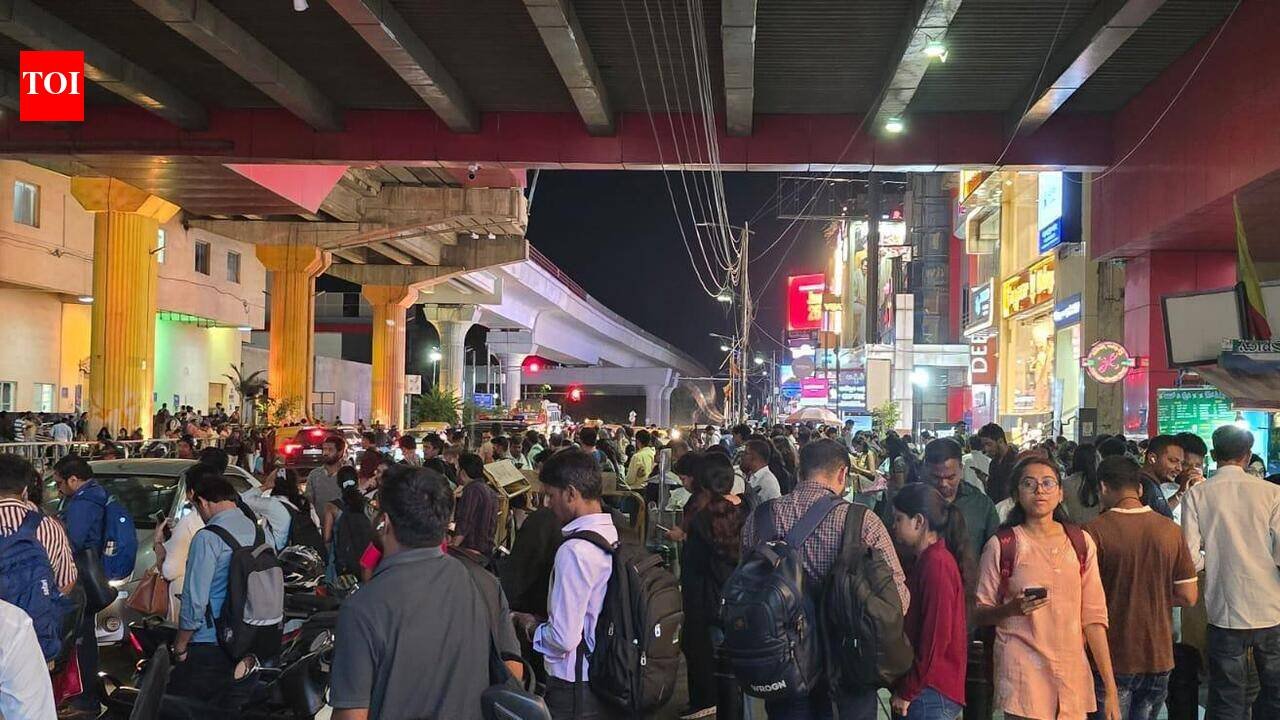
Bengaluru: The disruption of Namma Metro services Tuesday evening left thousands of commuters stranded and scrambling for transport home, with one of the most striking visuals being tech professionals squeezing into old, dust-covered trucks after failing to find other options. The incident has once again raised concerns over the city’s preparedness for Metro emergencies.As images and videos of the ordeal circulated widely on social media Wednesday, commuters and netizens questioned why passengers were left to manage on their own instead of being provided with immediate alternative transport such as buses, taxis or autorickshaws, and why timely communication on service disruptions was lacking.Aditya M, a passenger, said Metro operations are prone to technical issues, but stressed that emergency handling is crucial. “Passengers being stranded for hours without proper information is distressing. Not finding buses after exiting a Metro station only adds to the stress,” he said.The disruption began around 6.30pm Tuesday when the Bangalore Metro Rail Corporation Limited (BMRCL) suspended services on the underground stretch of the Purple Line between Cubbon Park and Magadi Road after a train developed a technical snag. Subsequent inspections identified a fault in the third-rail system.Passengers were deboarded at MG Road and Magadi Road stations, leaving many stranded and struggling to find onward transport. Several commuters who had left their offices around 5.30pm said they were unable to reach home until nearly 11pm.Supriya Rao, another passenger, said the lack of coordination worsened the situation.“Passengers made attempts to find autos or bike taxis from MG Road using multiple apps. Auto drivers were demanding exorbitant fares and cabs were not available. Had BMRCL planned better and coordinated with BMTC and got buses deployed, it could have helped passengers,” she said.Commuters also complained of inadequate communication regarding the disruption and demanded that authorities establish a robust contingency plan, including last-mile connectivity support and real-time passenger updates whenever Metro services are affected.BMRCL chief public relations officer BL Yeshwanth Chavan said passenger information regarding the suspension was communicated at stations and inside Metro coaches. Addressing the congestion at MG Road station, Chavan said the station had to be closed to facilitate repair work and that power supply to the affected section had to be shut down.Meanwhile, Bengaluru Metropolitan Transport Corporation (BMTC) officials said they were informed by BMRCL only around 7pm about the suspension of services between Cubbon Park and Magadi Road and the need for additional bus services between MG Road and Majestic.“We deployed 25 buses from MG Road and Indiranagar to clear the rush. Our staff reached the locations by around 7.30pm and made the necessary arrangements. Apart from operating additional services, buses from other routes were also diverted to manage the crowd,” a BMTC official maintained. However, the official acknowledged a key gap in coordination.“We have a coordination mechanism in place whenever Metro services are suspended. However, we have no clear information on which stations are witnessing the heaviest rush or the exact number of stranded passengers. If BMRCL shares such details in real time, it will help us deploy services based on actual demand,” the official said.While the additional BMTC buses reportedly helped around 2,000 passengers reach Majestic and other destinations, thousands of others endured hours of uncertainty before alternative transport became available.What went wrong with train?A fault in the third-rail system was detected on a curved section inside the tunnel near Cubbon Park station. The third rail had deviated from its prescribed alignment and sagged, resulting in damage to the current collector device (CCD) of a train.BMRCL chief PRO BL Yeshwanth Chavan said after a power block was imposed, maintenance personnel accessed the affected location and found that the third rail had shifted from its position. “It was decided to replace the third rail along the stretch. The third rail is mounted on support brackets, and preliminary findings indicate that issues related to the bracket assembly or fittings may have contributed to the displacement.”“Our team is investigating why the third rail moved out of position. Several trains had passed through the section earlier, but when this train approached, the collector equipment was damaged. We are examining whether the cause was related to the rolling stock, trackside equipment, or any other factor,” Chavan said.


