






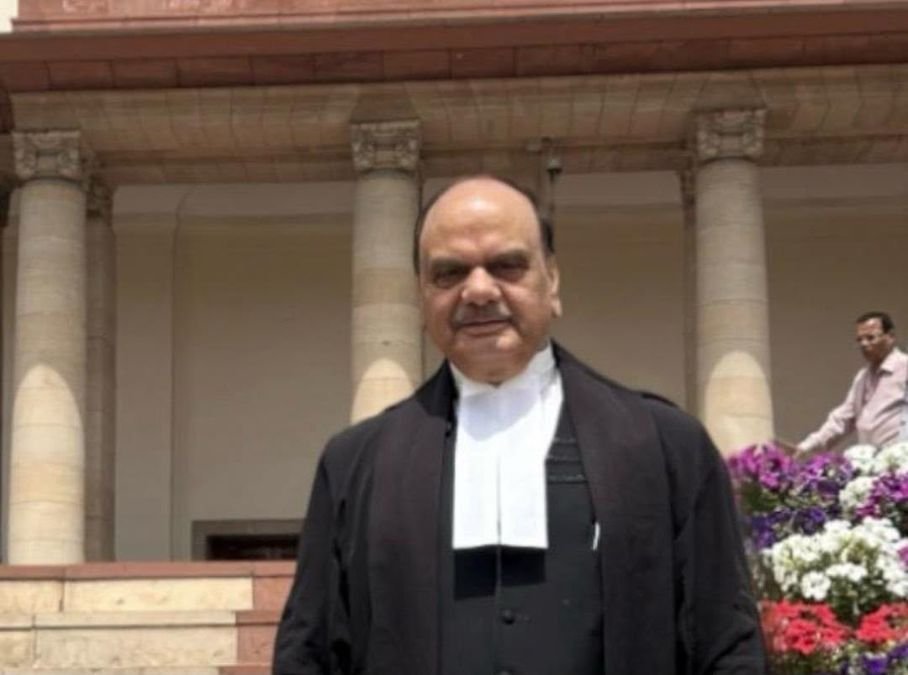
Srinagar, Jul 22: Senior Supreme Court Advocate and Distinguished Fellow, International Law Centre, Ashok Bhan has said that peaceful protest is the soul of democracy and any excessive use of state power must invite accountability.
Speaking at a meeting of young lawyers organised by Lawyers Guild, Bhan said the reports surrounding the police response to the peaceful protest organised by youth and students in Delhi had once again brought into sharp focus the question of whether democratic dissent was being accorded the constitutional respect it deserved.
“The Constitution of India does not merely permit peaceful protest—it protects it. Articles 19(1)(a), 19(1)(b), and 19(1)(c) guarantee every citizen the freedoms of speech and expression, peaceful assembly, and association. These rights are the bedrock of our democratic Republic. While they are subject to reasonable restrictions in the interests recognised by the Constitution, such restrictions must always be lawful, necessary and proportionate,” he said.
“If a peaceful demonstration is met with disproportionate police action, arbitrary detention, or excessive use of force, it raises serious constitutional concerns. Such allegations should be examined promptly through a fair, impartial and transparent inquiry. Accountability is not directed against the police as an institution; rather, it is essential to preserving public confidence in the rule of law,” Bhan said.
“The police are guardians of the Constitution, not instruments of political partisanship. Their duty is to facilitate peaceful democratic expression while maintaining public order. The use of coercive powers must remain an exception, never the norm. A democratic State demonstrates its strength not by suppressing criticism but by responding to it through dialogue, restraint and adherence to constitutional values,” he said.
Bhan said the Supreme Court of India had repeatedly affirmed that dissent was the safety valve of democracy, adding that peaceful disagreement could not be equated with disorder merely because it challenged those in authority.
“Governments derive legitimacy from the Constitution, and that legitimacy is reinforced—not weakened—when they respect the rights of those who hold opposing views,” he said.
He said the issue transcended partisan politics, adding that the constitutional principles involved applied equally to every citizen, every political party and every civil society organisation.
“The erosion of democratic freedoms for one inevitably threatens the freedoms of all,” Bhan said.
“India’s freedom movement was built upon peaceful public mobilisation, civil disobedience and moral courage. It would be a profound irony if independent India were to narrow the very democratic space that inspired its own struggle for liberty. Governments change, but constitutional freedoms must remain constant,” he said.
At the same time, Bhan said organisers of public demonstrations bore a corresponding responsibility to ensure that protests remained peaceful, disciplined and respectful of the rights of others.
“Democratic engagement must always reject violence and damage to public property,” he said.
“As a constitutional democracy, India must never permit the normalisation of excessive state power against peaceful civic participation. Public confidence in democratic institutions depends upon an impartial police force, an independent judiciary, a free press and an unwavering commitment to fundamental rights,” Bhan said.
He emphasised that the need of the hour was constitutional statesmanship.
“The Government should reassure citizens that peaceful dissent will be protected. Police authorities should continue strengthening professionalism, restraint and accountability. Civil society and political leadership across the spectrum must reaffirm their shared commitment to democratic values,” he said.
“India’s democracy has earned global respect because it has historically embraced diversity of opinion and constitutional dialogue. That democratic legacy must not be diminished,” Bhan said.
“The true measure of a democracy lies not in how it treats those who support the government, but in how it protects the rights of those who peacefully disagree with it. Preserving that principle is essential to safeguarding the constitutional promise of liberty, justice and equality for every Indian,” he said.


