


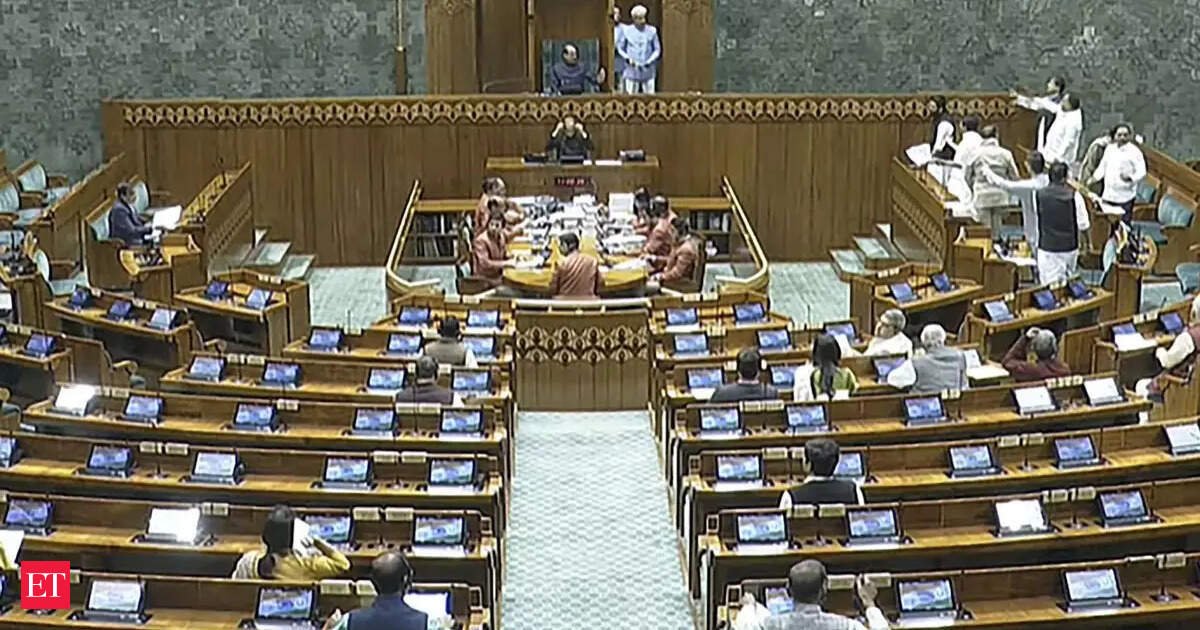
India and US announced a trade deal on February 2, 2026. A joint statement for the same was released on February 7, 2026. “The detailed agreement is undergoing technical and legal processes in both governments and is expected to be signed once these processes are completed,” Minister of State for Commerce and Industry Jitin Prasada told Rajya Sabha.
In a separate reply, he said that in the trade deal announced on February 2, the US has agreed to reduce reciprocal tariffs on Indian goods to 18% from 50% while India committed to lower tariffs on a range of American products. “The rate of 18% is lower than the tariffs imposed by the US on several competing countries, thereby enhancing India’s export competitiveness in the US market. The agreement also provides significant comparative advantage to Indian exporters, particularly in labour-intensive sectors and manufacturing,” Prasada said.
‘Pact with EU to Open 99% Market Access for India’
The India-EU FTA, concluded on January 27, lays the foundation for inclusive, resilient and future-ready growth, Minister of State for Commerce and Industry Jitin Prasada said. “Ambitious services access, a future-ready mobility framework and forward-looking CBAM provisions together lay the foundation for inclusive, resilient and future-ready growth,” he said.
Under the pact, over 99% of Indian exports will gain preferential entry, unlocking ?6.41 lakh crore ($75 billion) in export potential, including $33 billion in labour-intensive sectors such as textiles, leather, marine products, gems and jewellery. The FTA creates opportunities for MSMEs, women, artisans, youth and professionals, with calibrated auto liberalisation supporting Make in India, favourable access for agricultural and processed food exports, while safeguarding sensitive products and dairy, according to the minister.
“To stabilise and strengthen India’s export performance in 2026, the government has undertaken comprehensive measures, with a major focus on market diversification and enhancing competitiveness,” he said. A key pillar of this strategy is leveraging FTAs and preferential trade agreements. According to Prasada, key efforts include expanding market access through FTAs, diversifying destinations and products, addressing tariff and non-tariff barriers, offering export incentives and streamlining procedures through digital transformation. Over the past five years, India has concluded eight FTAs with Mauritius, the UAE, Australia, EFTA (under the Trade and Economic Partnership Agreement), Oman, the UK, New Zealand and the EU. In a separate reply, he said India has safeguarded sensitive sectors, including dairy, cereals, poultry, soymeal and certain fruits and vegetables, balancing export growth with domestic priorities in its free trade agreement with the EU.


