



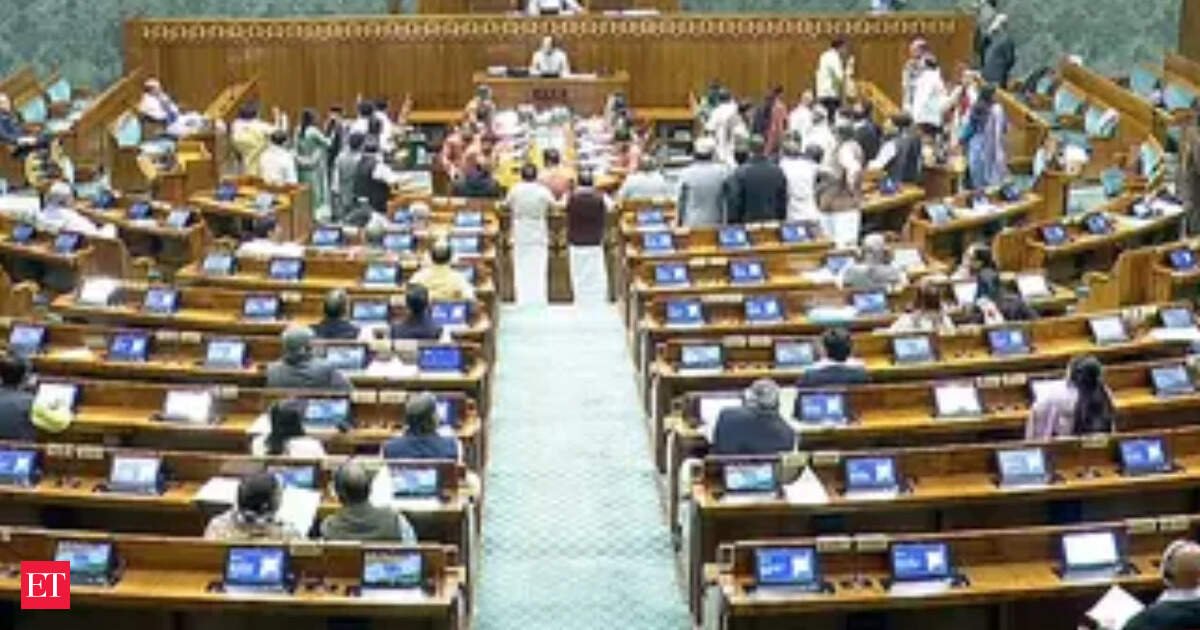
Numerically, the BJP-led NDA is in a strong but not a decisive position. In the Lok Sabha, NDA commands around 294 seats, while in the Rajya Sabha, its strength is about 141 in a House of 250. Given that constitutional amendments require a two-thirds majority in both Houses, the government will need at least partial backing from the Opposition.
Also Read | Congress under pressure to back or block Women’s Reservation Bill
Non-aligned players like BJD, BRS and YSRCP have clearly indicated to the government that they would support the women reservation bill but some of them might express reservations about delimitation. Talking to ET, YSRCP floor leader in Lok Sabha Midhun Reddy said his party will support the women reservation bill in the upcoming session. The agenda of the session is three interlinked legislations: the women’s reservation framework, a delimitation exercise to redraw constituencies and uniform increase in the Lok Sabha and assembly seats across the country by 50%, and enabling constitutional amendments. Together, they are aimed at ensuring the quota is implemented ahead of the 2029 general elections. But the very architecture, meant to enable the reform, has also opened up fresh fault lines.
Talking to ET, NCP-SP leader Supriya Sule said her party is in support of women reservation but they are waiting for more details. Sule said her party will attend the Opposition meeting called by Congress on April 15. The government, for its part, is attempting to build consensus. PM Narendra Modi has reached out to all the parties, framing the move as a historic step for “Nari Shakti”. Thanking the PM for his letter, John Brittas of CPI-M, said his party welcomes the move to implement women’s reservation. But highlighting its connection with delimitation, Brittas said that the proposal to increase Lok Sabha seats by 50% (from 543 to 816) on a pro-rata basis, will add over 200 seats to northern states but only around 65 to southern ones. “In politics, absolute numbers matter rather than ratio or percentage. This undermines the federal balance and diversity that strengthens our democracy,” Brittas said.
Several parties, including SP, have also renewed demands for a sub-quota for OBC women, an issue that has historically stalled a consensus. The bill, however, is likely to pass, aided by cross-party support and the moral weight of women’s representation. But the convergence ends there. The coupling of reservation with delimitation, and anxieties over regional balance mean that while Parliament may clear the legislation, ironing out its contours will require sustained political negotiation – making the path to a smooth rollout far more complex.


