


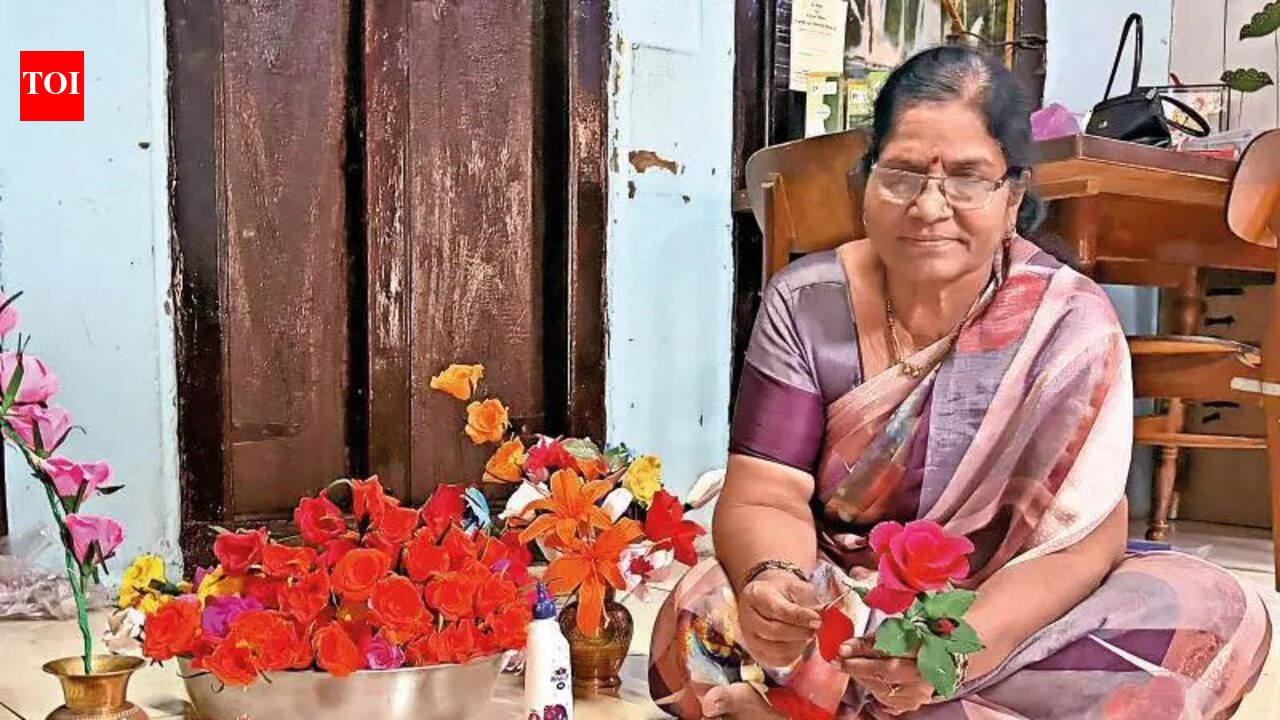
Her initiative began in 2004, when Hiremath received a handmade paper rose as a token of affection during a visit to another school. Curious about how it was made, she carefully dismantled the flower at home and decided to introduce the craft to her own students. “My aim was not merely artistic but practical. I wanted to help students develop skills that could foster confidence and independence,” said Hiremath.She bought the paper, helped the students with cutting work, trained students over 11 years old to make the roses, and managed orders that they received from banks, offices and other establishments throughout the year.The roses are sold at Rs 5 each, and the proceeds are used to meet the daily needs of residential students at the school. “Over time, what began as a classroom activity grew into a small but steady enterprise for the students. Banks, institutions and social organisations began placing regular orders, especially during festive seasons. During Valentine’s Day, there is a surge in orders, and this helps the students not just monetarily but also builds their confidence,” she said.The process was deliberately inclusive. Students who found it difficult to shape petals contributed by preparing stems and green leaves, ensuring that every child participated and learned a skill suited to their abilities. Thousands of flowers were created over the years, each carrying both effort and purpose.Hiremath retired five years ago, but the work did not end with her tenure. “The students come to my house, where we make the roses together. The flowers are made by cutting duplex paper into petals and attaching them onto a stem made from broomsticks. We often get orders for bouquets, so students use their creativity to design the bouquets out of these handmade flowers,” said Hiremath.


