



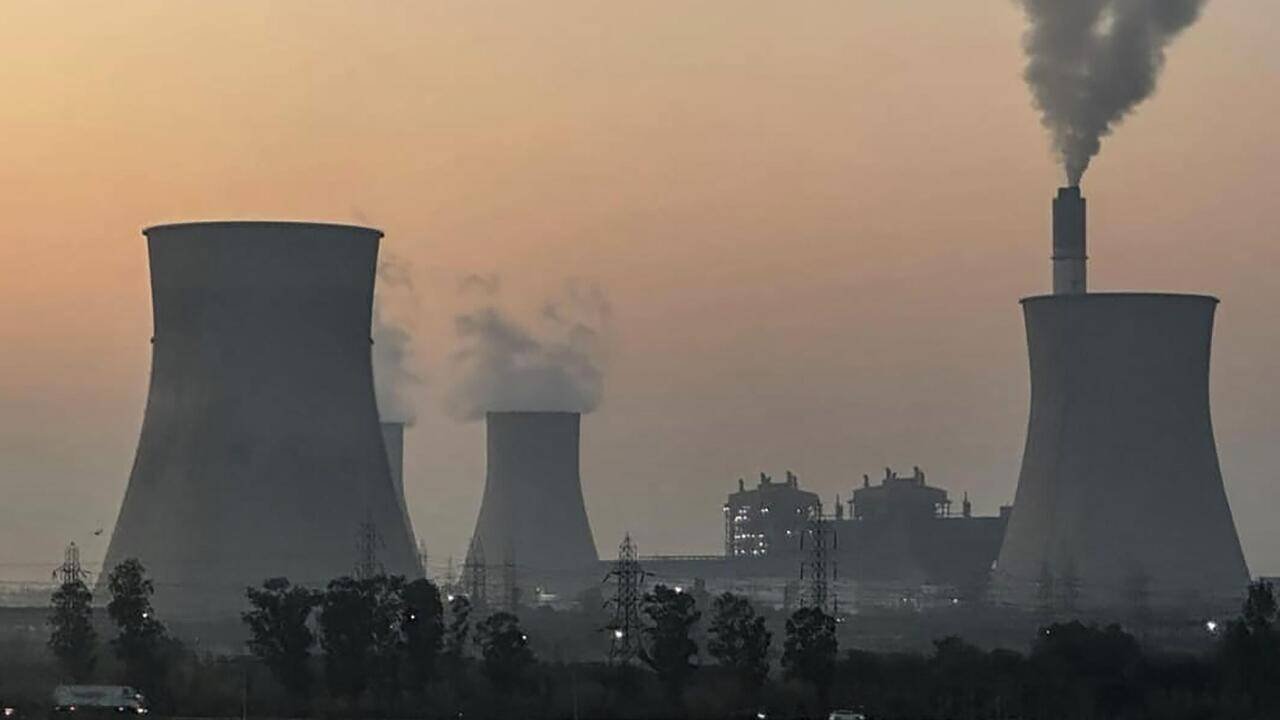
Gurgaon: Haryana govt’s Panipat Thermal Power Station (PTPS) is yet to install a sulphur dioxide (SO2) emission control system for its units that is mandatory because of its proximity to Delhi-NCR. The original compliance deadline was Dec 31, 2024.PTPS is classified as a Category A power plant, the highest emission control standard that is applicable to coal-based units around NCR — where air pollution is a critical problem — or within 10km of any city with a million-plus population.Pollution control board member secretary Yogesh Kumar told TOI Haryana Power Generation Corporation Ltd (HPGCL), which runs PTPS, has been told to expedite installation of flue gas desulphurisation (FGD) systems. The tender process is understood to have stalled for more than two years after bids were opened. The compliance deadline has since been extended to Dec 31, 2027. PTPS has eight generating units, three of which are operational. Data shows two of its units breached the permissible emission limit by more than 50% in 2025. HPGCL did not respond to requests for comment.An analysis by Centre for Research on Energy and Clean Air (CREA) estimates PTPS’s unit 7 emitted about 5,656 tonnes of SO2 in 2025, and unit 8 about 5,504 tonnes, making them among the highest emitters within a 300-km radius of Delhi-NCR.Separately, data tabled by the ministry of environment in Rajya Sabha on plants without FGD systems shows units 6, 7 and 8 of PTPS breaching the permissible stack emission limit of 600 mg/Nm³ (normal cubic metre) for SO2 concentrations. Unit 6, which remained nearly 35% below the limit in FY24, crossed the threshold in FY25, recording an average SO2 concentration of 763 mg/Nm³, 27% above the threshold.Deterioration was more pronounced in units 7 and 8. Unit 7’s average SO2 concentration increased from 606 mg/Nm³ in FY24 to 1,001 mg/Nm³ in FY25, 67% above the standard. Unit 8, which was already non-compliant in FY24 at 654 mg/Nm³ (9% above the standard), recorded 943 mg/Nm³ in FY25, 57% above the permissible limit.While stack emission refers to density of pollution found inside a chimney exhaust, power plant emission calculations account for the total volume of all waste materials released across the entire facility. Thermal plants fitted with FGD systems — including UP’s Dadri and Haryana’s Mahatma Gandhi Thermal Power Plant — record significantly lower SO2 emissions, CREA’s analysis found.Environmental activist Varun Gulati, who has filed a right to information query on FGD systems at PTPS, said he is yet to receive a reply, but the state govt should at least invest in a dry sorbent injection system — estimated at Rs 125 crore — if FGD is held up. “There should be a time-bound implementation schedule,” he said.DSI works by injecting a fine alkaline powder, usually hydrated lime or sodium bicarbonate, into the flue gas duct, where it reacts with SO2 to form a solid salt captured by existing particulate filters. It is cheaper and faster to install than a full FGD (wet scrubbing) system, but less efficient.Nationally, FGD implementation remains slow. Of 537 thermal power units (2,04,160 MW) identified for installation, only 44 have commissioned the systems, 233 are under implementation, 138 are at the tendering stage and 122 remain in the pre-tendering stage, according to the Rajya Sabha reply.The environment ministry first notified SO2 emission norms in 2015. The compliance deadline was progressively extended over the years as utilities cited a shortage of FGD vendors, insufficient manufacturing capacity, Covid-related disruptions, rising costs and supply-chain constraints.In July 2025, MoEFCC changed the policy more fundamentally. Rather than continuing to extend a uniform deadline, it created Category A-C classifications and exempted Category C units from SO2 norms altogether, based on recommendations from scientific studies and representations from the power sector. However, these must comply with all other environmental norms, including particulate matter, NOx, mercury (where applicable), fly ash utilisation, water pollution norms and consent conditions imposed by state pollution control boards.Central Pollution Control Board data shows Panipat has persistently breached air quality standards. In 2026 (till July 21), PM10 concentrations exceeded National Ambient Air Quality Standards (NAAQS) on 176 of 195 monitored days (90%), and PM2.5 on 101 days (52%).The annual averages stood at 179 µg/m³ for PM10 and 71 µg/m³ for PM2.5 — nearly three times and almost twice the national standards of 60 µg/m³ and 40 µg/m³, respectively. In 2025, the city recorded even higher annual averages of 229 µg/m³ for PM10 and 103 µg/m³ for PM2.5, with PM10 exceeding the standard on 91% of monitored days and PM2.5 on 84%.SO2 from coal-fired plants is a key precursor to secondary PM2.5 pollution, linked to respiratory and cardiovascular illness. “In such a city, continued operation of a coal-fired power plant without sulphur dioxide control technology can add substantially to the local pollution burden. Installing SO2 control systems is therefore important not only to reduce emissions from the plant but also to curb the formation of secondary PM2.5, a major contributor to winter air pollution in the Delhi-NCR. Equally important is making continuous stack emission data publicly available to improve transparency, accountability and regulatory oversight,” said Manoj Kumar of CREA.


